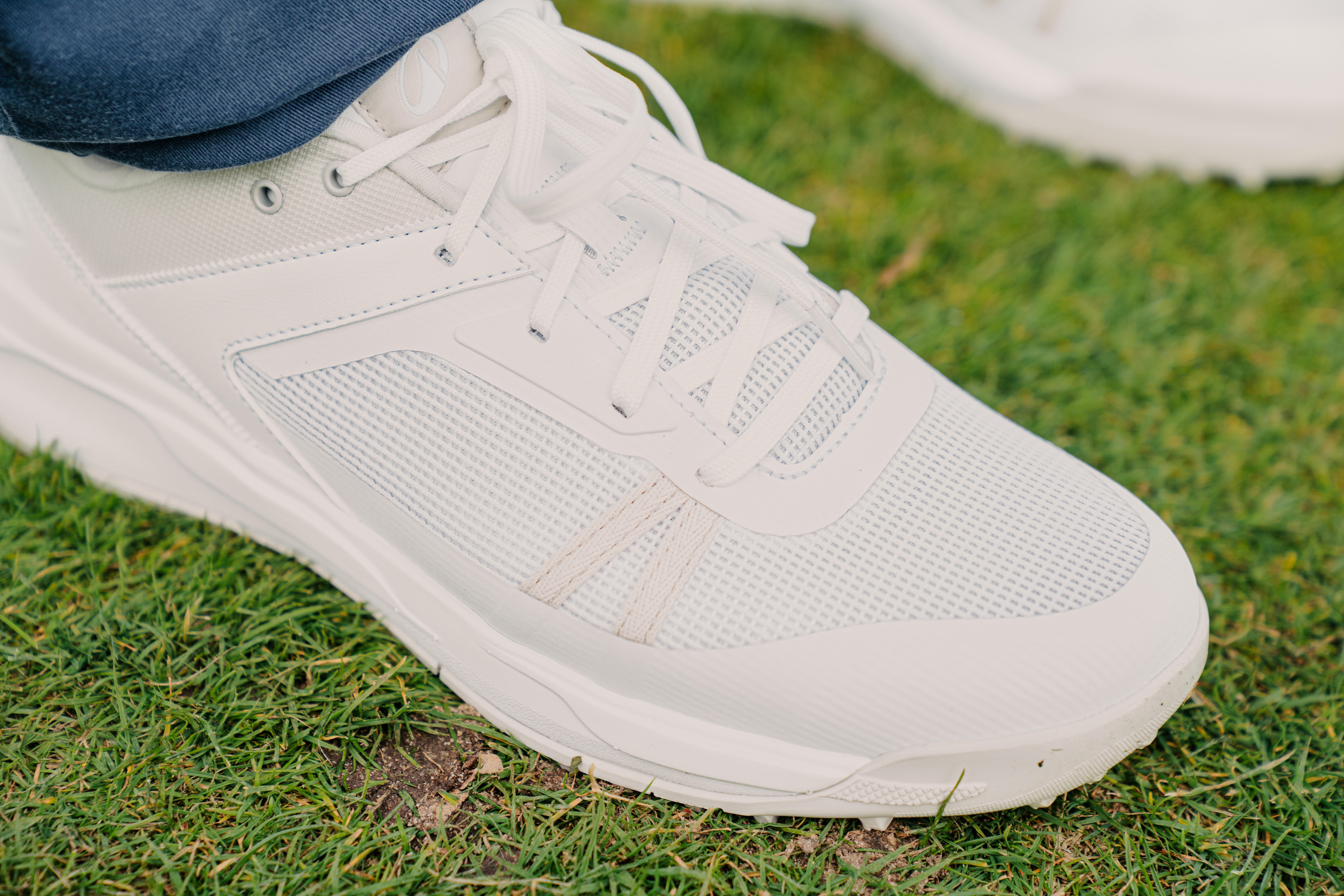
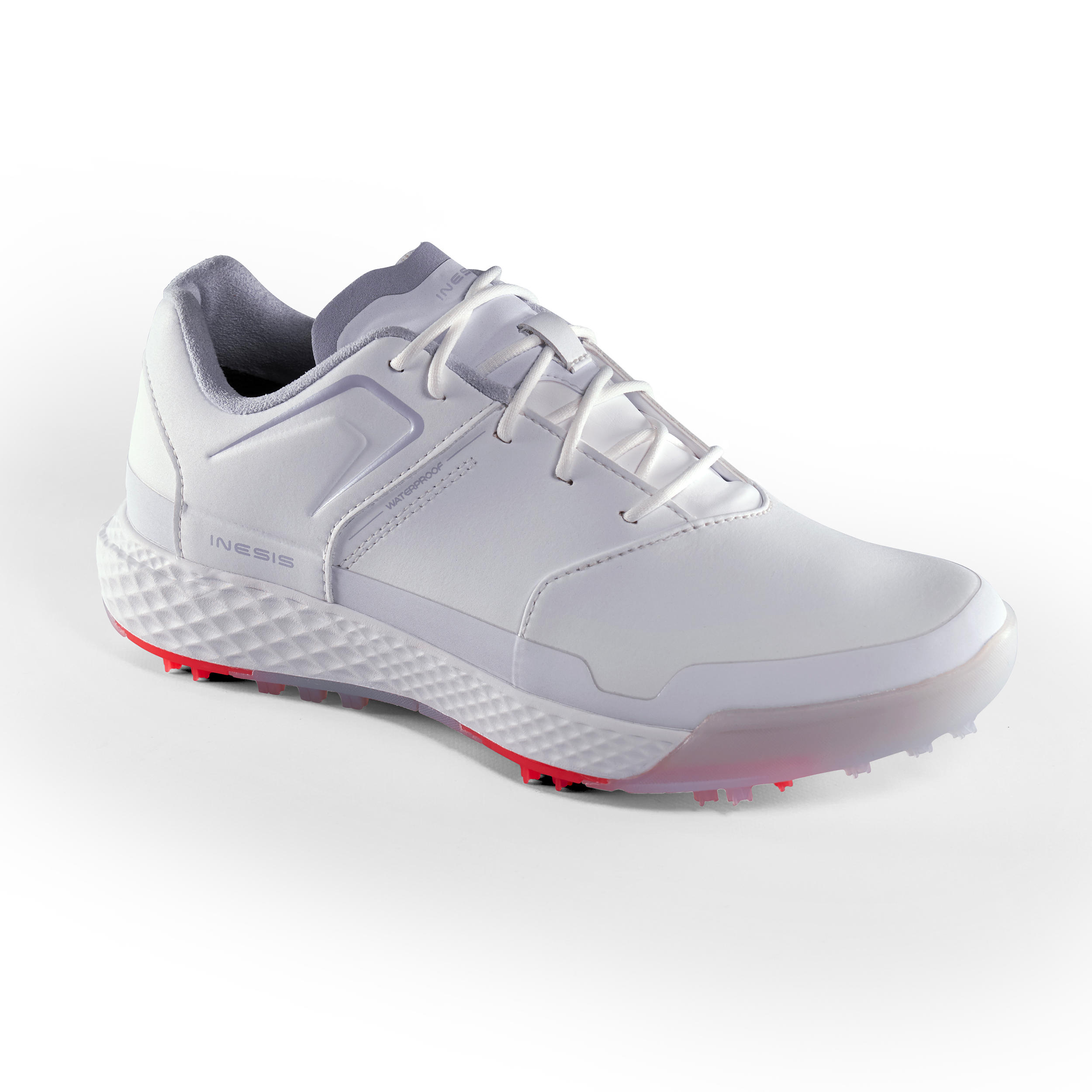
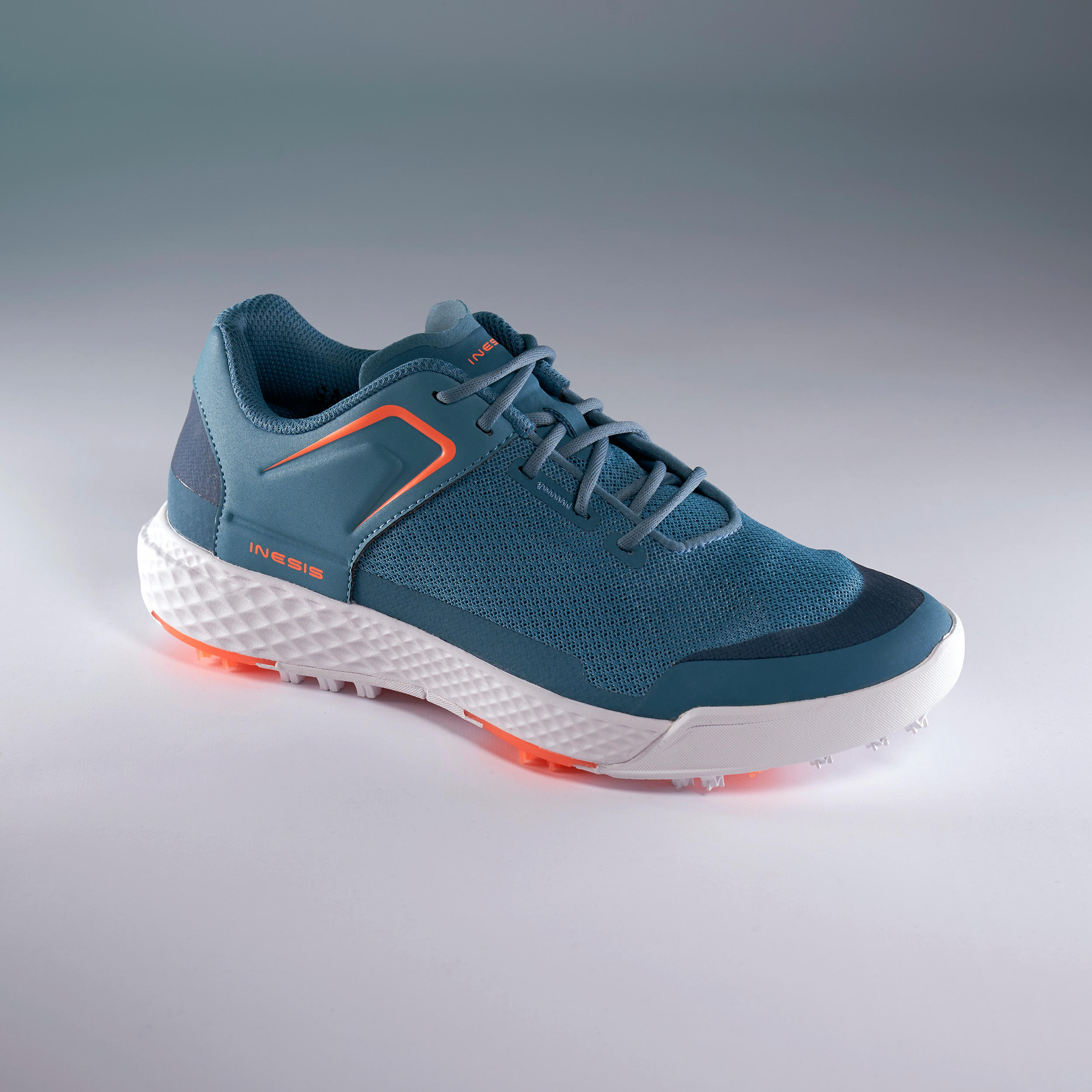
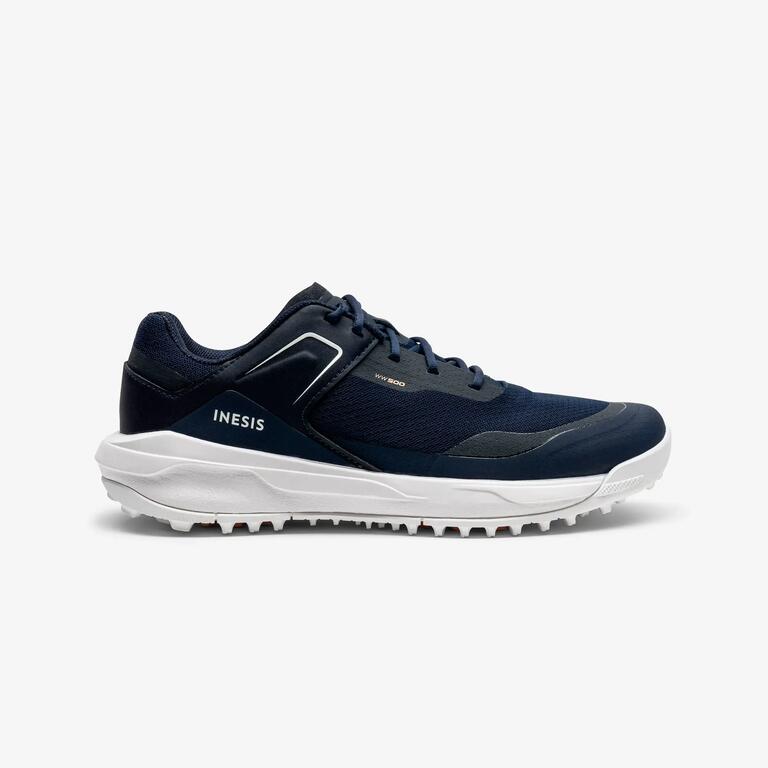
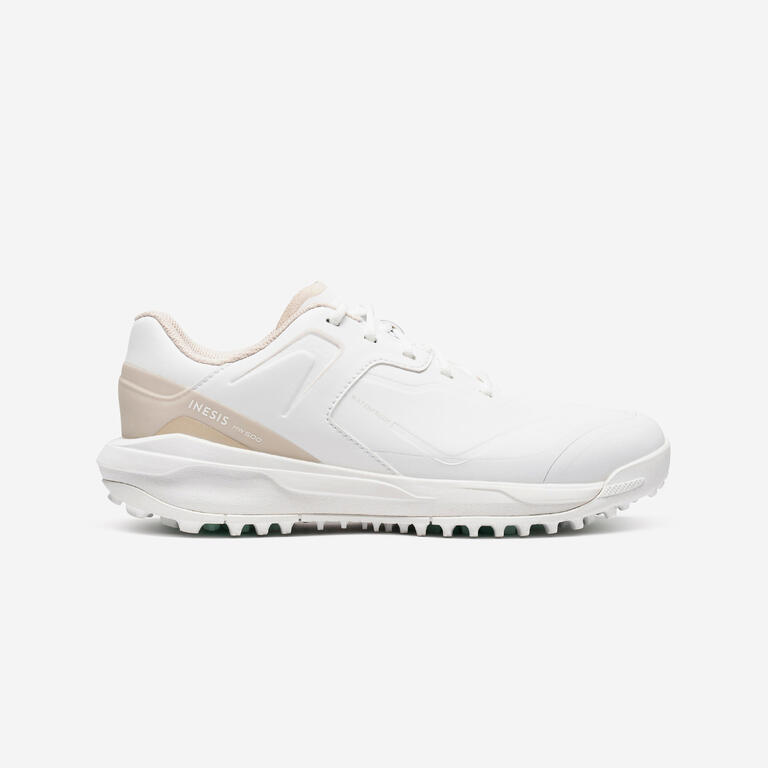
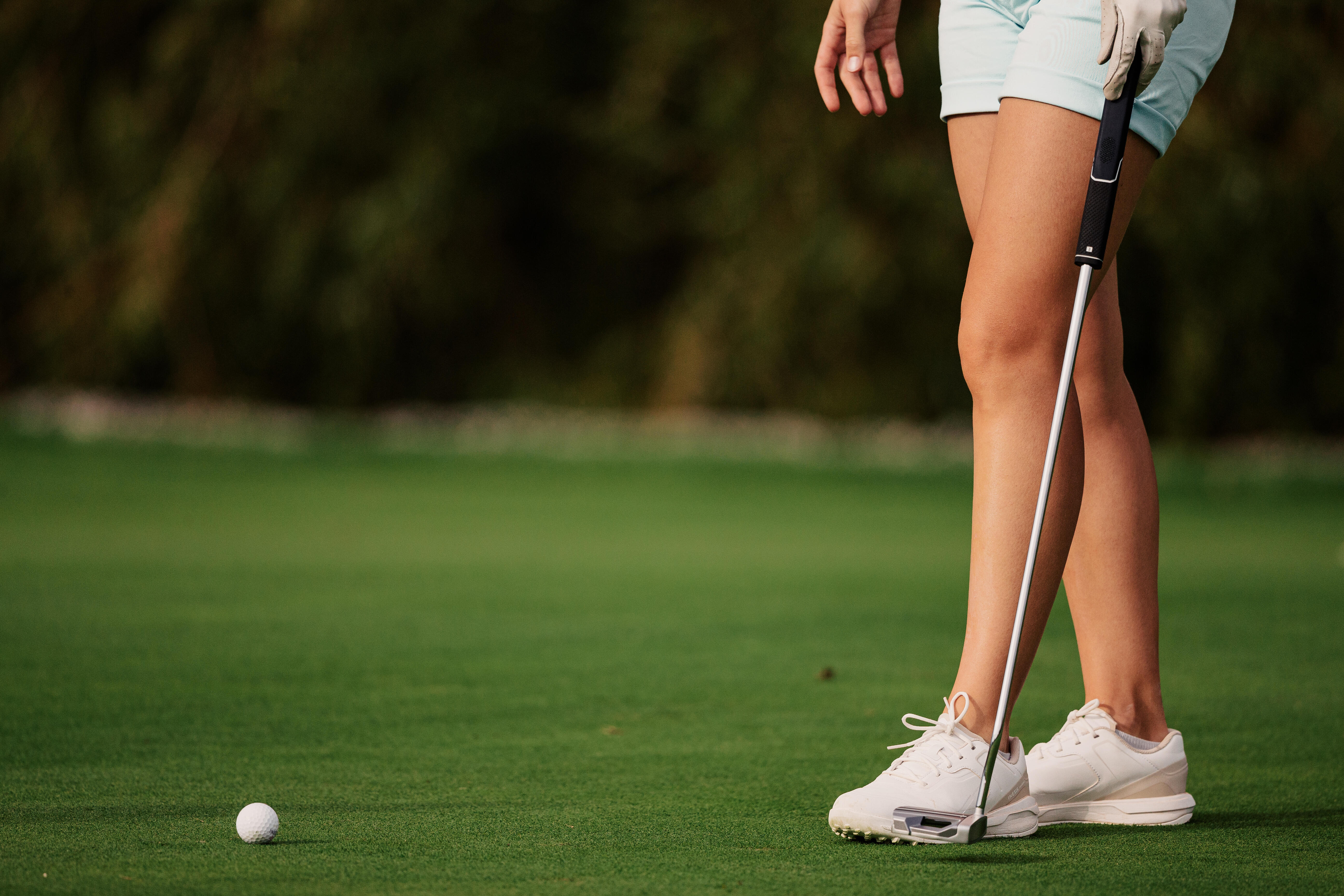
Golf asks your feet to stay planted through the swing, then walk seven or eight kilometres between shots. We build our women's shoes on a three-part sole: EVA for cushioning over that distance, firmer TPU spikes for traction through the strike, and softer rubber for the walking in between. Choose the waterproof pair for dew and winter, and the 3D mesh pair for summer.
Waterproof shoes use a membrane that keeps water out during wet rounds or heavy dew, which matters most if you play regularly regardless of forecast. Breathable, ventilated designs suit warm-weather play, prioritising airflow over water protection. If you mostly play in one type of climate, matching the shoe to those conditions will serve you better than trying to cover both.
Spiked vs Spikeless
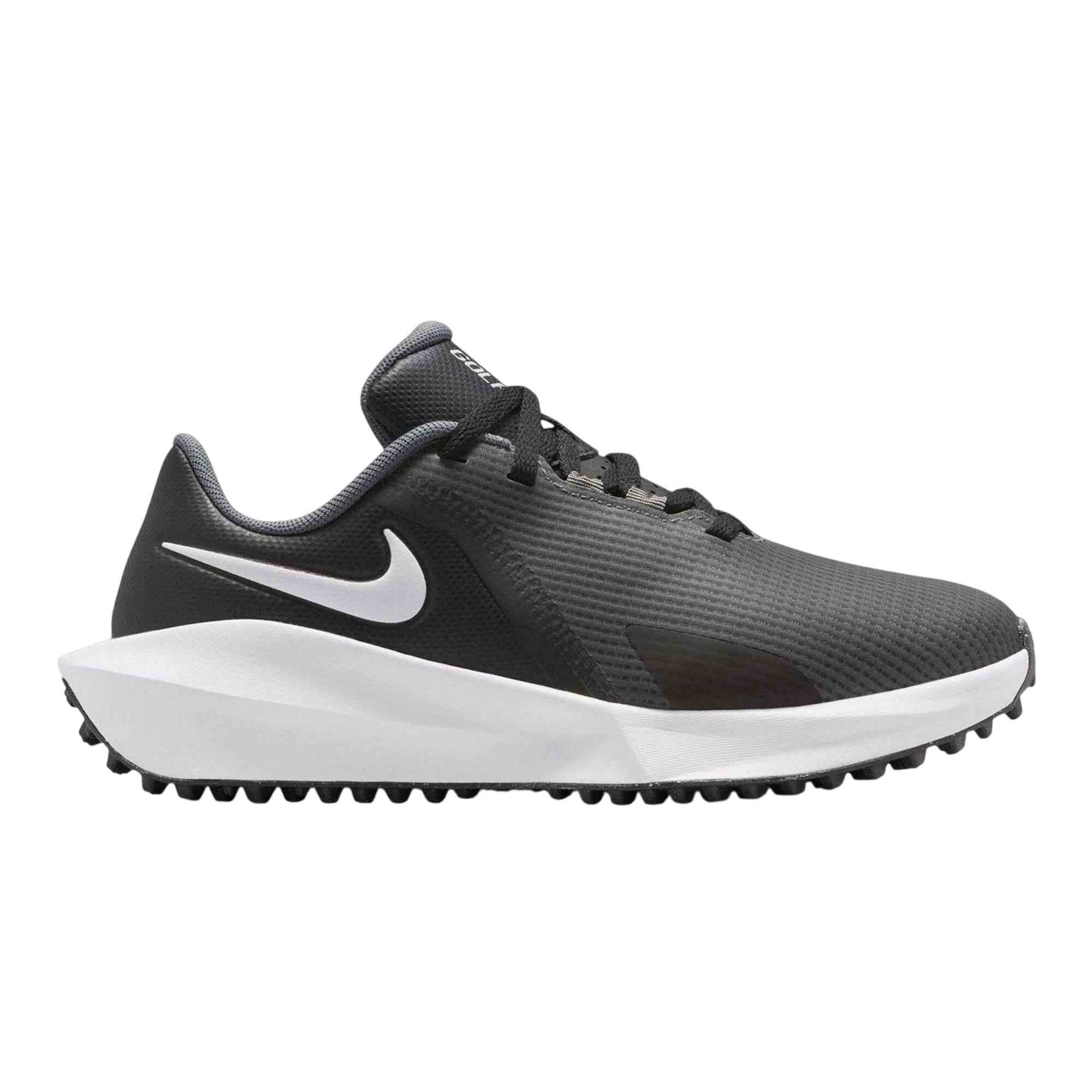
Spiked shoes grip into the turf for stability through the swing, which some golfers prefer on wet or hilly courses. Spikeless shoes use a patterned rubber sole instead, trading a small amount of grip for comfort and versatility, since they can be worn off the course as easily as on it. If you want one pair of shoes for golf and everyday wear, spikeless is the more practical choice.
Fit and Support
A comfortable fit is one of the most important factors when choosing women's golf shoes. Your shoes should feel secure without pinching, with enough room for natural toe movement throughout your swing and while walking the course. Supportive cushioning can also help reduce foot fatigue over a full round.
Style
Golf shoes now range from traditional leather designs to sneaker-style trainers, so you don't have to choose function over how they look. A more classic style suits clubs with a traditional dress code, while a athletic-style shoe fits a more relaxed setting. Consider where you play most often before deciding how far to lean into either look.
Learning to golf. Comfortable shoes mean eighteen holes don't leave your feet sore. Focus stays on your game, not your feet.
Playing regularly. Proper arch support and solid grip keep your stance stable through multiple rounds. Shoes that earn their place in your routine.
Tournament competitors. When stakes are high, stability through the swing and grip in any condition become critical. Performance shoes that don't let weather affect your game.
Looking After Women's Golf Shoes
Wipe mud and grass off after each round and dry at room temperature, never with heat. Check the cleats or spikes regularly and replace if worn, as they affect grip and traction. Rotate between two pairs if you play often, letting shoes rest between rounds. Use a shoe tree or stuff with newspaper to maintain shape while drying. Replace worn insoles to keep comfort and support through a full eighteen holes. Store in a cool place away from moisture to prevent mould and smell.
Women's golf shoes by type
Type
Best for
Soft spike shoes
Most golfers, compliance with course rules, grip without damaging greens.
Wearing on and off course without discomfort, modern grip technology.
Spikeless shoes
Playing regardless of weather, morning dew or rain protection essential.
Waterproof shoes
Hot weather rounds, keeping feet cool and dry without waterproofing weight.
Are golf shoes really different from regular trainers?
Yes, significantly. Golf shoes have lower heels and wider bases for swing stability. The soles provide traction designed for grass, not concrete. Many feature waterproofing for morning dew or wet courses. Regular trainers don't offer the same support or grip. Golf-specific shoes improve stability and reduce slipping during your swing.
Do I need spiked or soft spike golf shoes?
Most modern courses prefer soft spikes. They provide good grip without damaging greens. Metal spikes offer maximum traction but aren't allowed at many clubs. Check your local course's rules. For casual play and practice, soft spikes are more versatile. You can wear them on concrete without discomfort.
What's the break-in period for golf shoes?
How do I maintain waterproofing on golf shoes?
How much should I spend on women's golf shoes?
Most golf shoes need 3-5 rounds to break in. Wear them for practice rounds first to let the material soften and mould to your feet. New shoes can feel stiff and cause blisters if worn straight to a tournament. Starting with shorter sessions helps them settle. Properly broken-in shoes last longer and feel much better.
Clean after each wet round and let them air dry completely. Use leather conditioner or waterproofing spray annually to refresh the protective layer. Don't machine wash or dry, as heat damages seals and materials. Proper care keeps waterproofing working for several seasons instead of failing after one wet summer.
Look for mid-range shoes that balance durability and value. Entry-level shoes work for occasional play but wear faster. Premium shoes offer extra features but aren't necessary for most golfers. Mid-range offers good durability without overspending. Better shoes mean fewer replacements and better comfort over multiple seasons.
Feel Confident From Tee to Green
Proper fit transforms how you feel over four hours. Comfort and stability matter far more than style. Test shoes on and move around the store. Your feet deserve support designed for golf. The right shoes support you with better balance and fewer foot worries during your round.
 All SportsMenWomenKidsAccessoriesEquipment and LeisureHealth & NutritionBest DealsNew ArrivalsMarketplace

 Hiking & Trekking
 Swimming
 Cycling
 Fitness (Yoga/Pilates)
 Camping
 Running