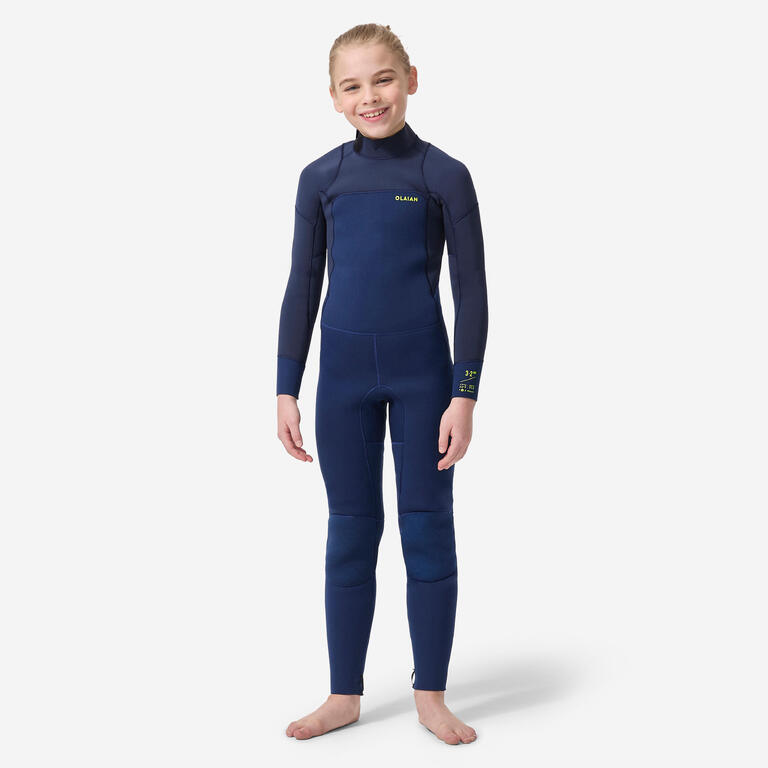
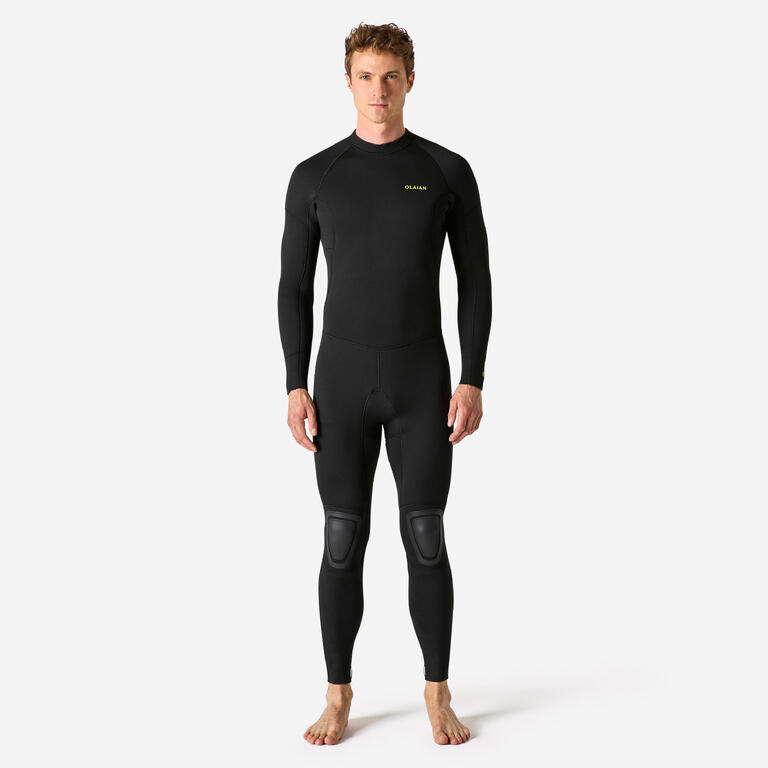
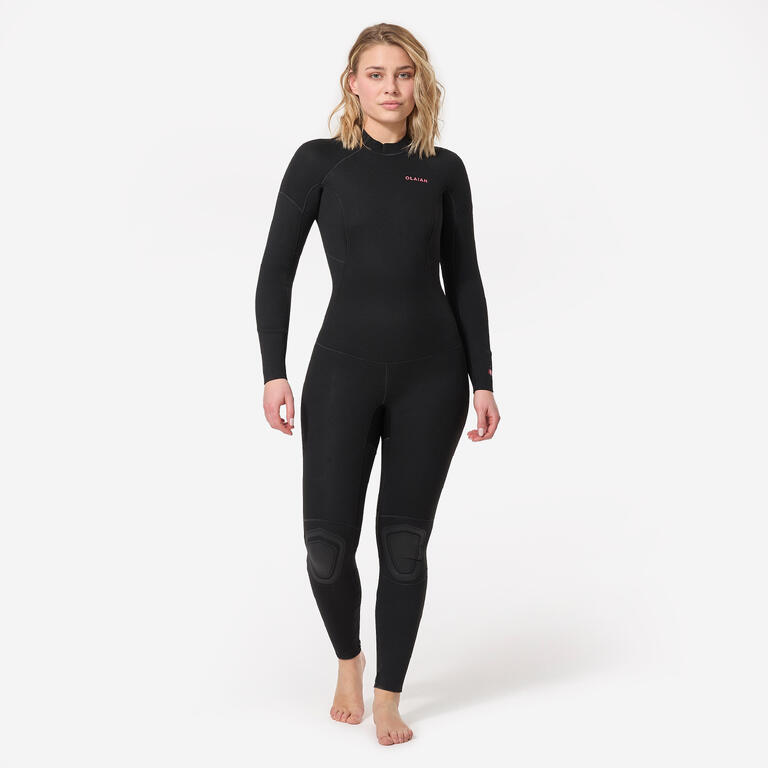
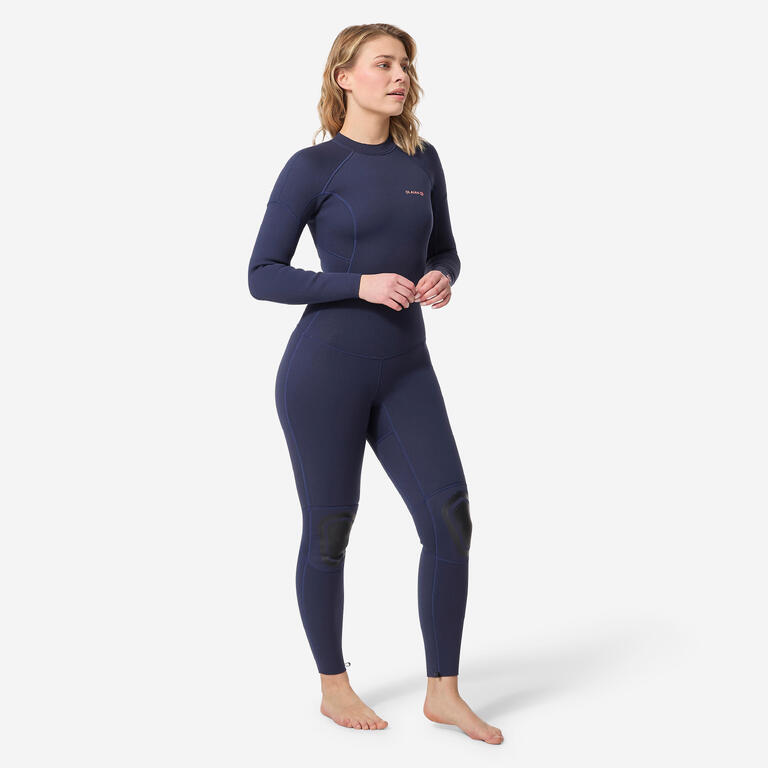
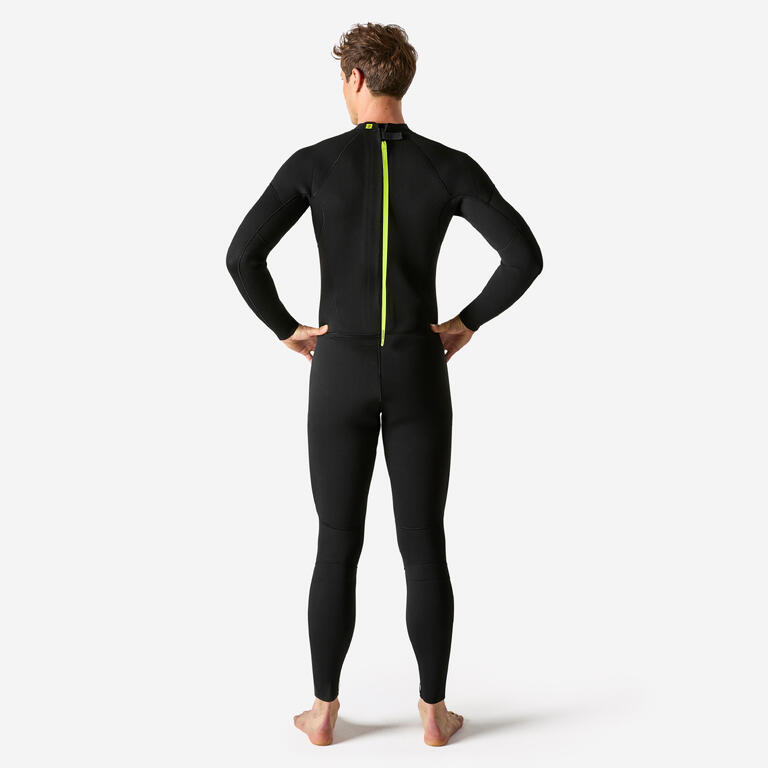
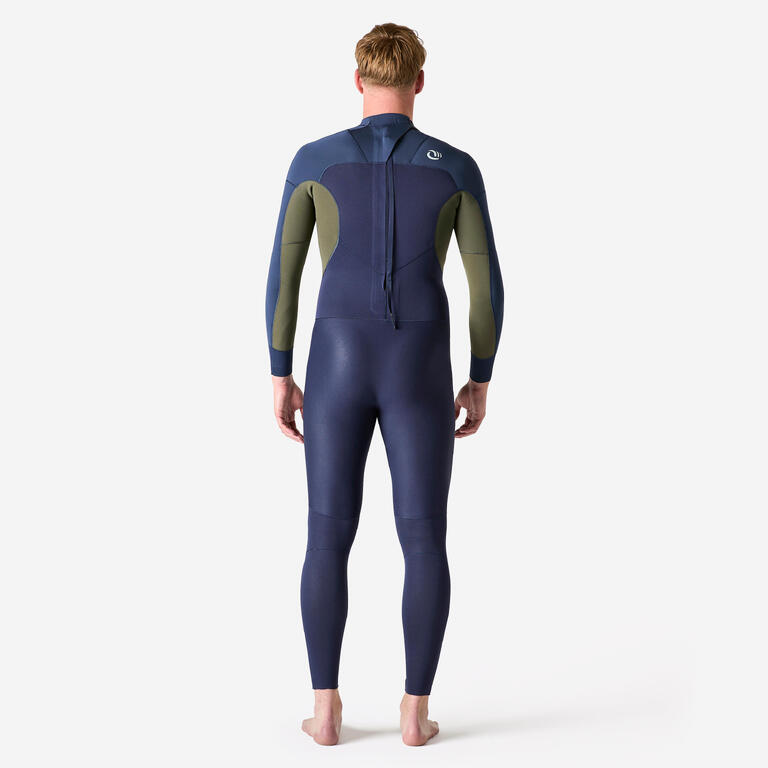
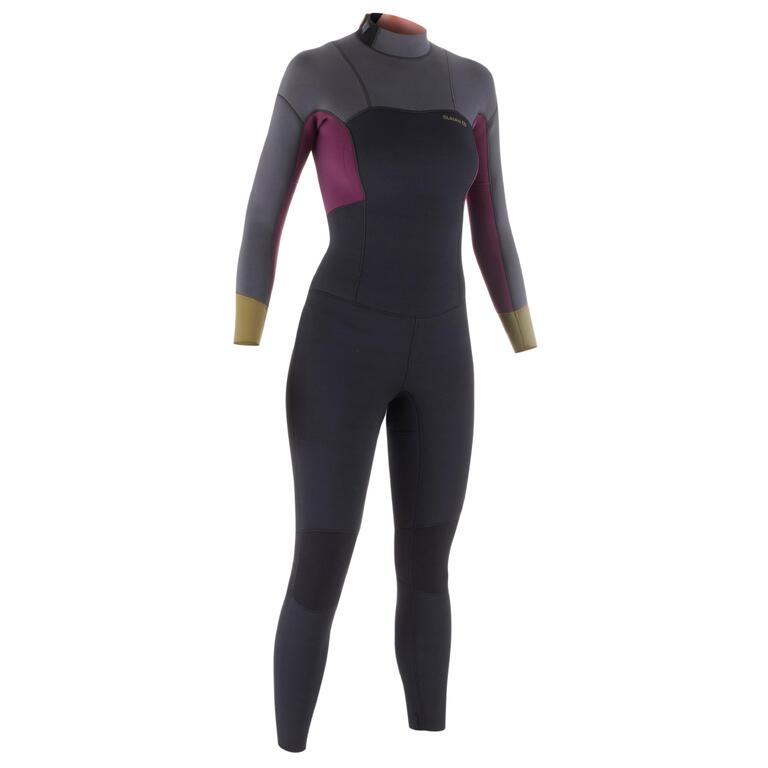
The right wetsuit depends on where and how you'll use it. Beginners and casual sessions benefit from comfort and easy care. Cold water adventures require proper warmth and gear that handles colder and more demanding conditions. Summer snorkelling or warm water sessions call for something stretchy with minimal bulk so you stay mobile. Choose what fits your adventure at Decathlon.
Thickness is the main thing with wetsuits. Thinner suits allow greater movement for swimming and snorkelling in warmer waters. Thicker suits provide proper insulation for cold water immersion and longer sessions in the sea. Think about your local water temperature and what activities you'll do most, then choose the thickness that suits your needs.
Material
Neoprene is the standard wetsuit material because it provides insulation, flexibility and durability in the water. Standard neoprene traps a thin layer of water that your body heats, helping retain body heat in cooler water conditions. Limestone-based neoprene is the eco option that performs just as well. Thermal linings add serious warmth for colder water conditions but you'll sacrifice some flexibility. The real thing to get right is thickness, not material. Pick neoprene and focus on the mm rating for your water temperature.
Fit
The fit must be snug at the neck, wrists and ankles to minimise water flushing in and out. Too loose and you'll lose heat constantly, too tight and you won't be able to move or breathe. A proper fit keeps the thin water layer against your skin, which your body warms. New wetsuits are stiff at first, they need a few sessions in the water as the neoprene stretches slightly. The material will mould to your body over time.
Weight
Lighter wetsuits are easier to put on and take off, which matters if you're getting changed frequently. Also nicer if you're carrying it between sessions. If it stays in a dry bag most of the time, weight's less of a concern.
First-time buyers. Getting into water sports and need a wetsuit that won't confuse you? Our entry-level option works for swimming and snorkelling, and it's easy to rinse and dry after use.
Regular water sports enthusiasts. If you're getting in the water regularly across different seasons, you need a wetsuit that handles mixed water temperatures and stays flexible without losing its insulation.
Cold water and serious swimmers. Extended time in cold water demands proper insulation without compromising your ability to move. Our premium range keeps you warm through demanding conditions whilst maintaining the flexibility to actually swim properly.
How to care for your wetsuit
After saltwater sessions, rinse thoroughly with fresh water to get salt out before it degrades the neoprene. Hang to air dry in the shade because direct sun breaks down the material over time. Keep it away from direct heat and UV exposure as both can weaken neoprene over time. For deeper cleaning, soak briefly in cool water with mild detergent, rinse well and hang to air dry. Store on a hanger rather than folded. Comes with a 2-year warranty.
Wetsuits by type
Type
Best for
Beginner and thin wetsuits
First-time buyers, warm water swimming, occasional use.
Regular swimmers, mixed water temperatures, recreational activities.
Mid-range wetsuits
Cold water swimming, extended sessions, serious enthusiasts.
Thick insulated wetsuits
Snorkeling, warm to moderate water, flexibility priority.
Mid-range thickness is your starting point, providing enough insulation for moderate water temperatures without restricting movement. A 3mm suit works for most situations unless you're diving in really cold water or warm tropical conditions. You can adjust thickness based on your local water temperature.
Is a thin wetsuit suitable for all water conditions?
Thin wetsuits give you maximum mobility for active swimming and snorkelling in warm water. For cold water or extended sessions, thicker wetsuits actually keep you warm through proper insulation so you don't spend the whole time shivering.
What is the best wetsuit for sensitive skin?
How long does a wetsuit last?
What is the best wetsuit for cold water?
Look for wetsuits with soft inner linings, flexible neoprene and smooth seams that won't rub or irritate your skin during longer sessions in the water. A proper fit also helps prevent chafing and discomfort, especially around the neck, wrists and underarms.
With proper care and rinsing after saltwater use, several years. Watch for material breaking down, lost stretch, and permanent creasing. Store on a hanger rather than folded to extend life. Comes with a 2-year warranty.
Neoprene with thermal lining is the choice for cold water. The lining keeps warm water snug against your skin and maintains your body heat through long sessions in freezing conditions. You'll stay warm and keep enjoying yourself.
Stay Warm, Stay In The Water
Extend your season with a wetsuit that actually keeps you warm. Our range keeps you comfortable in cold water without the bulk and stiffness that kills your movement. Built for people who want to stay in the water longer. Find us online or in store. Every pair comes with a 2-year warranty.
 All SportsMenWomenKidsAccessoriesEquipment and LeisureHealth & NutritionBest DealsNew ArrivalsMarketplace


 Hiking & Trekking
 Swimming
 Cycling
 Fitness (Yoga/Pilates)
 Camping
 Running
