Skipping the measuring tape
Buying before checking desk height and knee lift is an easy way to end up with a bike that will not fit. Two minutes with a tape measure saves the hassle.
An under desk bike keeps your legs moving through long days at the desk, without leaving your work behind. Here is what to check before you buy, the mistakes we see most, and where to start.
Pedal exercisers and desk bikes sit within our exercise bike range, plus two close cousins.
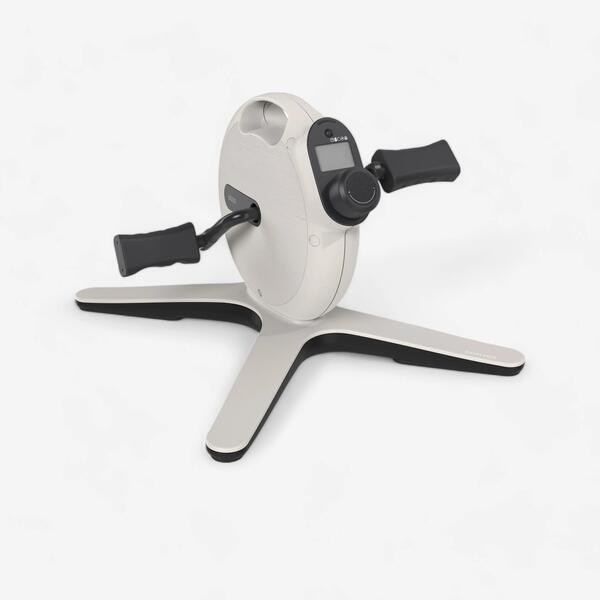
Includes compact pedal exercisers that fit under most desks.
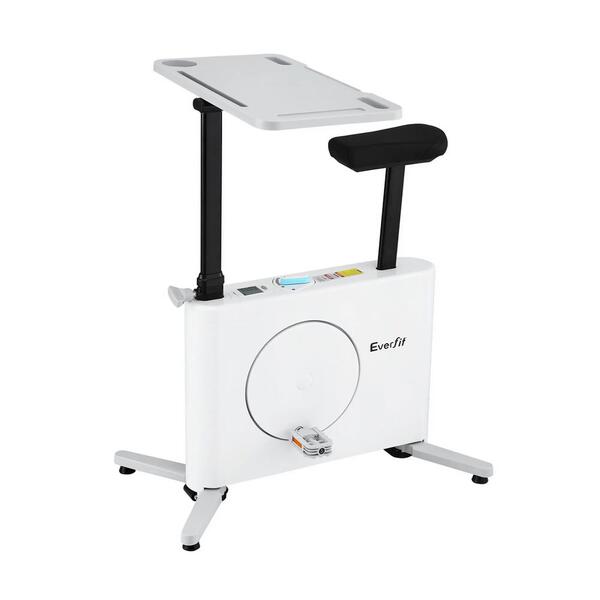
Includes seated bikes with a built-in work tabletop.
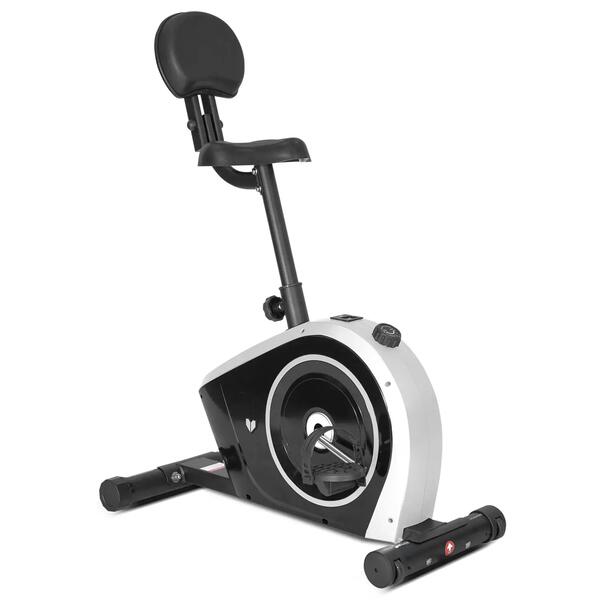
Magnetic desk bike options for smooth, quieter pedalling.
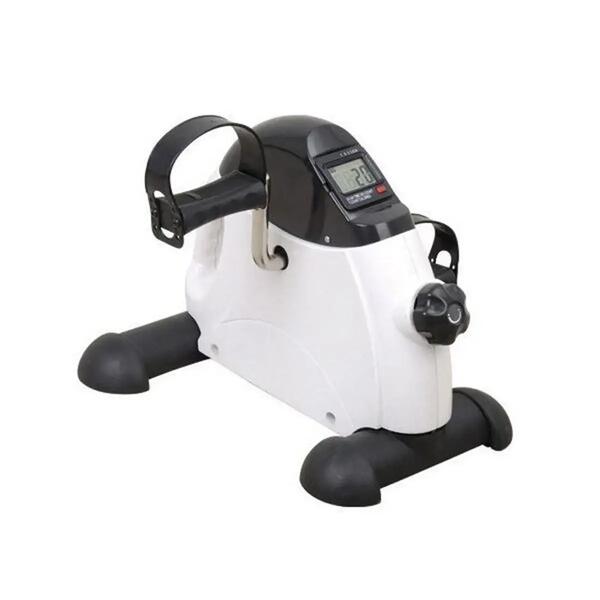
Some mini bikes work your arms as well as legs.
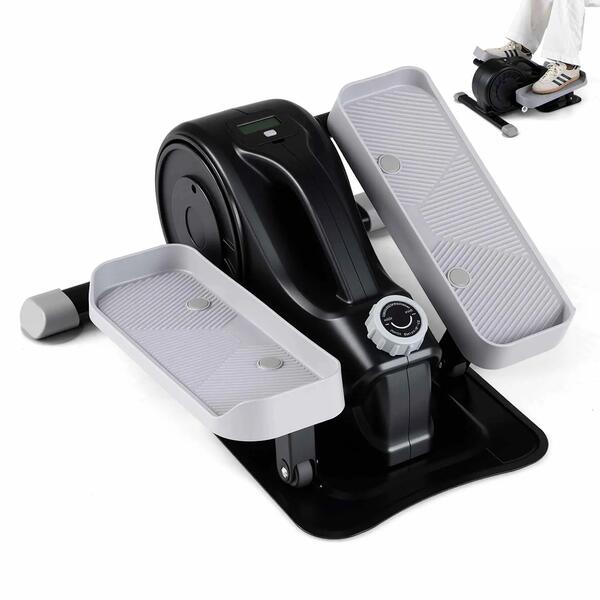
Includes compact under desk elliptical pedal machines.
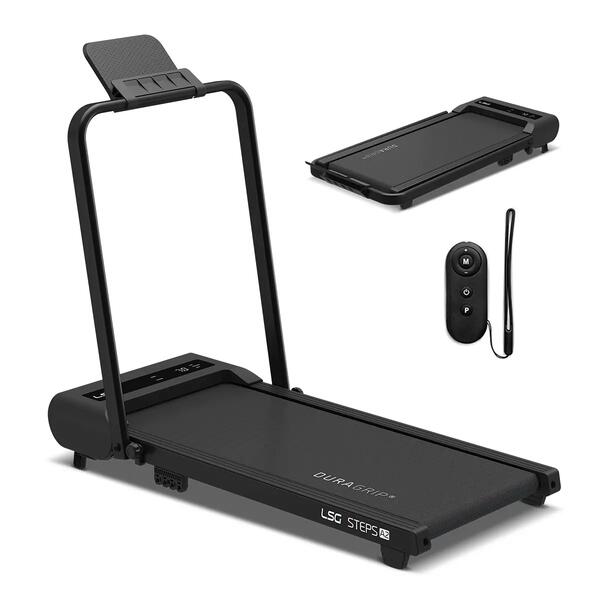
Walking pads made for use at a standing desk.
Measure from the floor to the underside of your desk, then sit and check how high your knees rise at the top of a pedal stroke. Mini pedal exercisers are low, but taller riders can still bump the desk. A desk bike with its own tabletop sidesteps the problem entirely.
Look for an adjustable tension knob or numbered levels, so you can keep it gentle on calls and push a little harder on breaks. Magnetic resistance tends to feel smoother and run quieter than friction or strap systems. Light, steady pedalling is the goal at a desk.
A pedal exerciser can creep forward as you push, especially on timber or tiles. Non-slip feet, a bit of weight and a grippy mat underneath all help. If your office chair rolls, it can drift back too, so check both.
Some mini bikes can be turned around for arm pedalling on a table, which adds variety. A simple display showing time and count helps you build a habit. Think about where it lives between sessions and if you can lift it easily.
Buying before checking desk height and knee lift is an easy way to end up with a bike that will not fit. Two minutes with a tape measure saves the hassle.
Heavy tension makes it hard to type and focus, and you will stop using it. Keep it light while you work and save harder efforts for breaks.
A chair on castors rolls away as you pedal, and a seat that is too low strains your knees. A stable chair at a comfortable height makes all the difference.
| Type | Best for | Keep in mind |
|---|---|---|
| Mini pedal exerciser | Light pedalling under an existing desk | Needs knee clearance and a non-slip base |
| Desk bike with tabletop | Riding and working in one spot | Takes up more floor space |
| Under desk elliptical | A smooth gliding motion with less knee lift | Movement feels different from cycling |
| Walking pad | Walking at a standing desk | Needs a height-adjustable desk |
Most are, especially models with magnetic resistance, which has no parts rubbing together. Friction and strap systems can make a soft whirr or squeak as they wear. The bigger issue in a flat is usually movement rather than noise, so a mat underneath helps stop vibration travelling through timber floors. If you share a wall or floor, try a short session and ask the neighbours.
A mini pedal exerciser takes up about the same floor space as a small footstool and lives under your desk or in a cupboard. A desk bike with its own tabletop is closer in size to a small upright bike, so it needs a dedicated corner. Under desk ellipticals sit between the two. Whatever you choose, leave room to get your chair in and out comfortably.
They do different jobs. An under desk bike is for light, steady movement while you sit and work, so it adds activity to long days. A spin bike is built for standing climbs, sprints and proper training sessions, and it is too tall to use at a desk. If you want both, many people pair a compact pedal exerciser at work with a full bike for workouts at home.
It suits anyone who sits for long stretches, such as remote workers, students and gamers, and people easing back into movement who want something low impact. Pedal exercisers are also popular with older adults for gentle daily movement. If you are recovering from an injury or have a health condition, check with your GP or physio first about what level of activity is right for you.
Give the pedals and frame a wipe after use and keep it out of dusty corners. Every few weeks, check that bolts and pedal straps are tight and that it still sits flat without rocking. If you start to hear squeaks or clicks, stop and check for loose parts before carrying on. Follow the maker's manual for anything beyond basic cleaning.
Start small and keep it light. A few minutes of pedalling each hour adds up, and there is plenty more in our fitness range when you want it.
Free delivery on orders over $150. Members get our lifetime warranty.