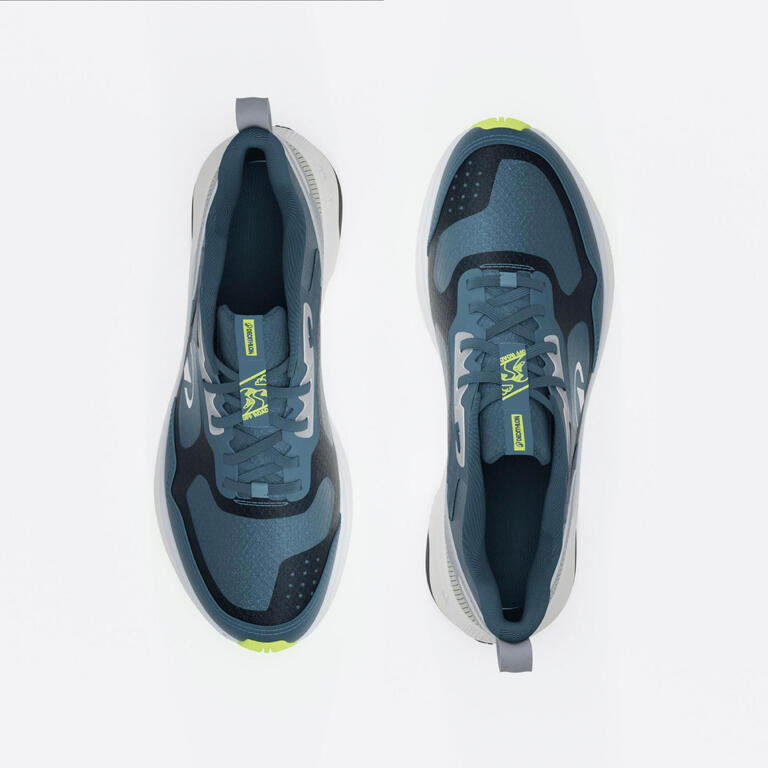
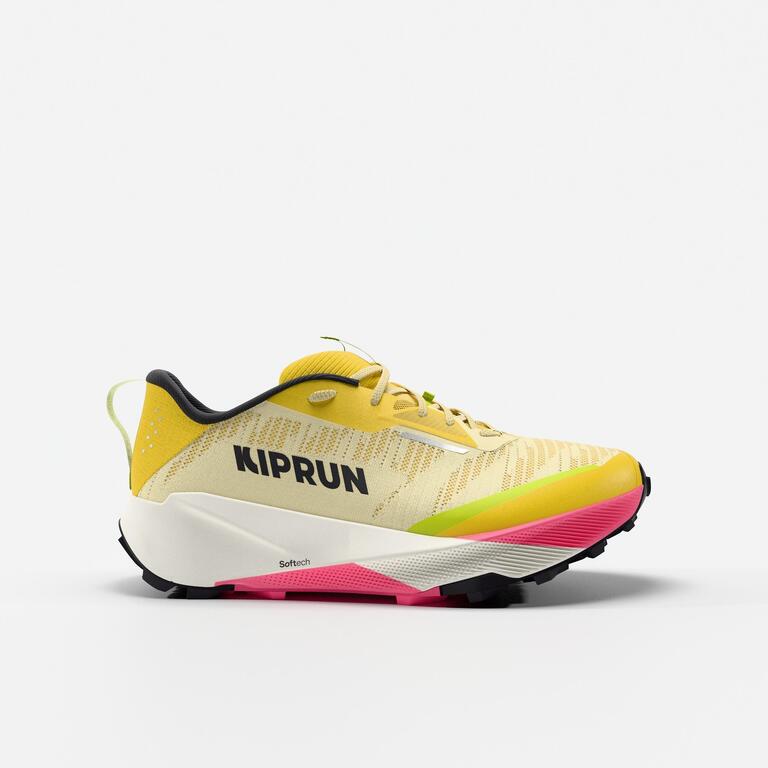
Trail running demands different shoes. Casual exploration needs comfort and something straightforward to maintain. Serious terrain needs real grip and stability so you don't slip on unpredictable ground. Mixed surfaces demand cushioning and protection from impact because rocks and roots are unforgiving. All three, properly engineered.
Grip and traction separate confident descents from slipping disasters. Aggressive lugged soles bite into mud and loose scree on technical terrain. Minimal tread works fine on hard-packed trails. Rock plates or reinforced midsoles protect feet from sharp stones during rocky running. Sticky rubber compounds matter more than tread depth on wet ground.
Material
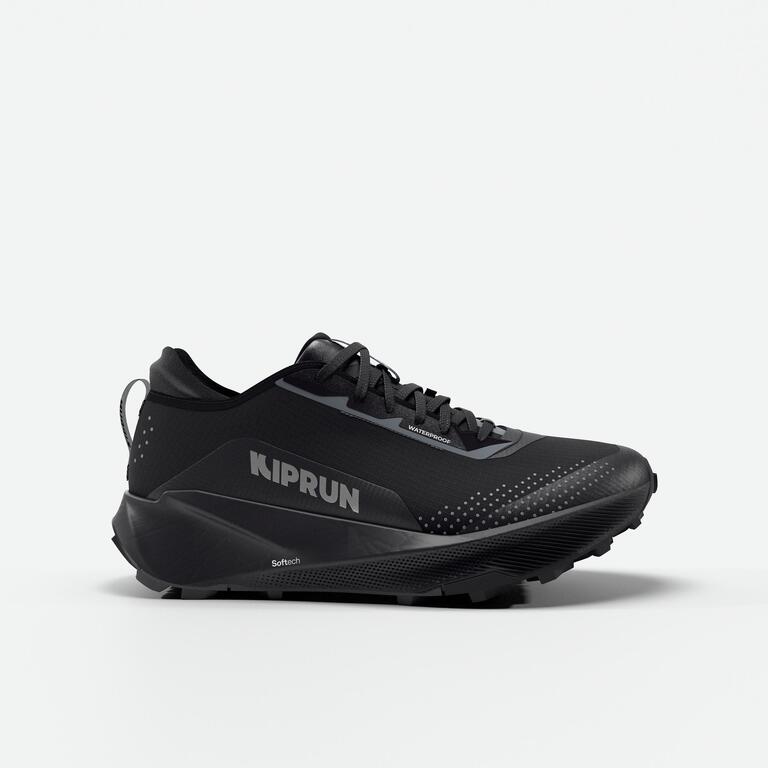
The upper materials determine protection and durability on technical terrain. Mesh keeps weight manageable but needs synthetic protection for trail abuse and rocky surfaces. Waterproof membranes give you extra armour and protection if you're regularly running through wet, muddy and challenging conditions. Together they balance weight, durability and practical protection.
Cushioning
Look for responsive cushioning that absorbs impact on uneven ground. The midsole needs to rebound quickly between footstrikes without feeling sluggish. The heel should provide stability on descents and the forefoot should flex naturally on climbs. The heel should provide stability on descents and the forefoot should flex naturally on climbs.
Weight
For weekend trail outings, shoe weight hardly registers. Regular trail runners benefit significantly from lighter footwear that reduces impact on uneven terrain. Balance weight against protective features and grip rather than pursuing ultra-minimalist designs.
First-time trail runners. Beginner trail running shoes are the most accessible option for exploring off-road running. Moderate grip and stable construction help runners feel confident on mixed terrain without the need for highly technical trail features.
Regular trail runners. Trail running shoes for frequent use are designed for consistent performance. Extra cushioning protects your feet through regular sessions, and grip handles repeated trail conditions well.
Technical and off-road trail runners. Advanced trail running shoes are built for challenging terrain and speed. Aggressive outsoles maintain grip where other shoes slip on loose or wet surfaces.
Keeping your trail running shoes in good condition
Clean with warm soapy water and soft cloth after each trail run to remove mud and debris. Air dry at room temperature before wearing again as excessive heat breaks down adhesives and materials. Keep away from direct sunlight which degrades shoe components. For thorough cleaning, soak briefly in cool water with mild detergent, rinse completely and air dry. Store in a cool, dry location. All trail running shoes come with a 2-year warranty.
Trail running shoes by type
Type
Best for
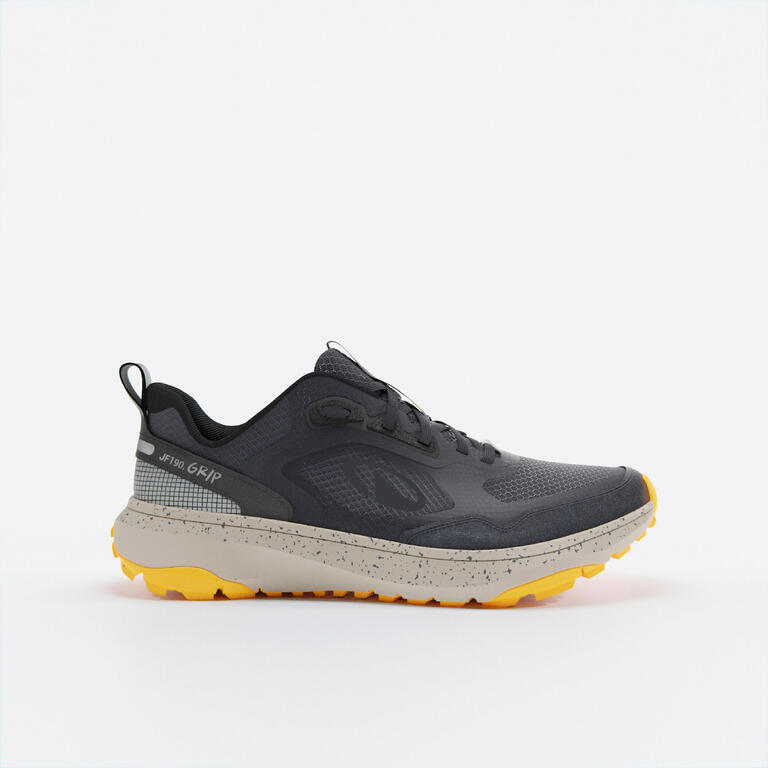
Beginner trail running shoes
First-time trail runners, general mixed-terrain running, casual use.
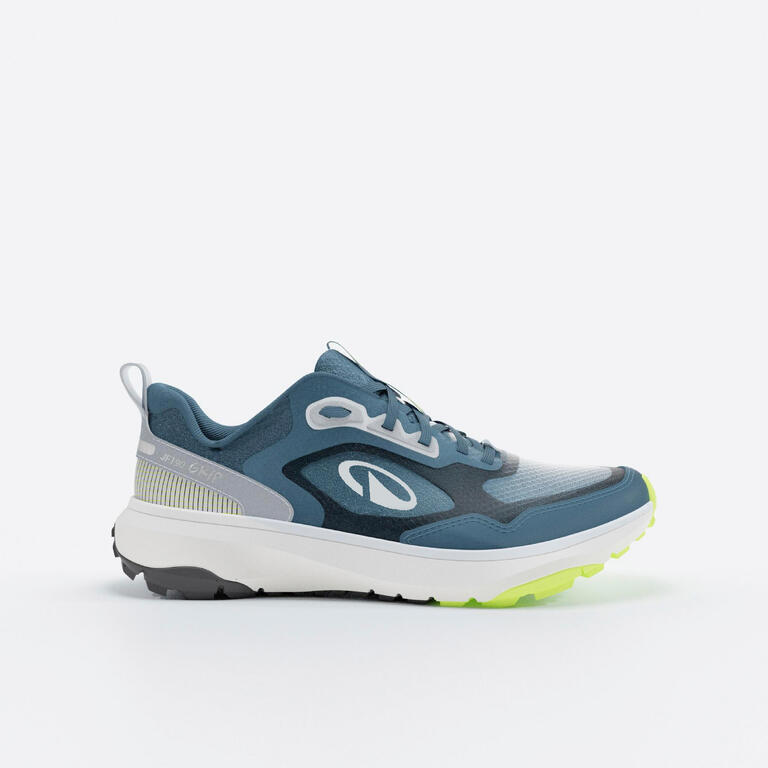
Regular trail runners, all-round terrain styles, home and outdoor.
Mid-range cushioning protects your feet on technical terrain. You need enough impact protection for roots and rocks without being so cushioned that you lose ground feel and responsiveness. This balance helps you navigate tricky surfaces safely.
Are lightweight trail shoes appropriate for technical terrain?
Lightweight trail shoes excel for fast trail running where agility and responsiveness matter. On technical terrain with rough surfaces or challenging descents, cushioning and protective grip become essential. The extra protection helps your feet handle extended exposure to rocks, roots and uneven ground safely.
Which trail running shoes grip rocky terrain best?
How long do trail running shoes last?
Which trail running shoes perform best in wet conditions?
Trail running shoes with strong traction and durable outsoles are often well suited to rocky terrain. Features such as deeper tread patterns and protective toe areas can help improve confidence and comfort on uneven surfaces.
With regular care, quality trail running shoes last several hundred kilometres depending on terrain harshness. Look for worn tread patterns, loss of grip on roots and rocks, and compressed cushioning. Most trail running shoes are covered by a 2-year warranty when purchased through Decathlon.
Waterproof membranes keep your feet dry during rainy trail running. The material prevents water seeping through the upper whilst allowing internal moisture to escape. This balance keeps feet dry and blister-free on wet trails.
Trail Running Shoes Open Up New Routes
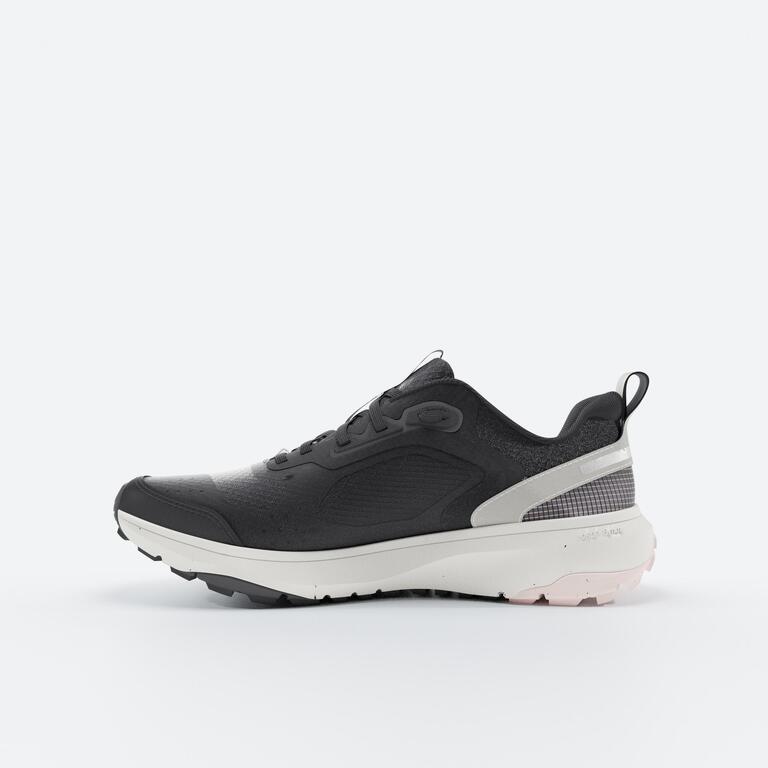
Trail running demands shoes that can handle whatever terrain throws at you. Our trail running shoes offer grip on loose ground, protection over rocks, and durability through mud and challenging conditions. Confidence on uneven surfaces means you can explore more adventurously. Available online and in-store backed by a 2-year warranty.
 All SportsMenWomenKidsAccessoriesEquipment and LeisureHealth & NutritionBest DealsNew ArrivalsMarketplace



 Hiking & Trekking
 Swimming
 Cycling
 Fitness (Yoga/Pilates)
 Camping
 Running
