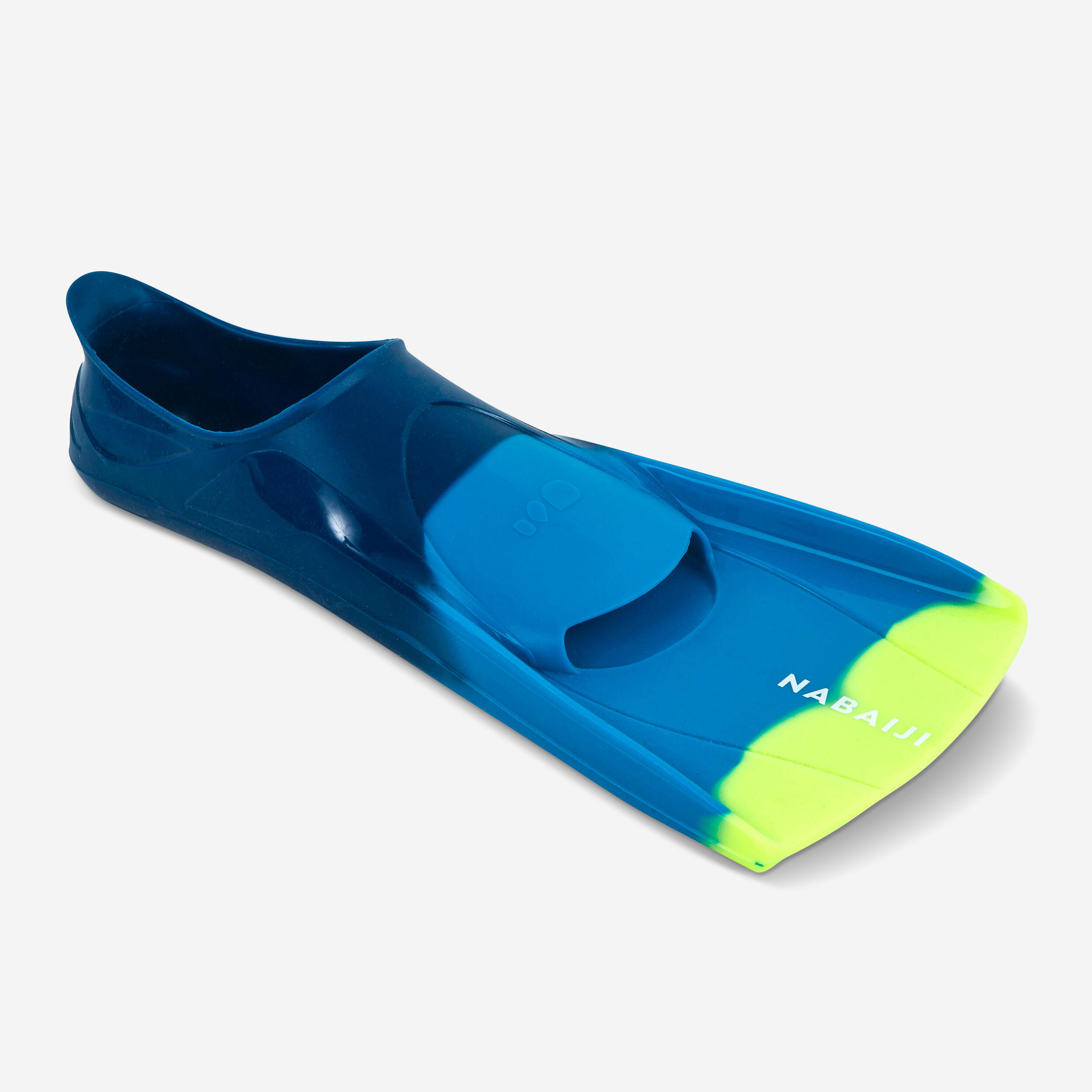
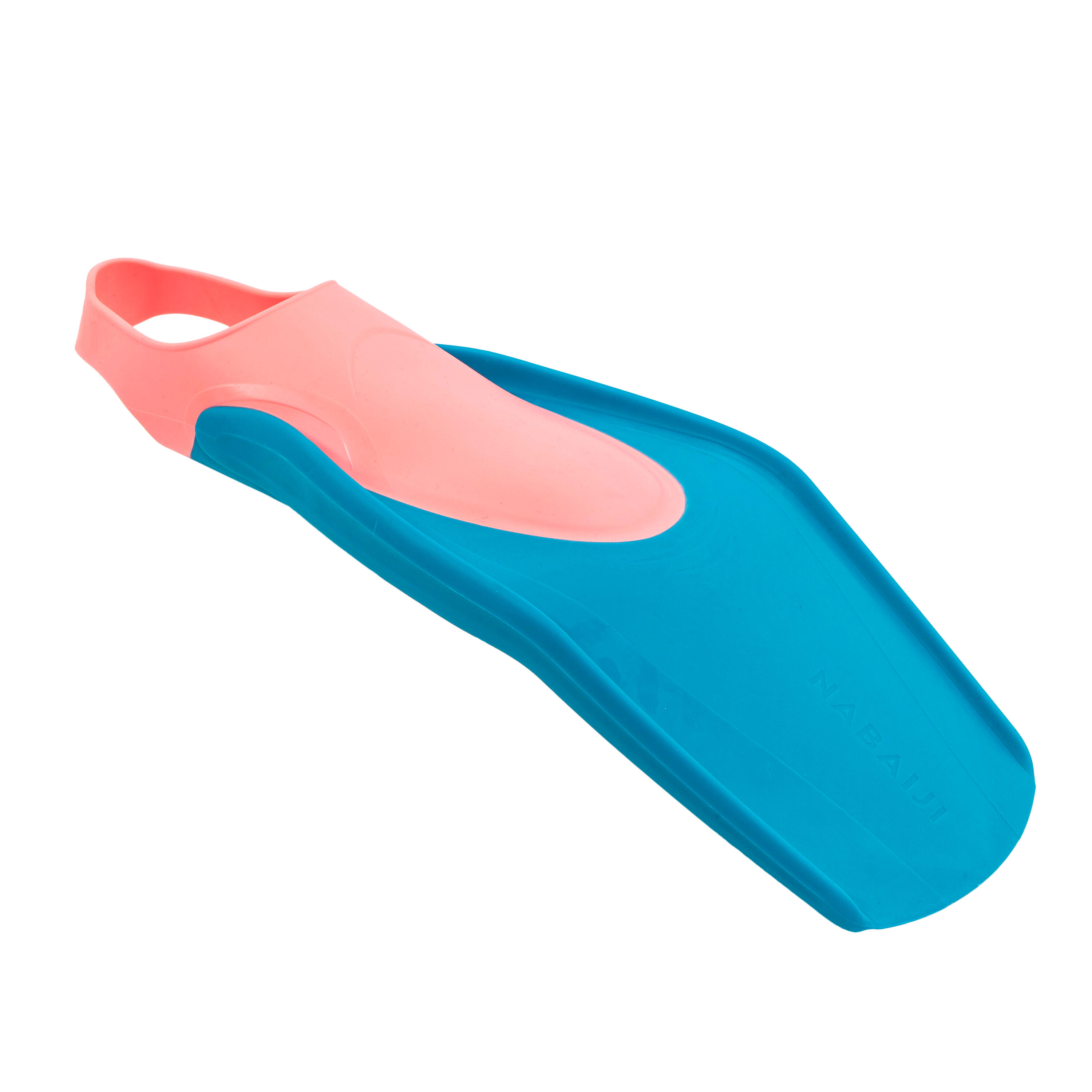
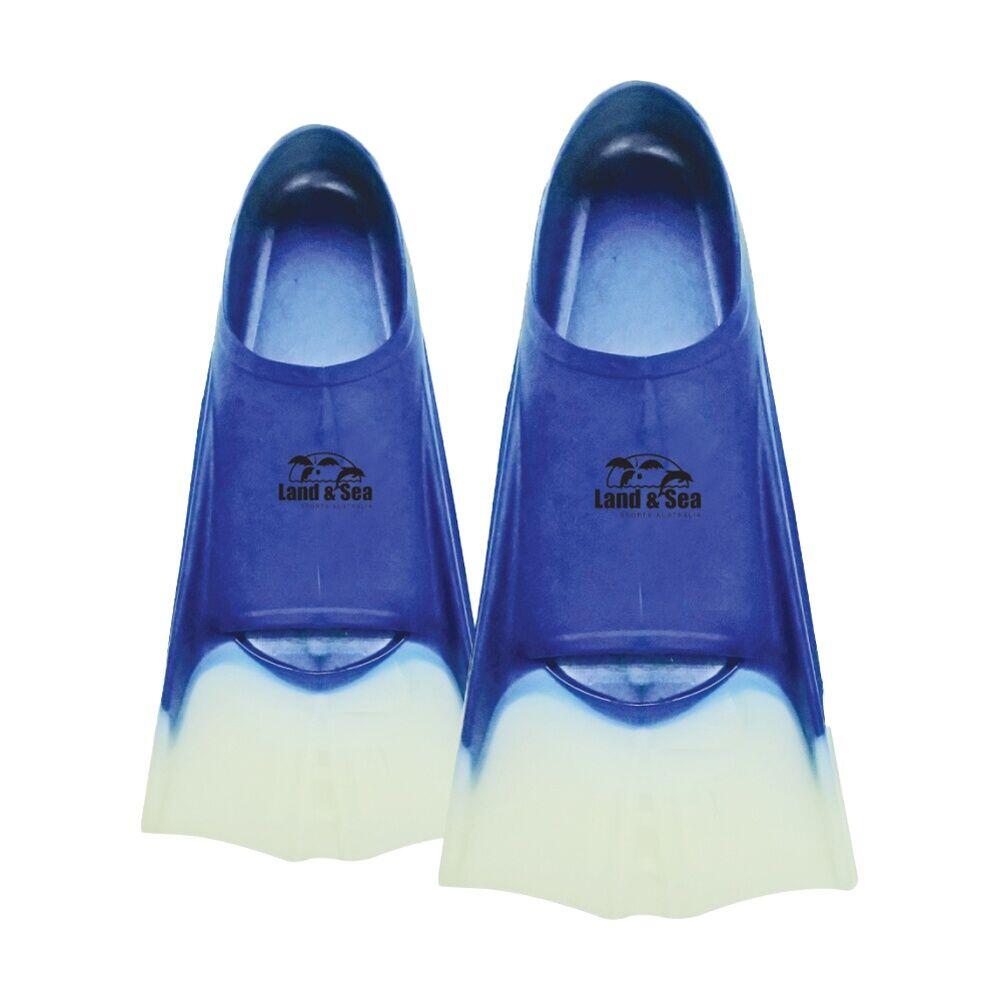
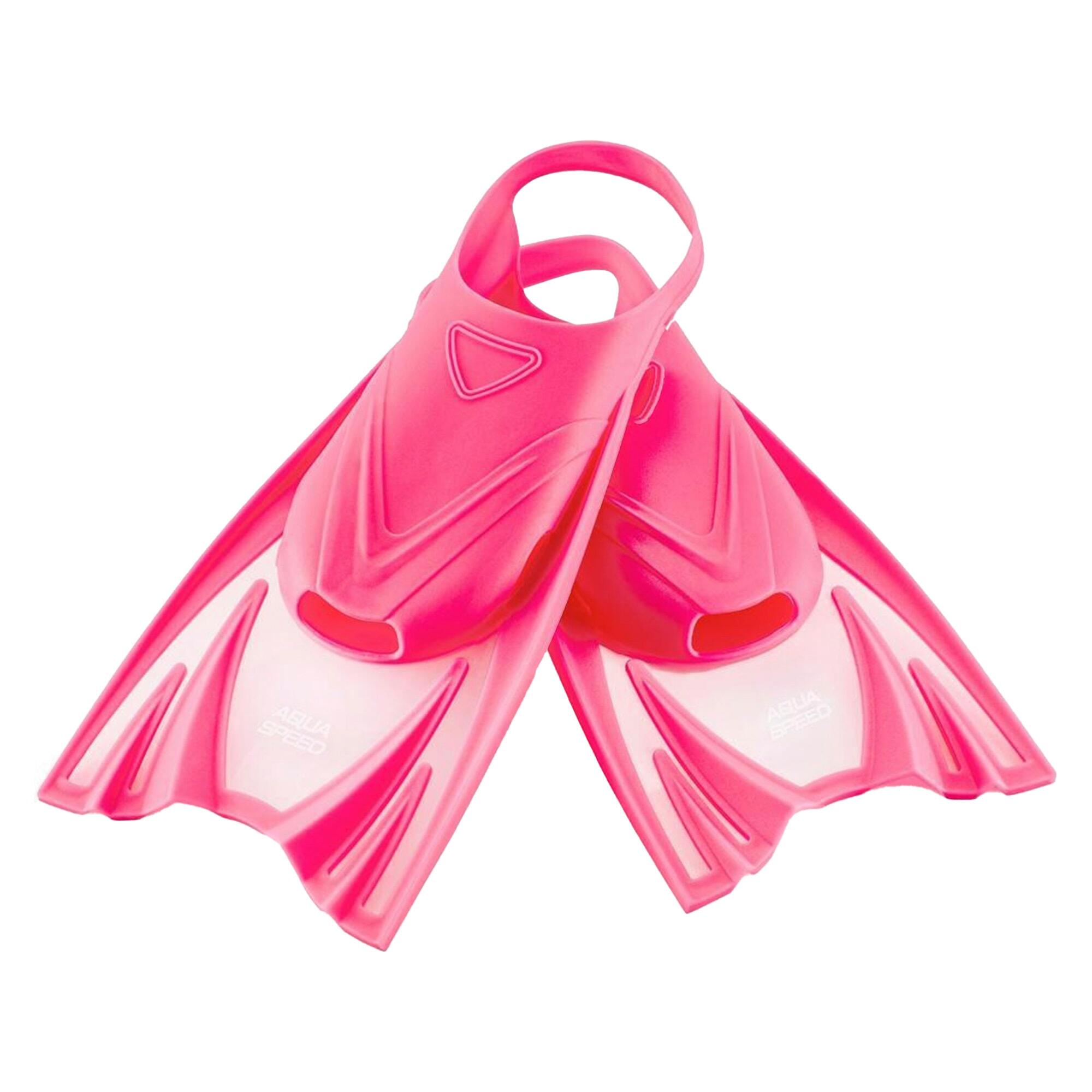
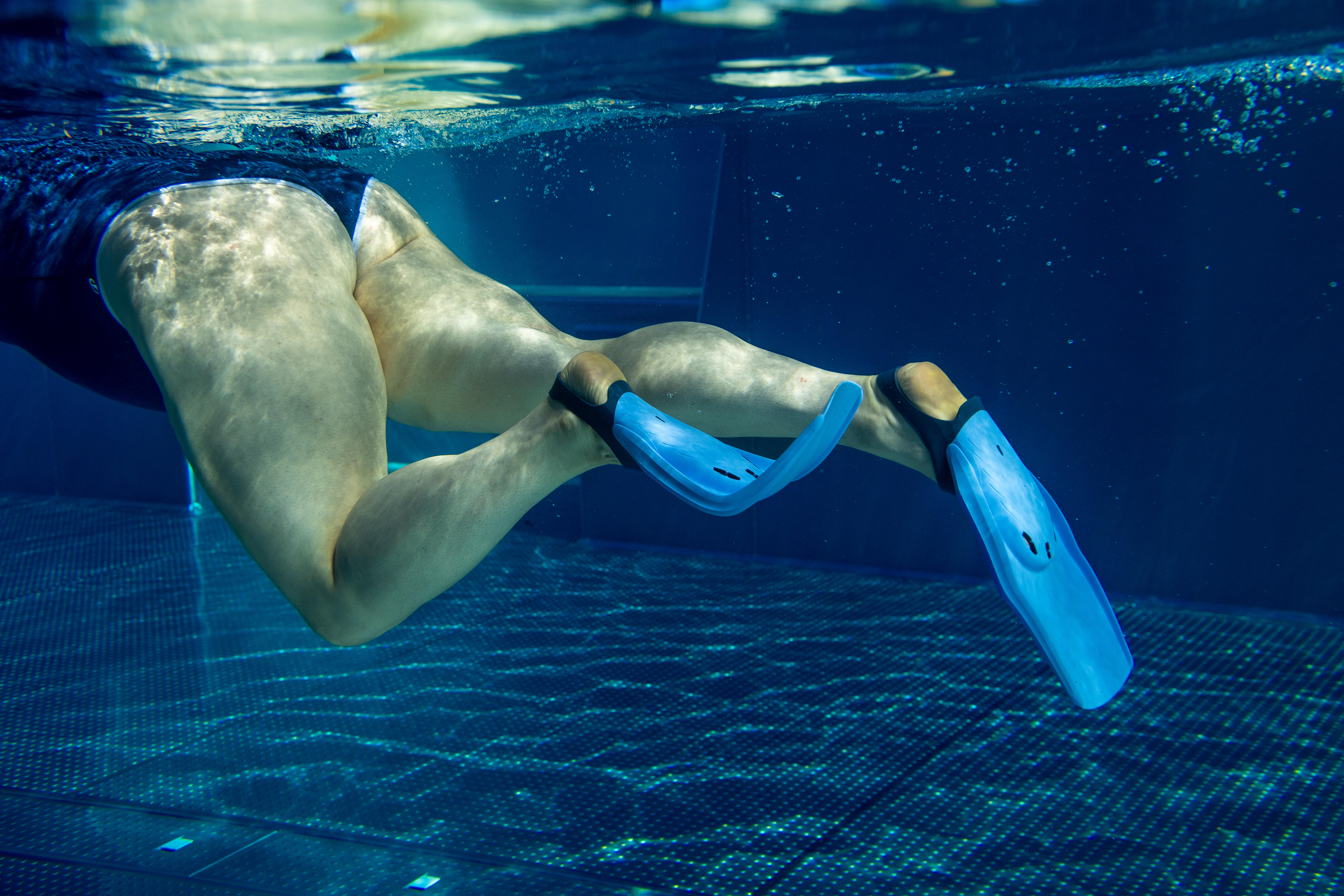
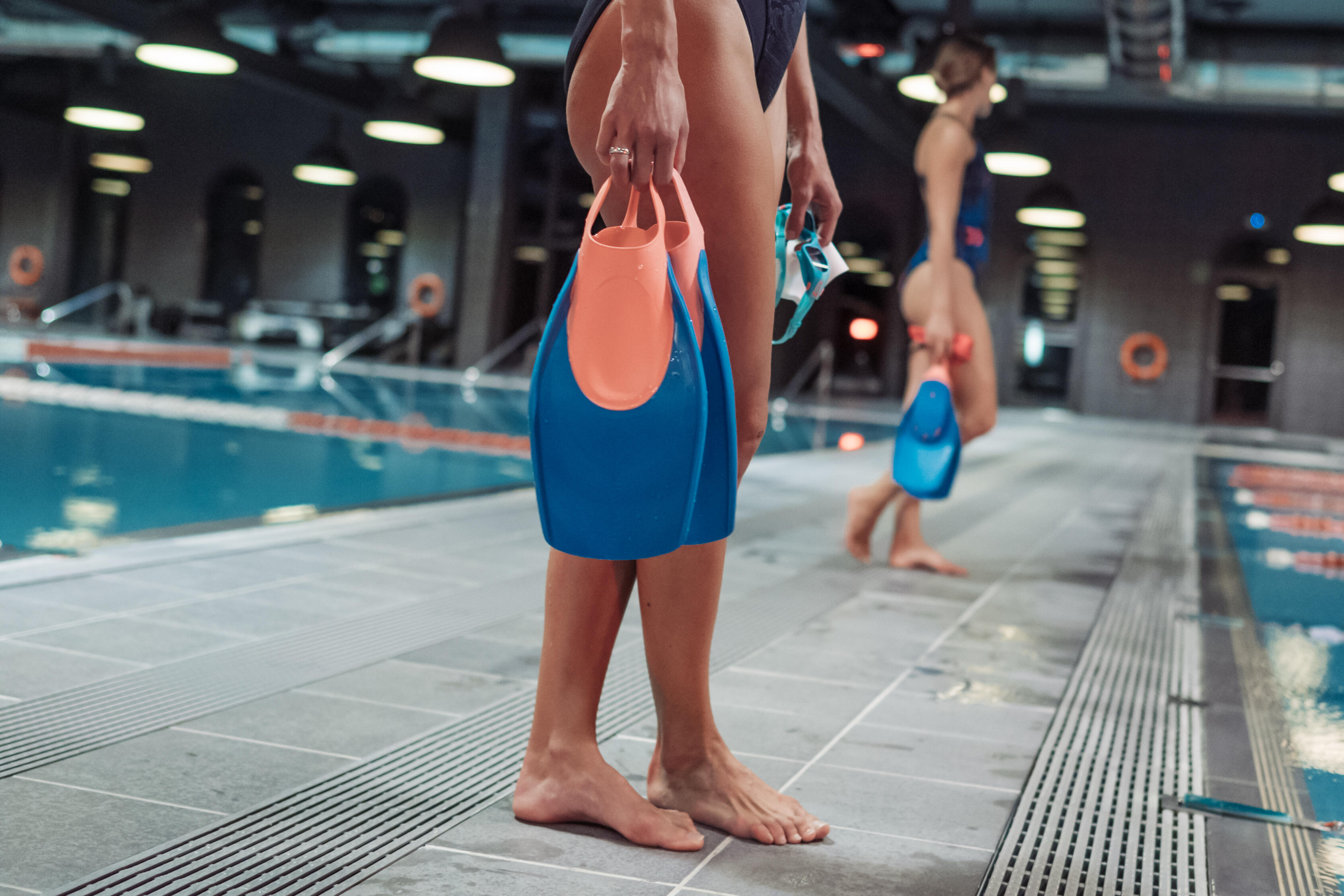
Fins change what your legs can do, and the blade length decides how. We make short blades for pool training, where you want a faster tempo and a workout rather than speed, and longer blades for propulsion when you're snorkelling or covering distance. Rigid fins build the most strength and are the hardest work. Match them to how long you'll actually keep them on.
Snug-fitting fins keep your foot secure and prevent water loss, improving propulsion efficiency. Looser-fitting fins are easier to put on and take off, better for casual swimmers or families. The right fit balances comfort with control so you can focus on swimming, not adjusting your fins constantly.
Blade design
Short, flexible blades are easier to control and better for beginners or casual swimming. Long, stiffer blades provide more propulsion for experienced swimmers or lap training. Choose blade design based on your swimming level and intended use. A responsive blade that matches your experience keeps you engaged instead of exhausted.
Material and durability
Rubber fins are durable and easy to clean, making them practical for regular use. Silicone offers better flexibility and comfort during extended wear but is more expensive. Thermoplastic provides good balance between cost and performance. Quality materials withstand repeated use and chlorine exposure without cracking or losing shape.
Weight and portability
Lighter fins make a difference if you regularly carry them to beaches, pools or travel. Heavy fins become a burden during longer sessions. Consider whether you need fins that fit in a regular bag or if they can be carried separately. Portability matters more for frequent swimmers than occasional pool-goers.
Kids and adults trying fins for the first time. Simple swim fins that help you learn the kicking motion. Easy to put on and take off, suited for splashing around and getting comfortable in the water.
Snorkellers and casual pool players. Comfortable swim fins suited to leisurely snorkelling and water play. Balanced design works across different techniques and holds up to regular rinsing and storage.
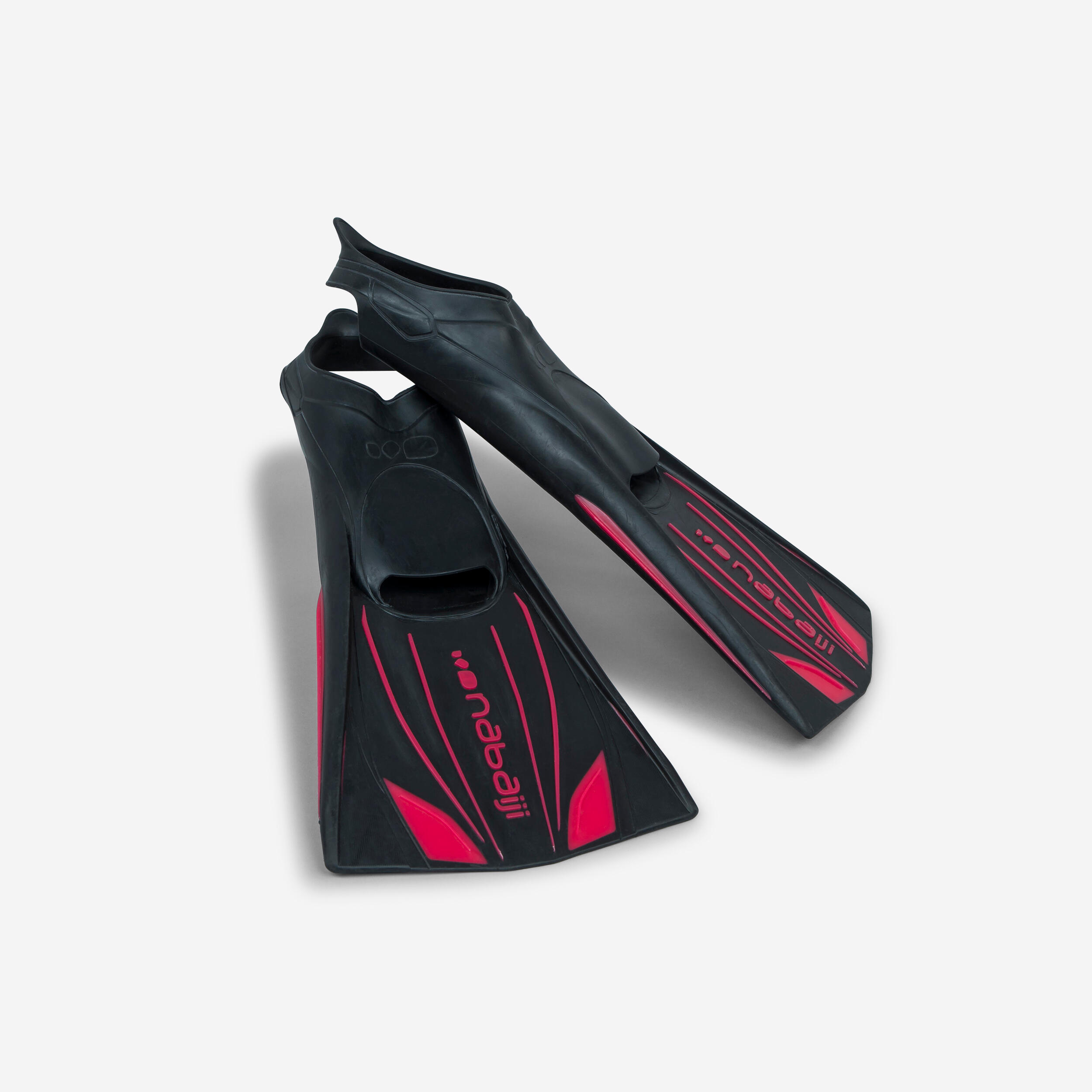
Lap swimmers and fin-kick drill trainers. Performance swim fins engineered for power and speed. Responsive design maximizes propulsion for serious kicking drills, lap training and competitive water activities.
Looking after your swim fins
Thoroughly rinse after every use to remove chlorine, salt and sand, which can accelerate material degradation. Pat dry completely and allow to air dry before storing, as moisture causes odour and material breakdown. Check the blade and straps regularly for cracks or tears. Avoid leaving in direct sunlight for extended periods as UV exposure can harden rubber and silicone materials. Store in a cool, dry place away from heat. If the blade feels less responsive or stiffer than when new, the materials may have hardened.
Swim fins by type
Type
Best for
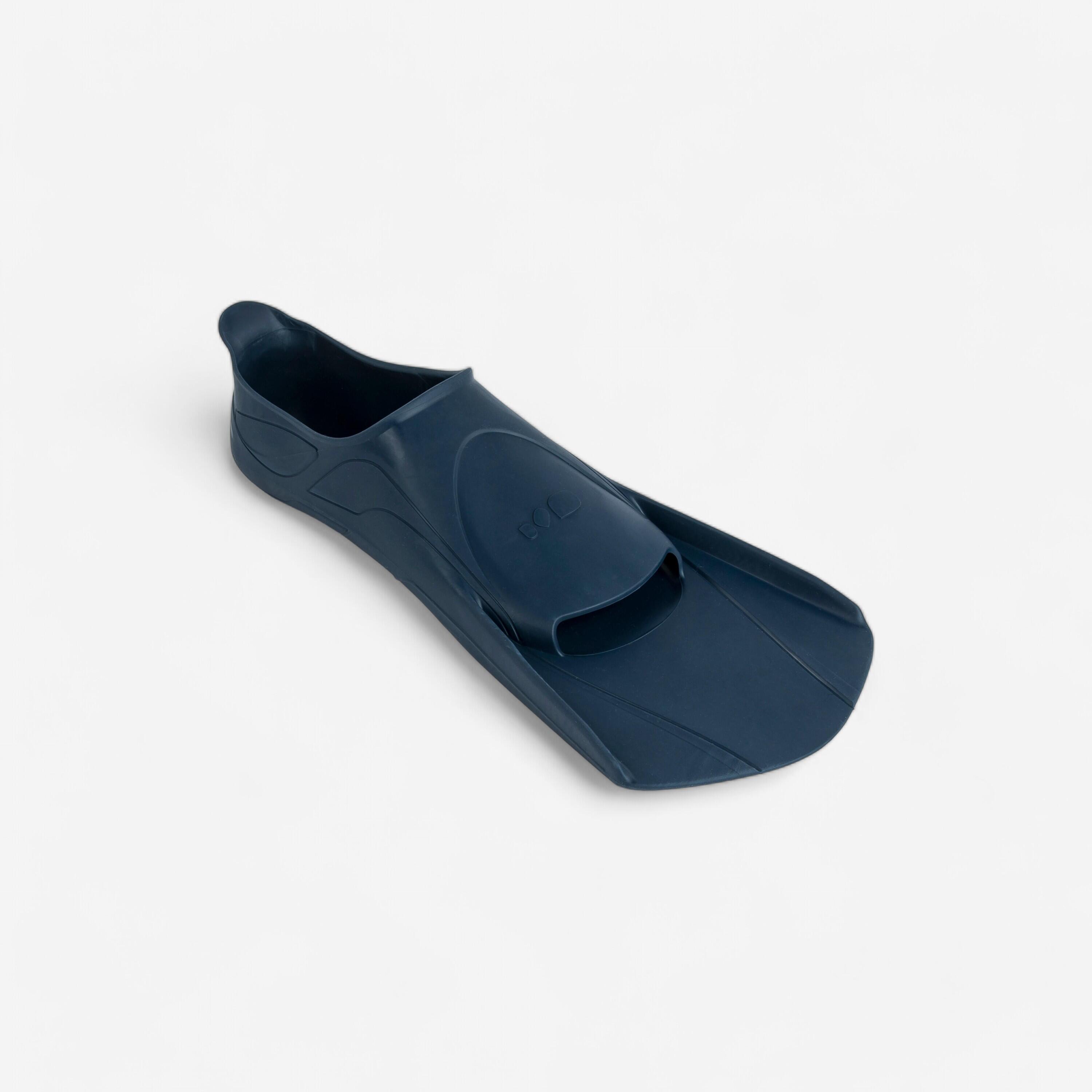
Short Blade Swim Fins
Swim training, technique drills and building leg strength.
Strong propulsion and extended training sessions.
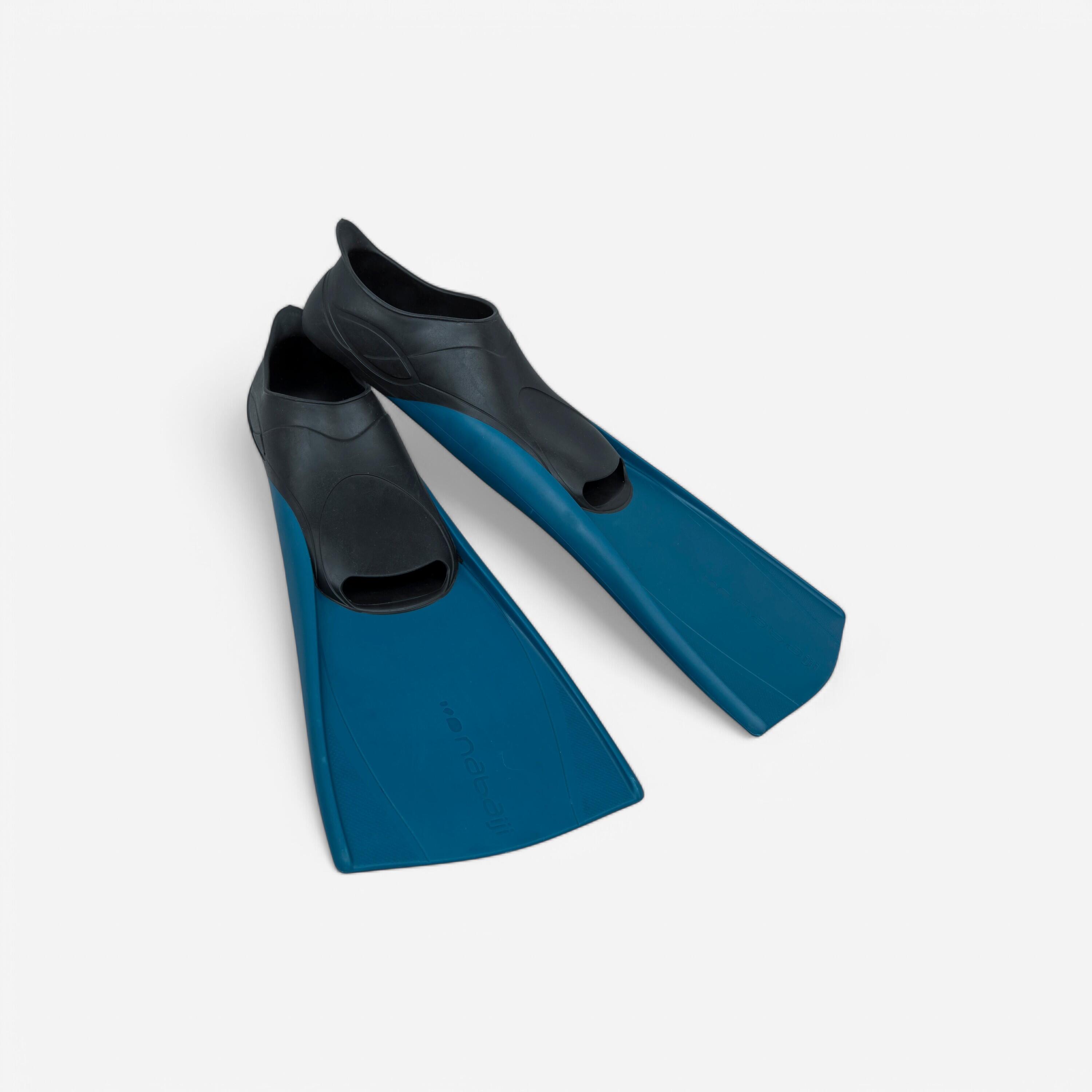
Long Blade Swim Fins
An adjustable fit for snorkelling and recreational swimming.
Open Heel Swim Fins
Comfortable swimming in pools and warm-water conditions.
What's the difference between short and long swim fins?
Short swim fins encourage a faster kick and are ideal for swim training, technique drills and fitness swimming. Long swim fins provide greater propulsion with each kick, making them a better choice for snorkelling, recreational swimming and building leg strength.
How do I know if my swim fins fit properly?
Swim fins should fit snugly without pinching or causing discomfort. A secure fit helps improve control in the water and reduces the chance of fins slipping off during your swim. Always check the sizing guide before choosing your pair.
Do swim fins help improve swimming technique?
Can I use swim fins in the pool and the ocean?
What should I look for when choosing swim fins?
Yes. Swim fins are commonly used to develop kicking technique, improve ankle flexibility and build leg strength. They also help swimmers focus on body position and kick timing during training sessions.
Yes. Swim fins can be used in swimming pools, open water and at the beach, provided they're suitable for the activity. Short fins are generally preferred for pool training, while longer fins are better suited to snorkelling and recreational swimming.
Choose swim fins based on your swimming goals, skill level and preferred activity. Consider the fin length, blade flexibility and a comfortable foot pocket to help you swim efficiently and enjoy longer sessions in the water.
Power And Efficiency Below The Surface
Fins amplify what your legs can do in the water, making them invaluable for building power and exploring different kicking techniques. Beginners often underestimate how fins transform the feeling of movement, while experienced swimmers know that fin work translates directly to improved swimming efficiency. The right fit matters enormously because poorly fitting fins cause fatigue rather than benefit.
 All SportsMenWomenKidsAccessoriesEquipment and LeisureHealth & NutritionBest DealsNew ArrivalsMarketplace
 Hiking & Trekking
 Swimming
 Cycling
 Fitness (Yoga/Pilates)
 Camping
 Running