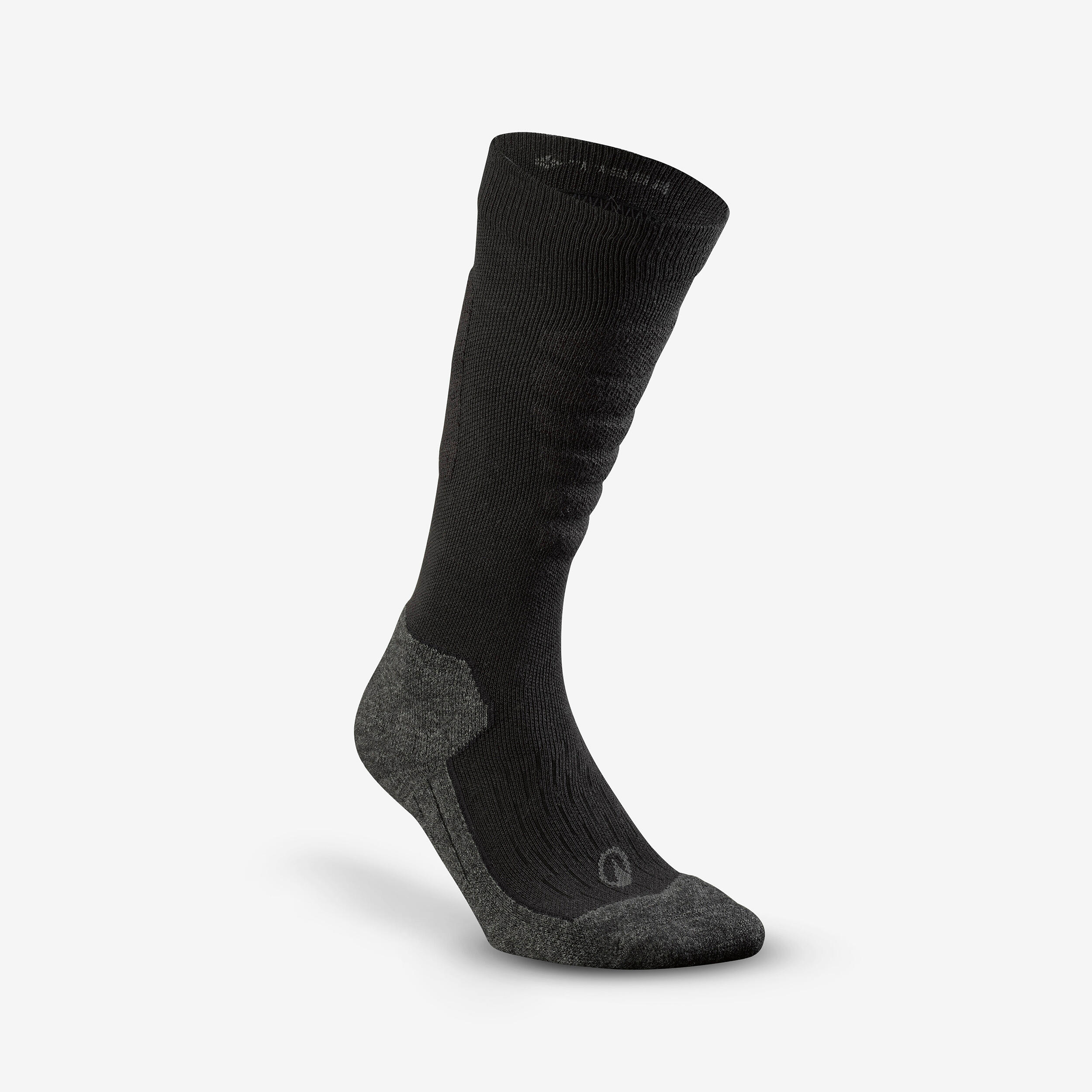
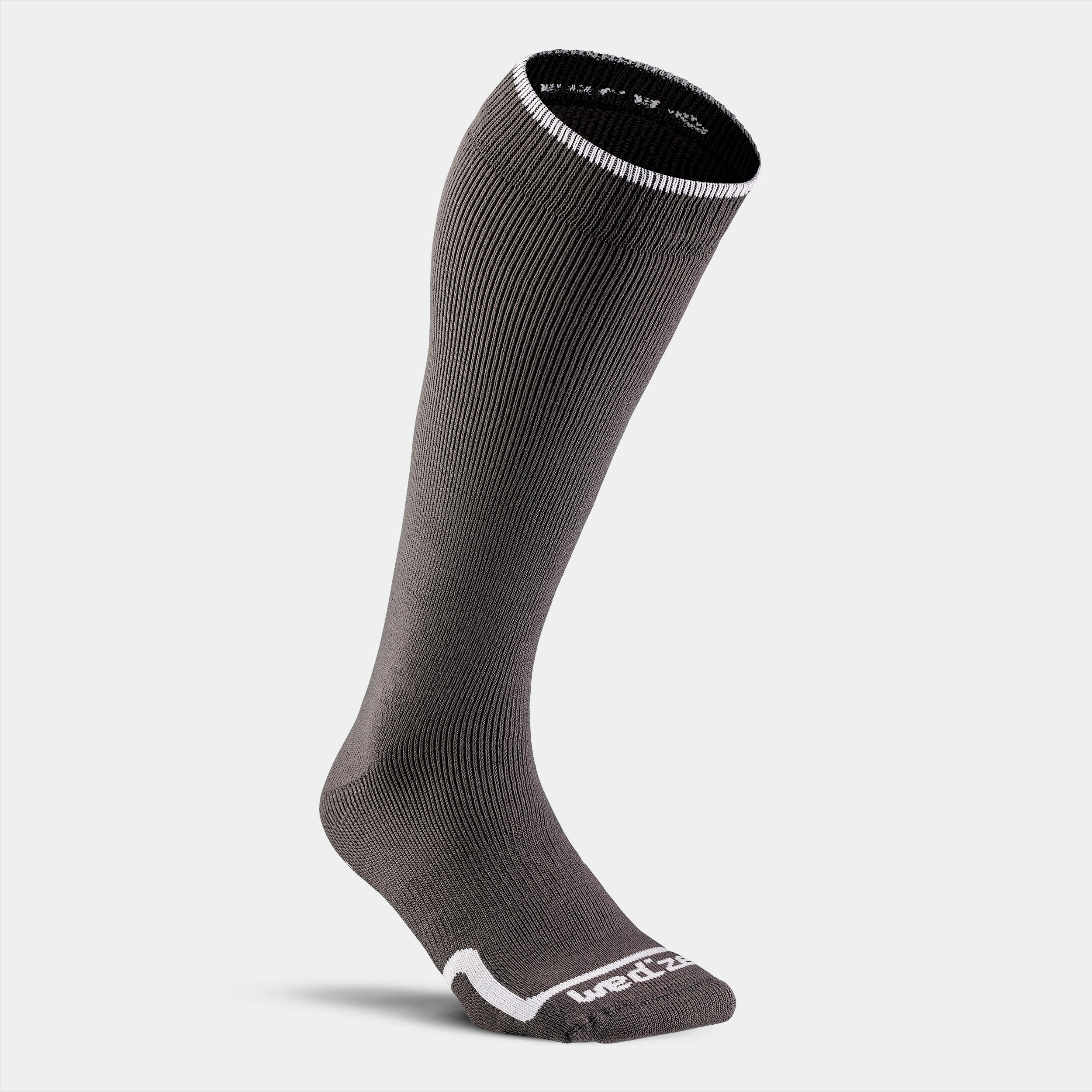
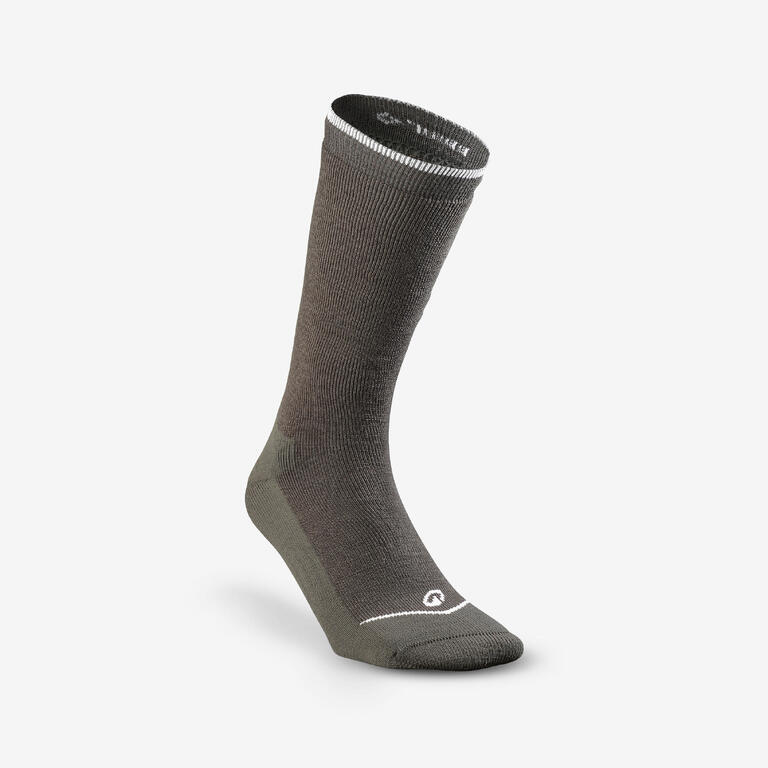
Ski boots can stay on for hours, making the layer between your feet and the boot especially important. Ski socks provide long coverage through the lower leg while sitting comfortably inside your boots as you move around the mountain. They're a simple but essential part of your snow kit from the first lift of the morning to the last run back down.
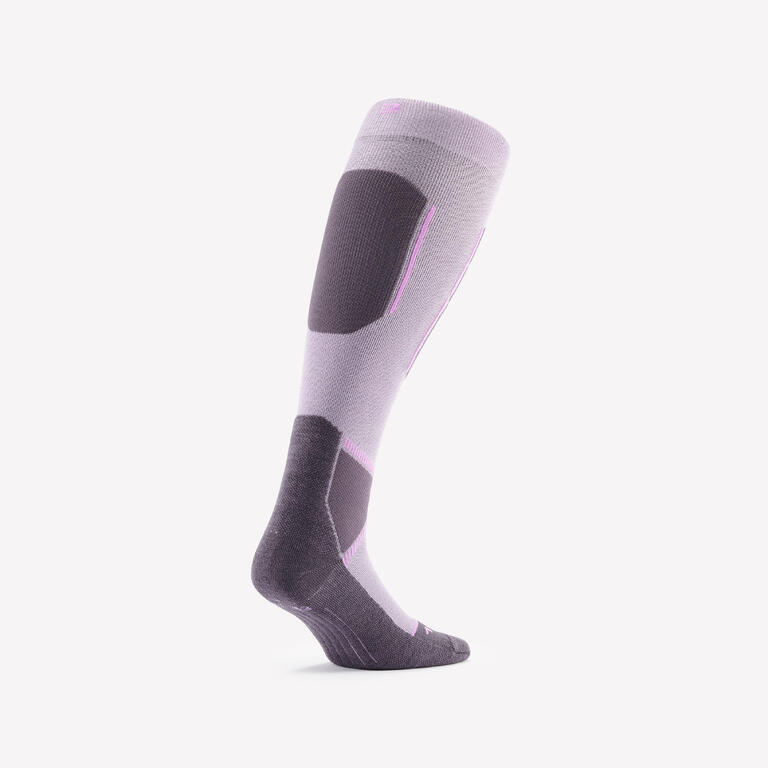
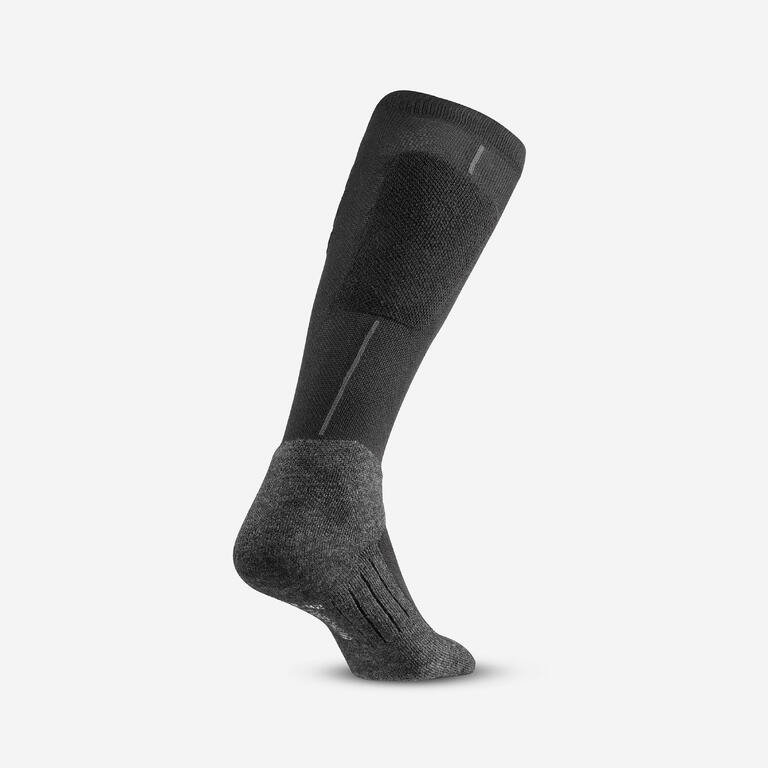
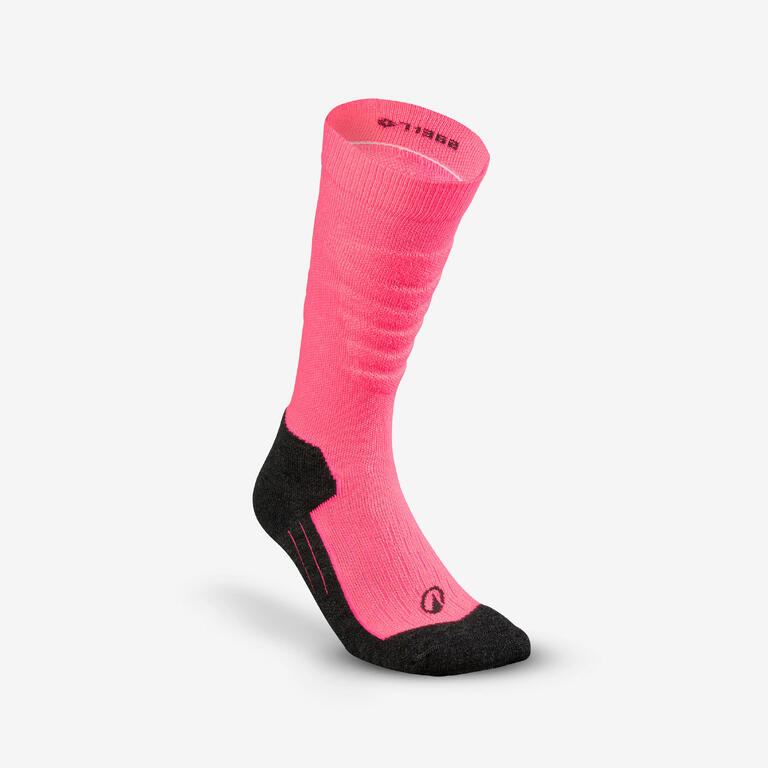
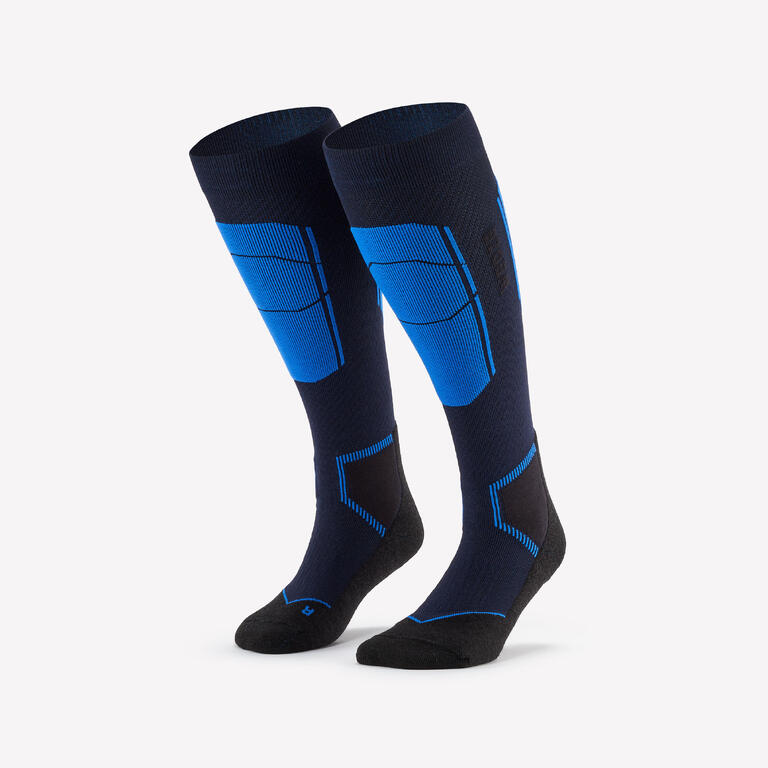
Ski boots can create pressure around the feet and lower legs, particularly over long days on the slopes. Look for targeted cushioning or reinforcement around areas such as the shin, heel and sole if you want extra padding between your foot and boot. The amount of cushioning you need depends on your boot fit and comfort preference, so avoid adding unnecessary bulk where space is already limited.
Warmth
Choose the level of warmth based on the conditions you expect and how long you'll be outside. Warmer, more insulated socks can suit colder days, while lighter options may feel more comfortable in milder weather or if your feet tend to run warm. Remember that extra thickness isn't always the answer, as ski boots need enough room to fit comfortably without compressing your feet.
Fit and Thickness
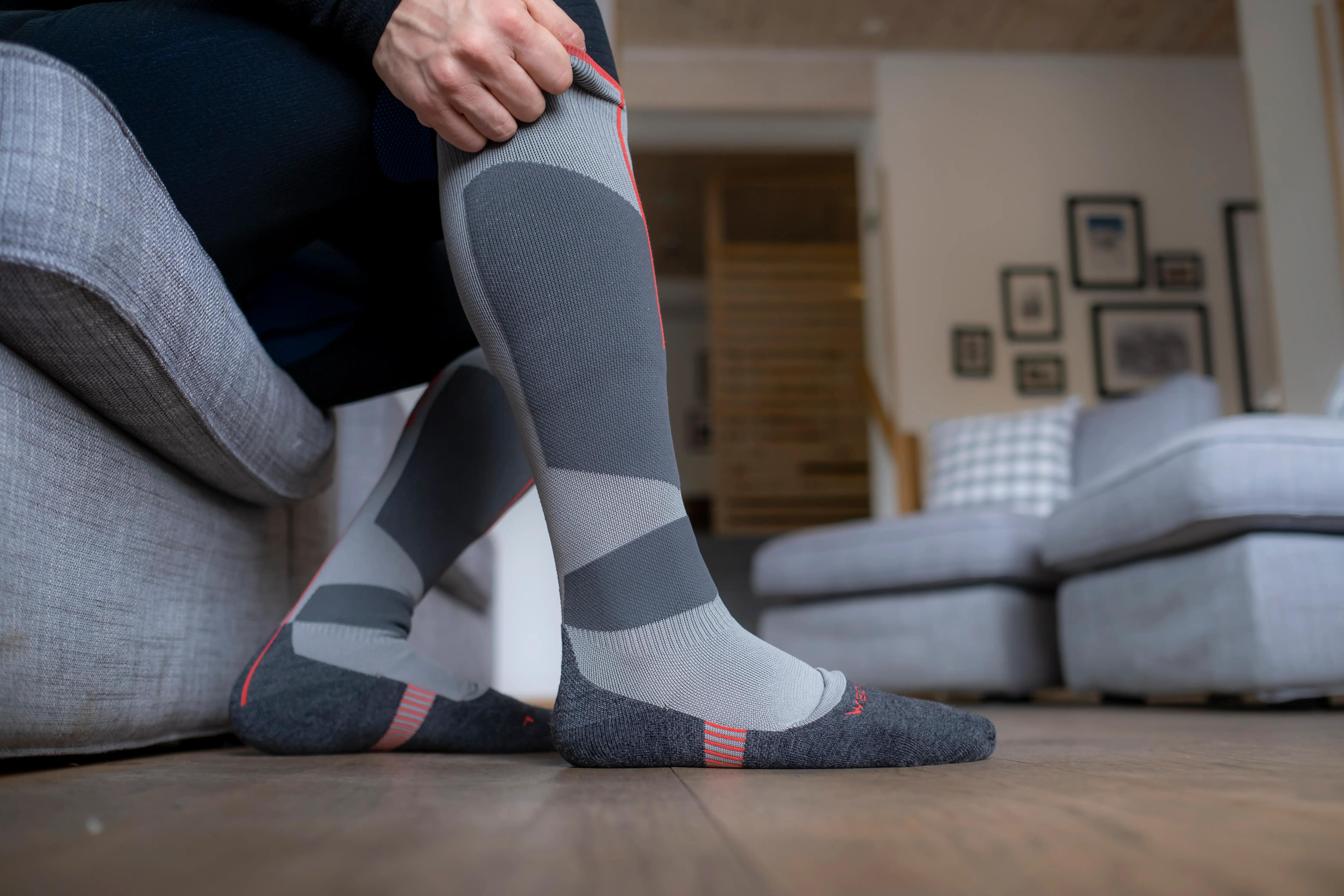
Ski socks should fit closely without bunching, slipping or creating folds inside your boots. Thinner socks take up less space and provide a closer boot fit, while thicker options add more cushioning and insulation but can make snug boots feel cramped. Choose a thickness that works with your ski boots rather than assuming a thicker sock will always keep you more comfortable.
Material
Merino wool is commonly used in ski socks for its warmth and ability to manage moisture, while synthetic fibres can add quick-drying performance and durability. Many ski socks combine different fibres to balance warmth, breathability and comfort over a full day on the mountain. Avoid relying on everyday cotton socks for skiing, as cotton holds moisture and can stay damp once you start sweating.
Casual skiers. You ski occasionally and want socks that stay warm and comfortable for a day on the slopes. A close-fitting pair with balanced warmth and light cushioning covers the essentials without adding unnecessary bulk inside your boots.
Cold-weather skiers. You spend time on the mountain in lower temperatures where keeping your feet warm becomes the priority. Look for insulating materials such as merino wool blends while making sure the socks still fit comfortably inside your ski boots.
Long-day skiers. You spend hours in your boots and need socks that remain comfortable as the day goes on. Targeted cushioning around pressure areas, good moisture management and a secure fit can help minimise discomfort through extended time on the slopes.
How to Care for Ski Socks
Wash ski socks after use according to the care label, paying particular attention to merino wool or technical blends that may require gentler care. Avoid excessive drying heat, which can shrink some fibres or affect the elasticity needed for a close fit inside ski boots. Let the socks dry fully before storing them, and avoid leaving damp pairs compressed inside your boots between days on the slopes.
Ski socks by type
Type
Best for
Midweight ski socks
All-round skiing where warmth, cushioning and boot comfort matter.
Close-fitting boots where minimal bulk and a precise fit are preferred.
Lightweight ski socks
Colder days where warmth and moisture management are priorities.
Merino ski socks
Skiers wanting extra padding around common boot pressure points.
Ski-specific socks sit comfortably inside close-fitting ski boots while providing warmth, moisture management and cushioning in key areas. Everyday socks can bunch or add unnecessary bulk, so a dedicated ski sock becomes more useful when you're spending longer on the slopes.
How thick should ski socks be?
Thicker isn't automatically better. A thicker sock can provide more cushioning and insulation, but too much bulk may make your ski boots feel tight and create uncomfortable pressure. Thinner socks provide a closer fit and can work well with insulated boots, so match the thickness to both the conditions and your boot fit.
Should I wear one or two pairs of socks when skiing?
Are merino wool or synthetic ski socks better?
What size ski socks should I buy?
One well-fitting pair of ski socks is generally the better choice. Wearing two pairs can add bulk, create bunching and make your ski boots feel too tight. If cold feet are a concern, choose a warmer ski sock that still leaves enough room for your boots to fit comfortably.
Both can work well. Merino wool provides natural warmth and temperature regulation, whilst synthetic fibres can offer good moisture management, quick drying and durability. Many ski socks combine fibres to balance warmth, breathability and performance over a full day on the slopes.
Start with your usual shoe size and check the product's size guide. Ski socks should fit closely without bunching, slipping or creating folds inside your boots. Avoid sizing up simply for extra room, as excess fabric can create uncomfortable pressure points once your ski boots are fastened.
Start With Comfort Inside Your Boots
A day on the slopes means hours with your feet enclosed in firm ski boots, making what sits between your skin and the boot especially important. Ski socks provide warmth and comfort without adding unnecessary bulk where space is already limited. Choose a pair that works with your boots and the conditions, then concentrate on the runs ahead.
 All SportsMenWomenKidsAccessoriesEquipment and LeisureHealth & NutritionBest DealsNew ArrivalsMarketplace

 Hiking & Trekking
 Swimming
 Cycling
 Fitness (Yoga/Pilates)
 Camping
 Running
