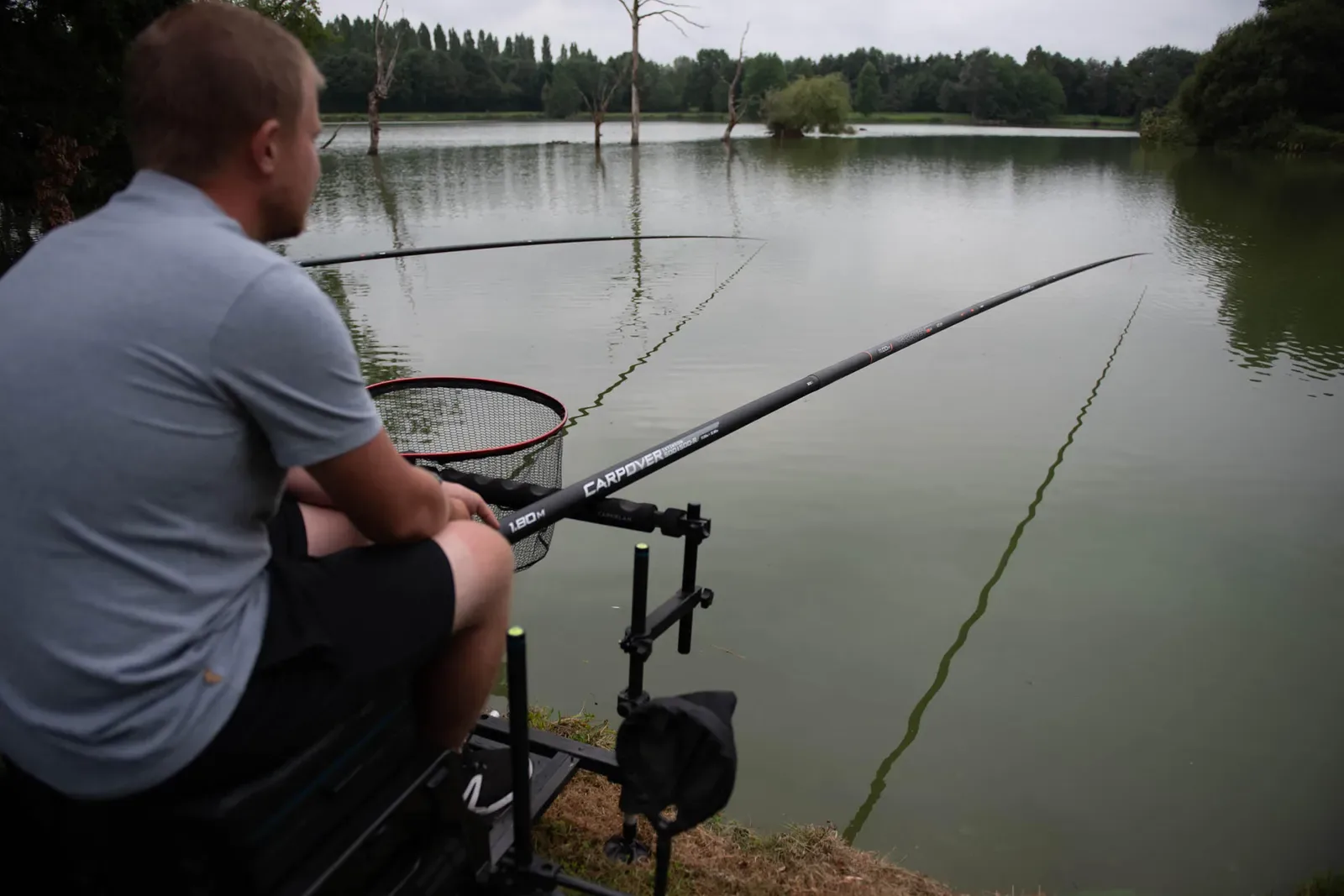
Chasing the fish with the net
Swiping at a fish often knocks the hook free. Keep the net still and low in the water and lead the fish in head first.
A good landing net turns the last few seconds of a fight into a calm, clean finish. Here is how we pick one by hoop size, mesh and handle length, and how to use it kindly.
The net styles we stock, plus two things that help at the water's edge.
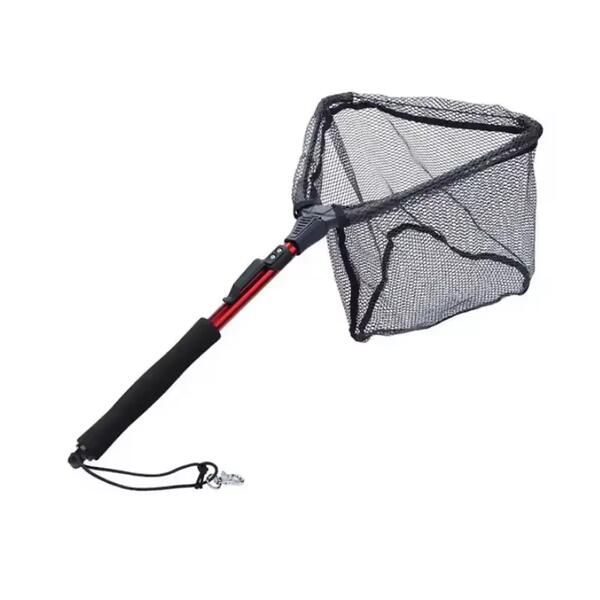
Includes a telescopic net for reaching down from banks.
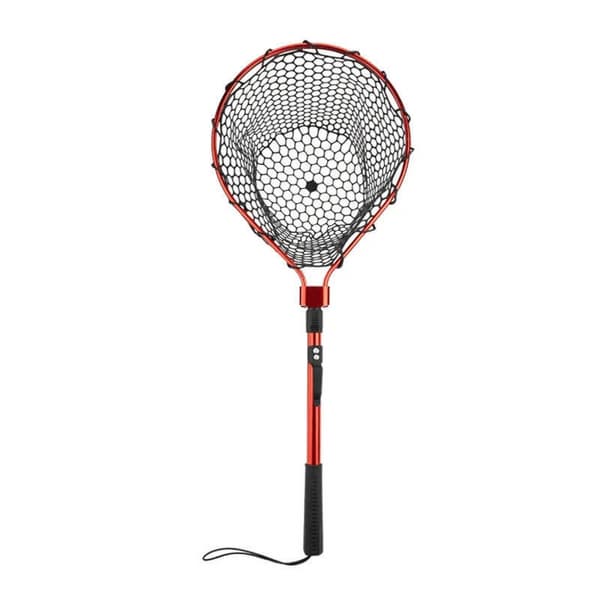
Includes a rubber mesh net that resists hook tangles.
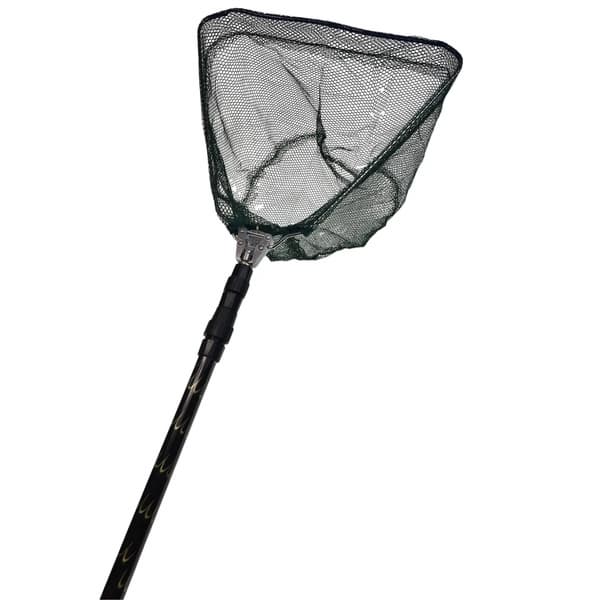
Includes a foldable net on an extendable pole.
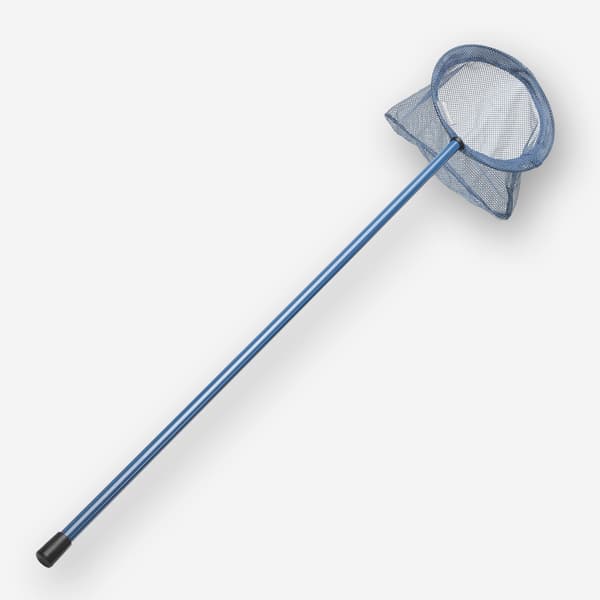
Includes light nets for young children at the shore.
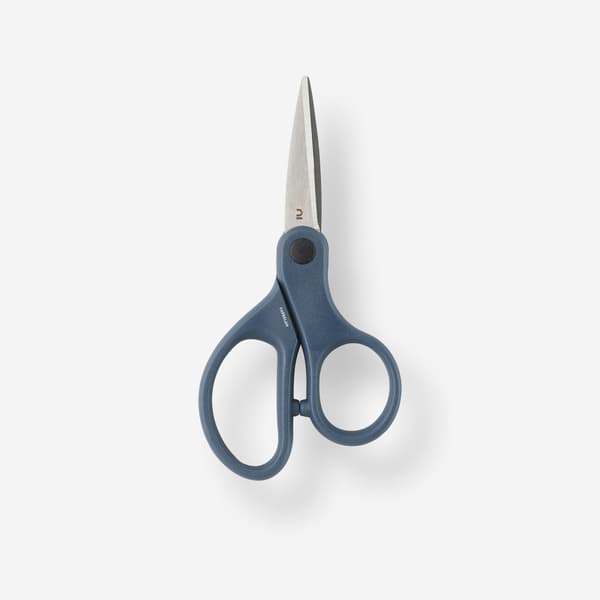
Includes pliers and scissors for a quick, tidy release.
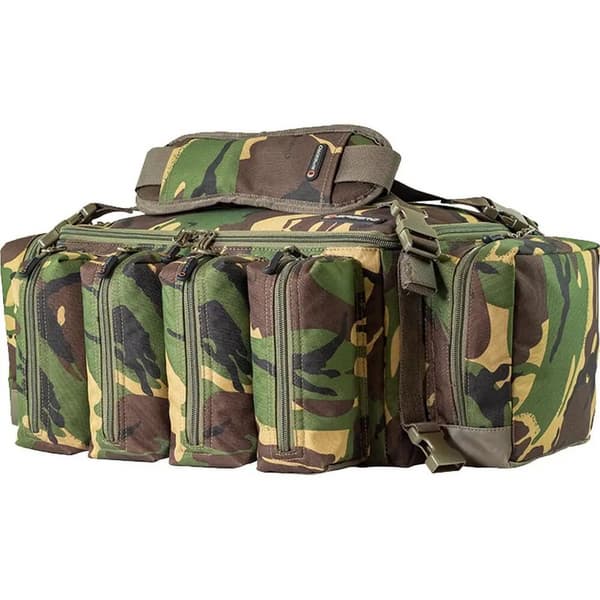
Tackle bags and cases that keep your gear together.
Match the hoop to the biggest fish you expect, not the average one. A small hoop is easy to carry but makes it hard to guide a lively fish in. If you fish for a mix of species, lean towards the bigger size.
Rubber or rubber-coated mesh is generally gentler on a fish's slime coat and far less likely to snag treble hooks. Knotted nylon is lighter and cheaper but tangles more. If you release most of your catch, rubber is worth it.
Think about how far you stand above the water. Kayaks and low banks suit a short handle, while jetties, rock ledges and high banks need a long or telescopic one. A telescopic handle covers both if you fish in different places.
Salt is hard on metal joints and locking collars. Look for aluminium or other corrosion-resistant frames and simple locks you can rinse clean. A net that floats is a bonus if you fish from a boat or kayak.
Swiping at a fish often knocks the hook free. Keep the net still and low in the water and lead the fish in head first.
A heavy fish can bend a handle or snap a joint. Once the fish is in, slide your hand up to the frame and lift with both hands.
Fish tire quickly out of water. Have your pliers ready, keep the net in the water while you unhook, and release promptly.
| Net type | Best for | Tip |
|---|---|---|
| Telescopic handle | Jetties, rock ledges and high banks | Extend it before you hook up, not mid-fight |
| Rubber mesh | Catch and release, lures with trebles | Gentler on fish and quick to clear of hooks |
| Folding pole | Walking in, travel and small cars | Check the head locks firmly before each trip |
| Kids' dip net | Rock pools and shallow shorelines | Light and small, made for young hands |
| Knotted nylon mesh | Occasional use on a budget | Expect more tangles with treble hooks |
| Crab scoop net | Scooping crabs in the shallows | Check local rules on crabbing gear first |
Choose the hoop for the largest fish you realistically expect to catch. A small net is fine for bream, whiting and other pan-sized fish, but a flathead, snapper or bass needs a wider, deeper bag so it can be guided in head first. If you are unsure, go a size up, because a net that is too small costs more fish than one that is too big.
For most anglers who release fish, yes. Rubber or rubber-coated mesh is generally kinder to a fish's protective slime and scales, and hooks pull out of it far more easily than from knotted nylon. Nylon is lighter and usually cheaper, so it can suit occasional use where you keep your catch.
It depends on how far you stand above the water. Wading, kayaking and low banks suit a short handle, while jetties, breakwalls and high riverbanks need a long or telescopic handle to reach the fish without leaning out. A telescopic handle is the most flexible choice if you fish a mix of spots.
Tire the fish out first, then put the net in the water and keep it still. Lead the fish over the hoop head first and lift the frame smoothly once it is inside. Avoid stabbing at the fish from behind, as a startled fish often shakes the hook just as it touches the mesh.
A net makes release easier on the fish because you can unhook it while it stays in the water, rather than swinging it up onto rocks or a deck. Wet your hands before touching a fish, keep handling brief and release it promptly. Size and bag limits apply to the fish you keep, so check the current rules with your state fisheries authority before you go.
A net that suits your spot makes every landing calmer for you and the fish. Browse our fishing range to finish your kit.
Free delivery on orders over $150. Members get our lifetime warranty.