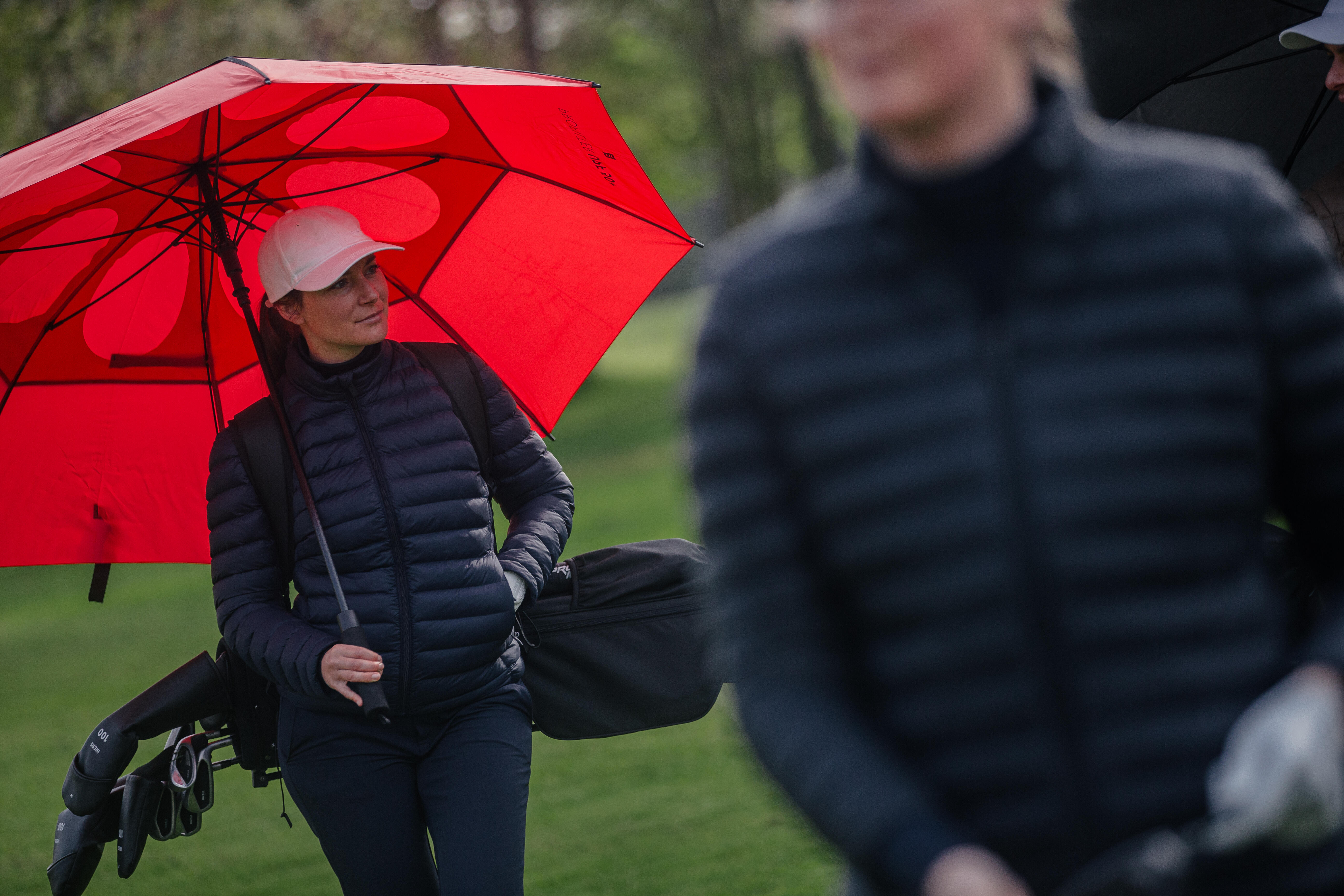
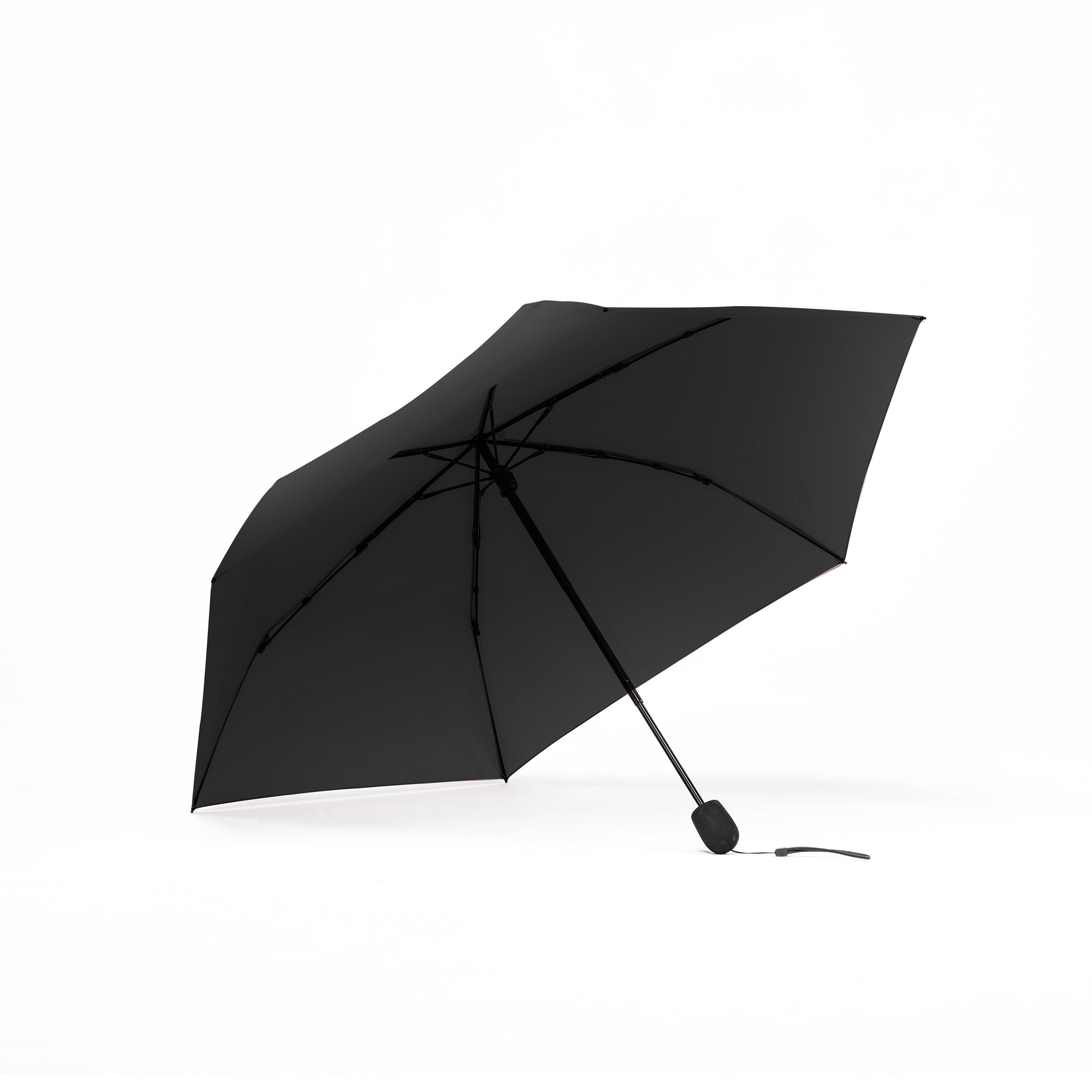
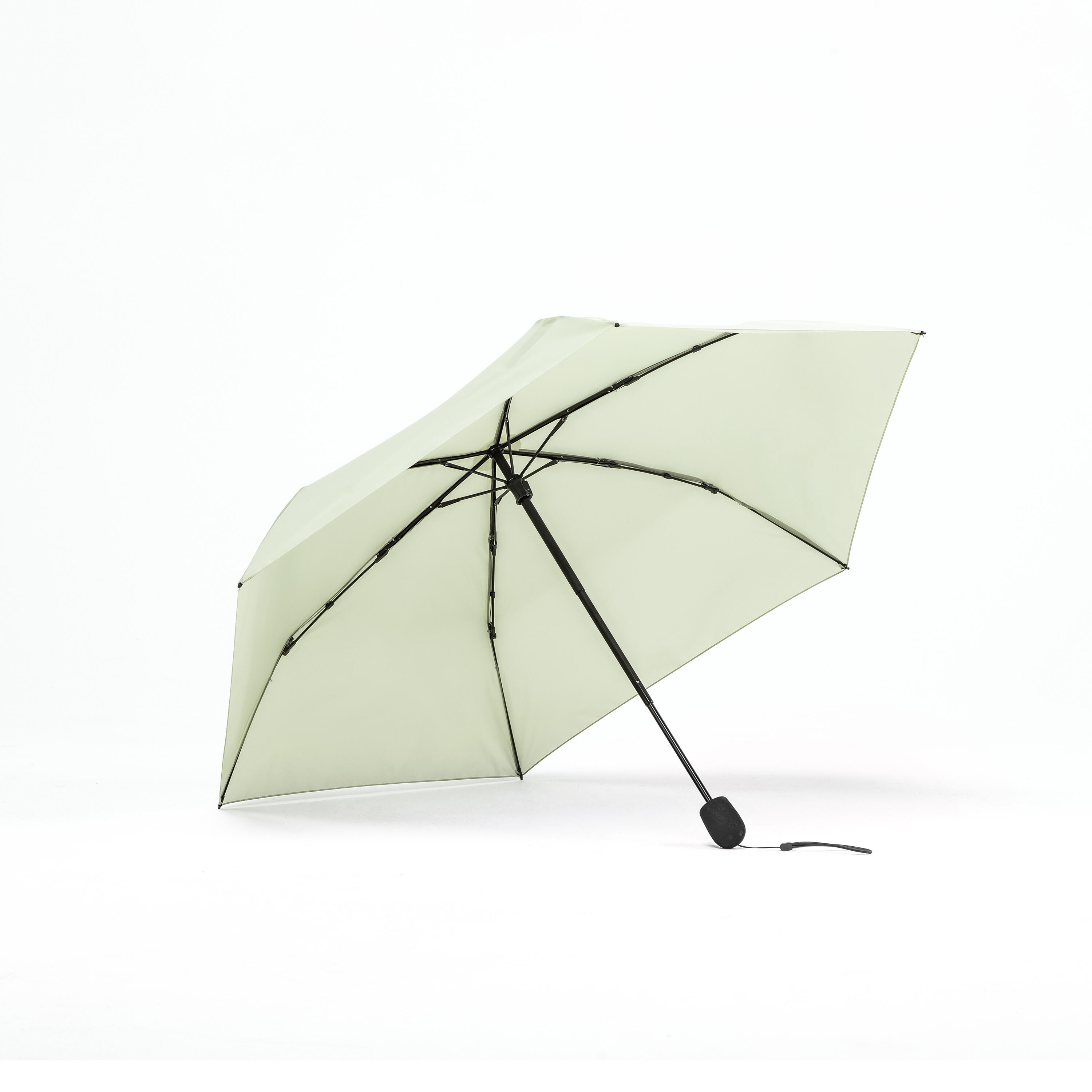
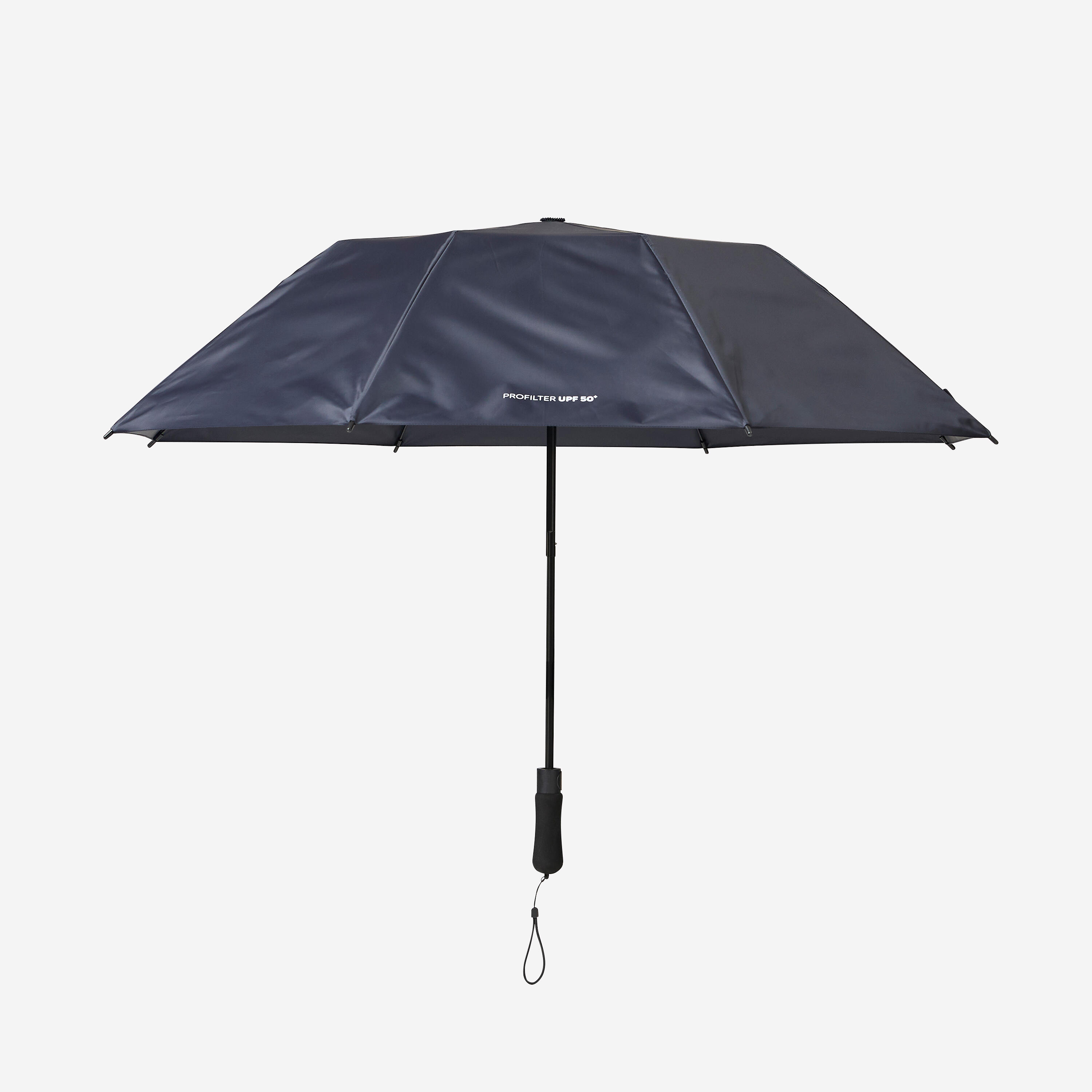
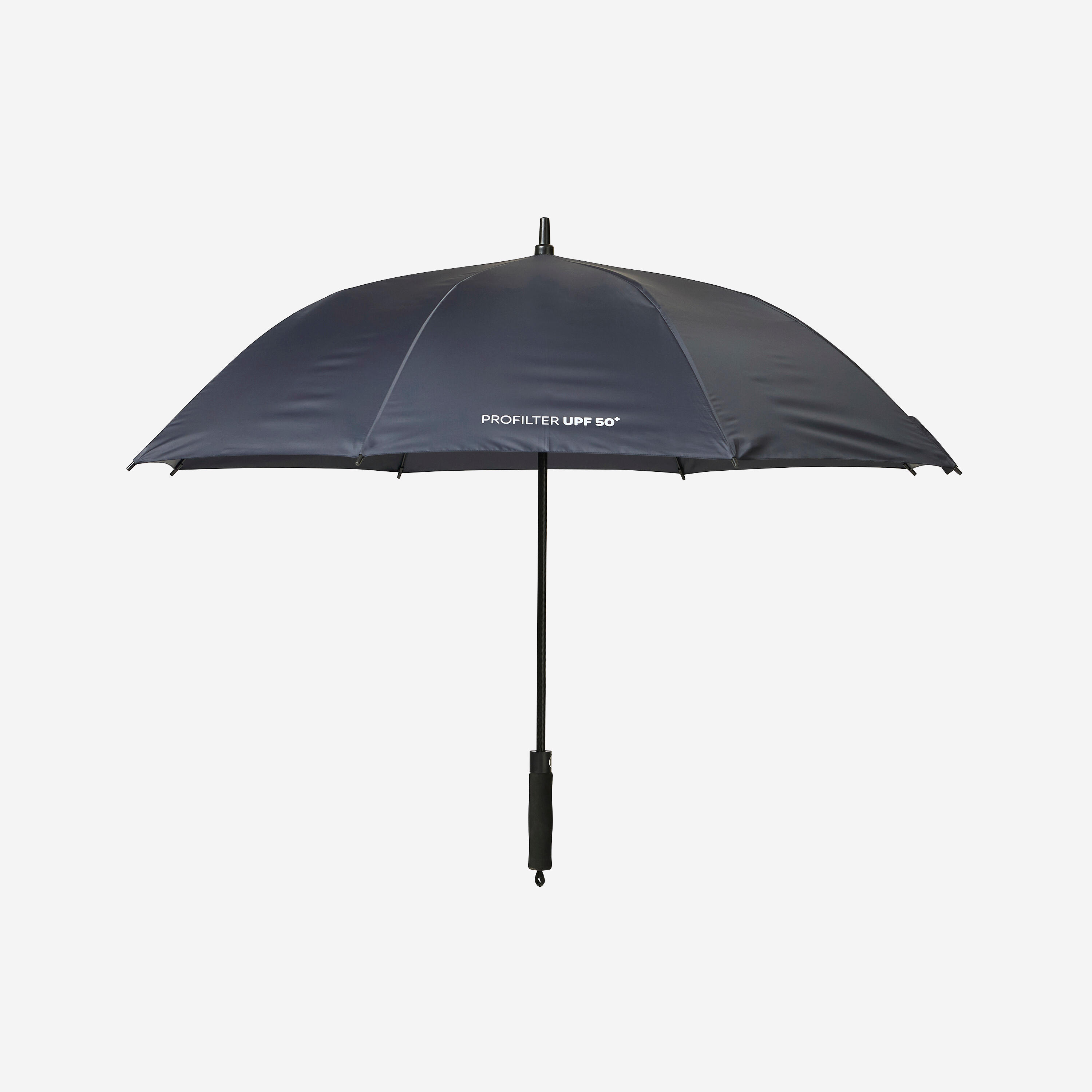
Conditions change fast, and an umbrella earns its place in the bag on bright days as well as wet ones. We filter UPF50+ across the range, blocking 99 per cent of UVB and 93 per cent of UVA, and we wind tunnel test at 50km/h so the frame survives being turned inside out. Our 170cm model runs a double canopy for genuinely windy rounds. Our 100cm micro weighs 160 grams.
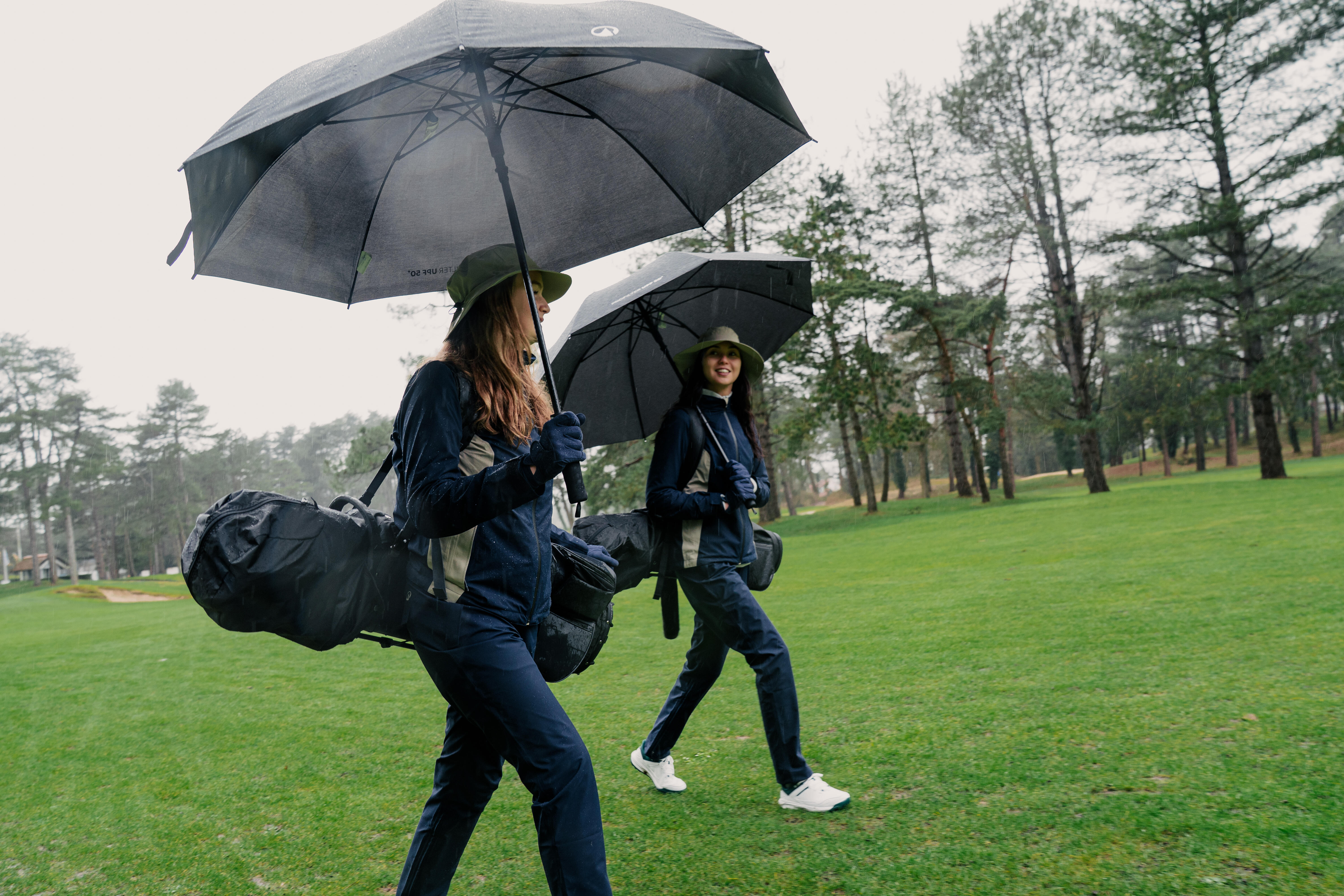
The diameter of the canopy determines how much protection you get from rain and sun. A larger umbrella can cover both you and your golf bag, helping keep your equipment dry as you move around the course. If you usually play in wet conditions, a larger canopy is worth the extra size to carry.
Material
Material affects durability, weight and how the umbrella performs over time. Polyester is consistent, easy to clean and the most widely available. Nylon is lighter and handles water well but wears faster under heavy use. If durability in wet conditions matters most, look for a pongee or reinforced polyester canopy.
Portability
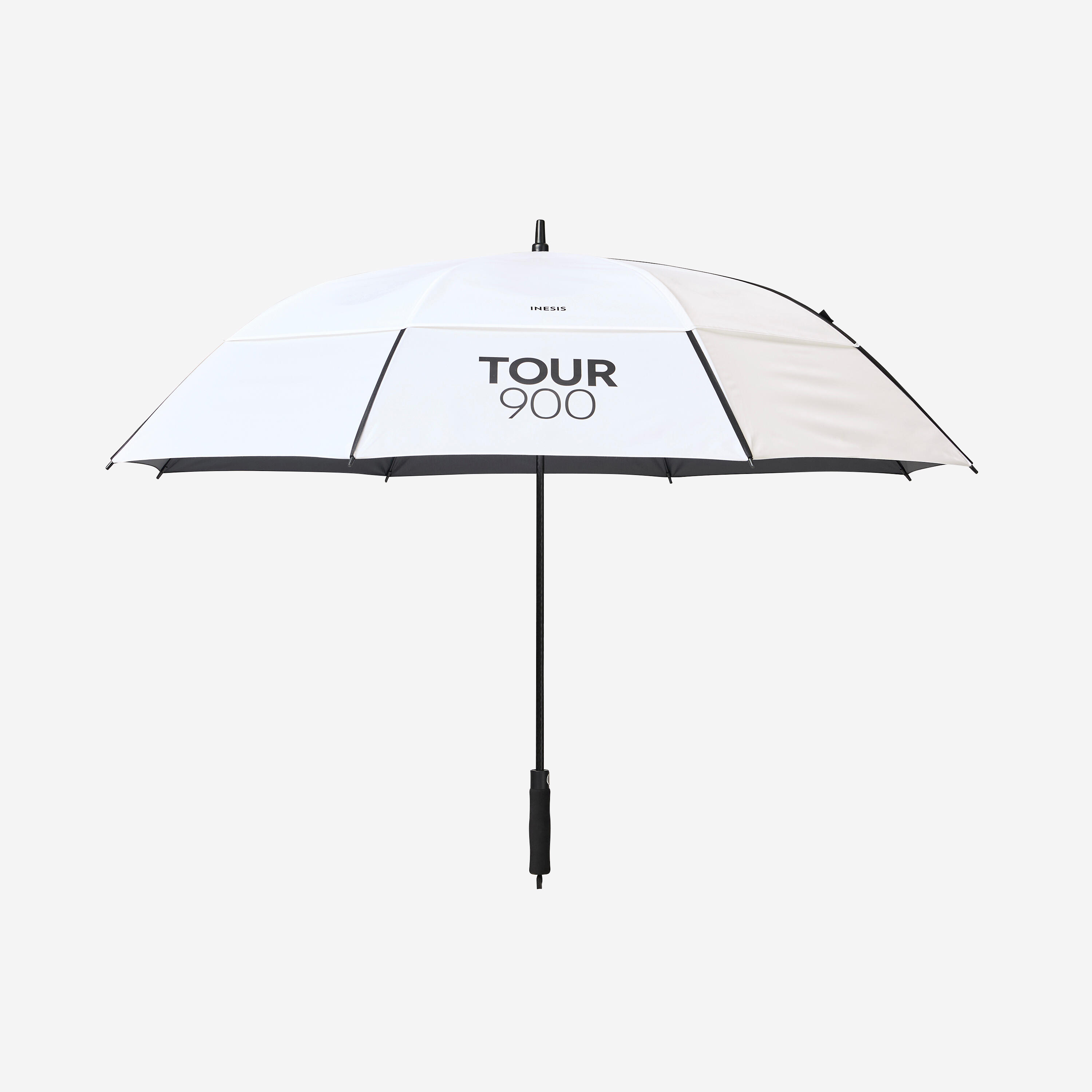
A double-canopy design lets wind pass through the vent instead of pushing against the fabric, which helps stop the umbrella from flipping inside out. Standard single-canopy umbrellas are lighter but more likely to struggle in gusty conditions. If you regularly play exposed courses, wind resistance is worth prioritising over size alone.
UV Protection
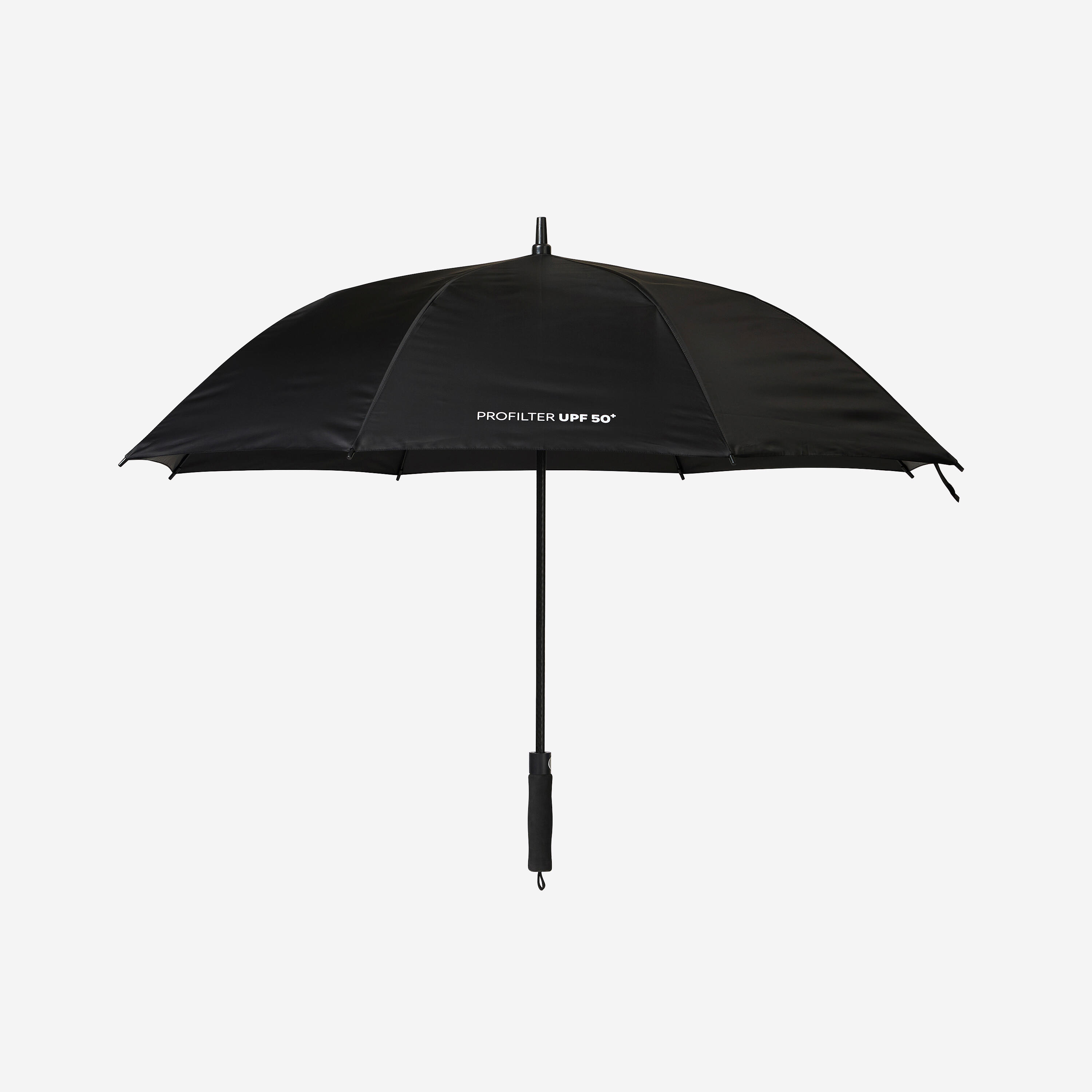
Not every golf umbrella filters UV rays, so it's worth checking rather than assuming. A UPF50+ rating helps protect you during long rounds in strong sunshine, not just on rainy days. If you play year-round or spend plenty of time on exposed courses, it's worth prioritising UV protection alongside reliable rain coverage.
Light rain players. An umbrella that keeps you dry between shots without fuss. Basic protection that doesn't need replacing after one season.
All-year rounders. A wider canopy shields you properly, and a reinforced frame handles Australian wind without inverting. Reliability through the seasons means one umbrella actually lasts.
Frequent wet-weather players. When heavy rain and wild wind are regular, a premium umbrella stays stable and performs when it matters most. Protection that doesn't fail mid-round.
Maintaining Your Golf Umbrella
Open fully after use and let dry completely before closing or storing. Moisture trapped inside causes mould and weakens the fabric. Check the canopy for small tears and patch them early before they spread. Keep the shaft and handle clean by wiping occasionally. Store open or loosely in a garage so air circulates. Test the opening and closing mechanism every season to make sure it works smoothly. A quality umbrella lasts years if you don't let moisture sit inside.
Golf umbrellas by type
Type
Best for
Compact umbrellas (54-58 inches)
Light rain coverage, easy to carry and store without bulk.
Most golfers, covering you and your bag without excessive weight.
Standard umbrellas (60-64 inches)
Heavy rain or two players sharing coverage, maximum protection.
Large umbrellas (66+ inches)
Windy conditions, staying stable without turning inside out.
What's different about a golf umbrella compared to a regular one?
Size and handling. Our golf canopies run from 100cm up to 170cm across, wide enough to cover you and the bag rather than just your head, with a straight shaft you can hold in one hand while you walk. We also wind tunnel test at 50km/h, because a frame that inverts on the fourth hole is no use for the other fourteen.
Are golf umbrellas windproof?
Golf courses are open and exposed, so wind is the biggest test for any umbrella. Most golf umbrellas use a double-canopy design with vents that let gusts pass through instead of flipping the umbrella inside out, plus a fibreglass frame that flexes rather than snapping. No umbrella is fully stormproof, but a vented golf umbrella handles wind far better than a standard one.
What size golf umbrella do I need?
Do I need separate umbrellas for rain and sun?
How do I maintain my golf umbrella so it lasts?
Golf umbrellas run large, typically a 62 to 68 inch canopy, so they cover you and your bag, or two players walking together. Bigger gives more coverage but adds weight and bulk in your bag. For solo use, the mid-range sizes are the easy default.
Not necessarily. A larger umbrella with UV protection works for both. However, some golfers prefer a lightweight compact one for sun and a sturdier one for rain. In Australian conditions with quick weather changes, one dual-purpose umbrella kept handy through your round makes sense.
Air dry it fully after use before storing. Never leave it wet in your bag. Occasionally wipe the canopy with a soft cloth to remove dirt and salt residue. Store it open or slightly ajar in a cool place. Proper care prevents mildew, maintains water resistance and keeps the frame from rusting or warping.
Weather Shouldn't Stop Your Round
Changing conditions are part of golf, but the right umbrella helps you stay prepared for whatever the day brings. Whether you're walking between holes in the rain or looking for shade on a sunny afternoon, reliable protection lets you focus on your game and enjoy more time on the course.
 All SportsMenWomenKidsAccessoriesEquipment and LeisureHealth & NutritionBest DealsNew ArrivalsMarketplace


 Hiking & Trekking
 Swimming
 Cycling
 Fitness (Yoga/Pilates)
 Camping
 Running