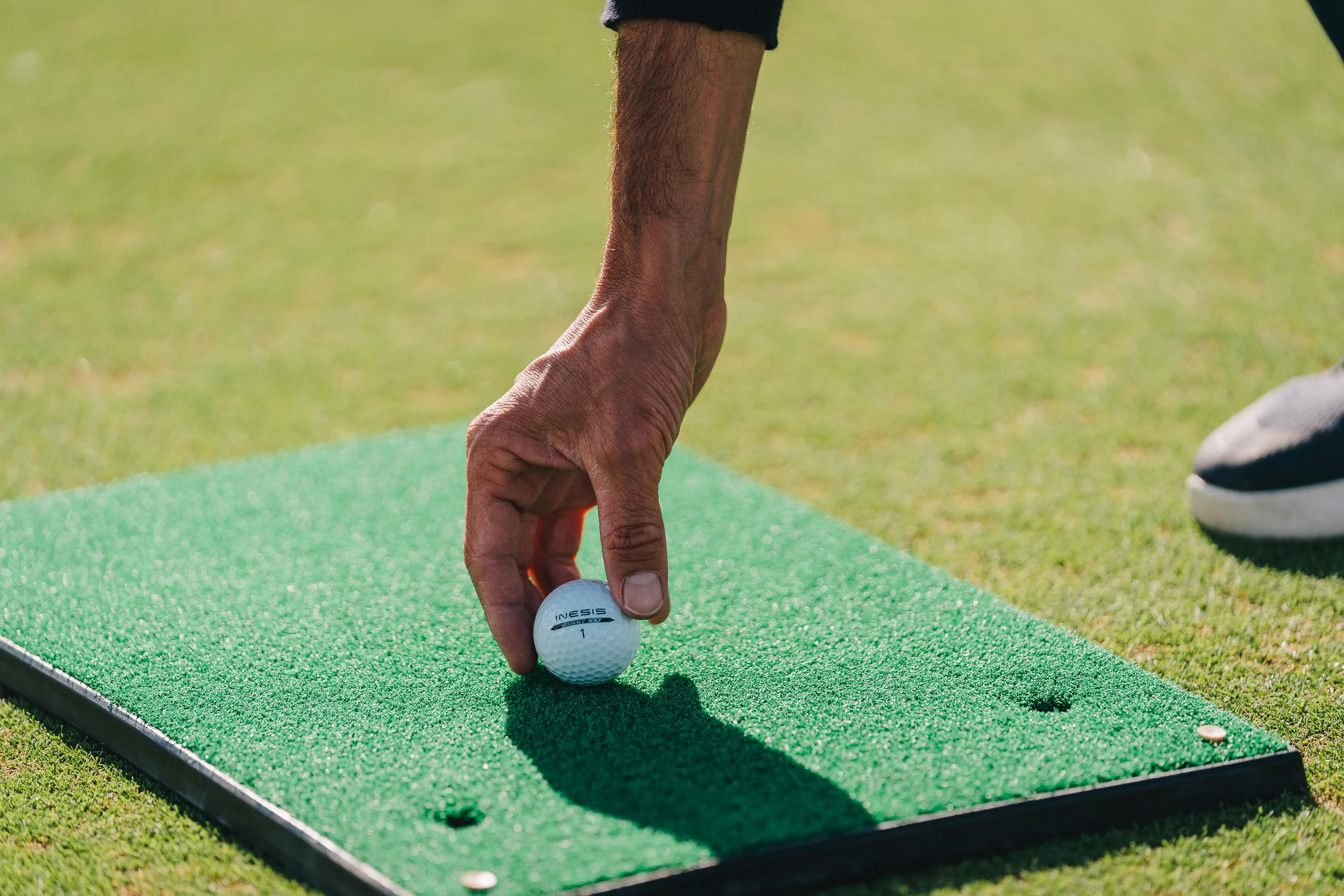
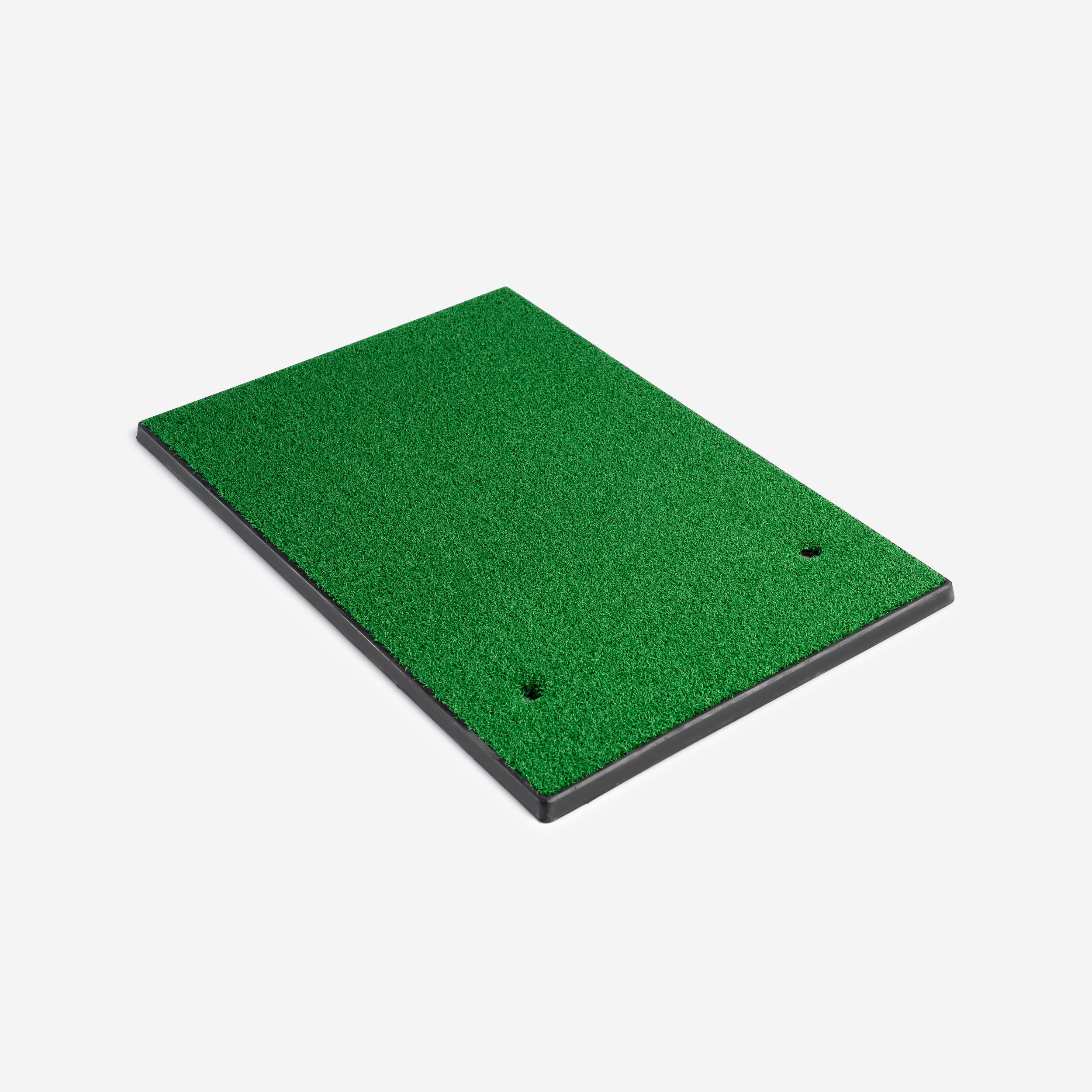
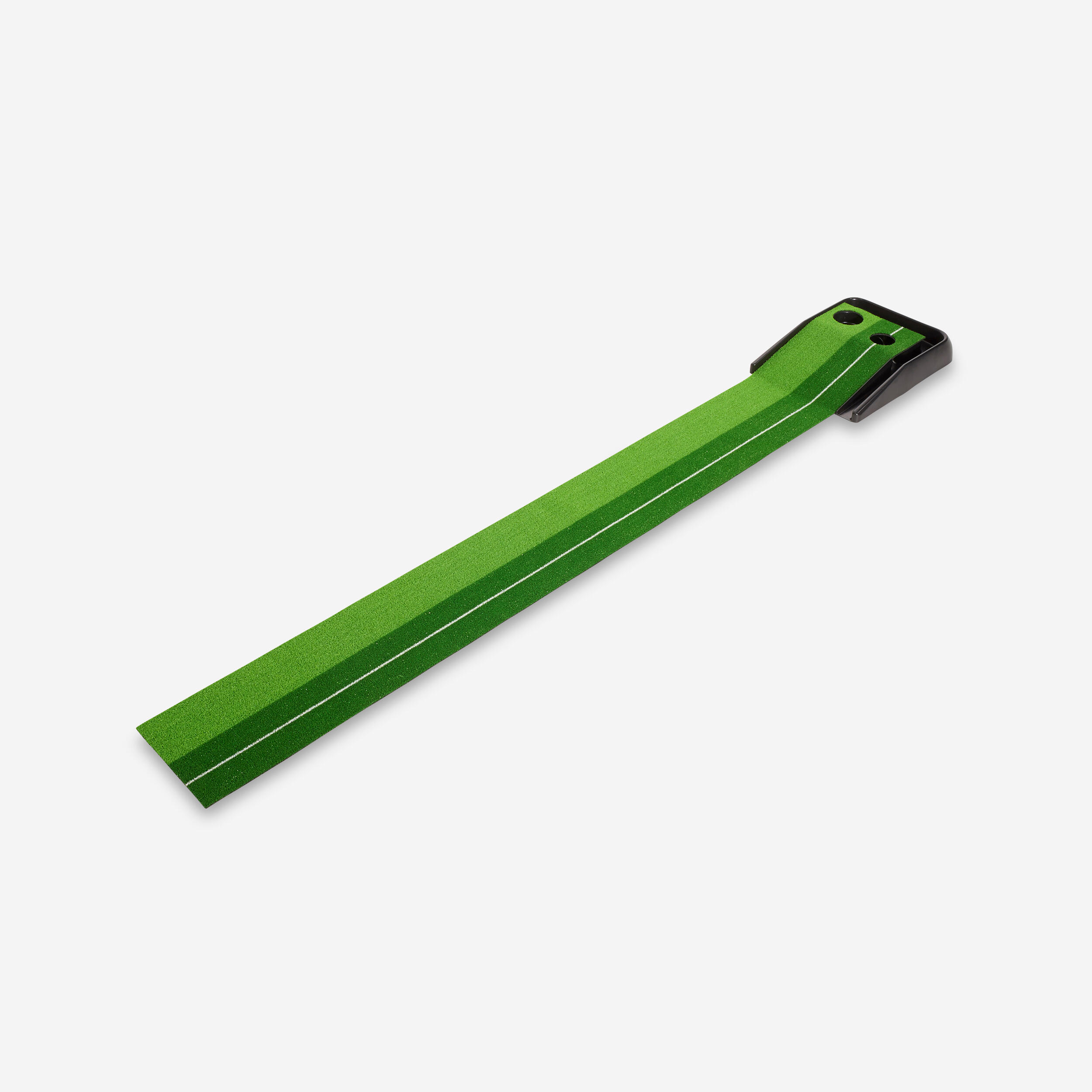
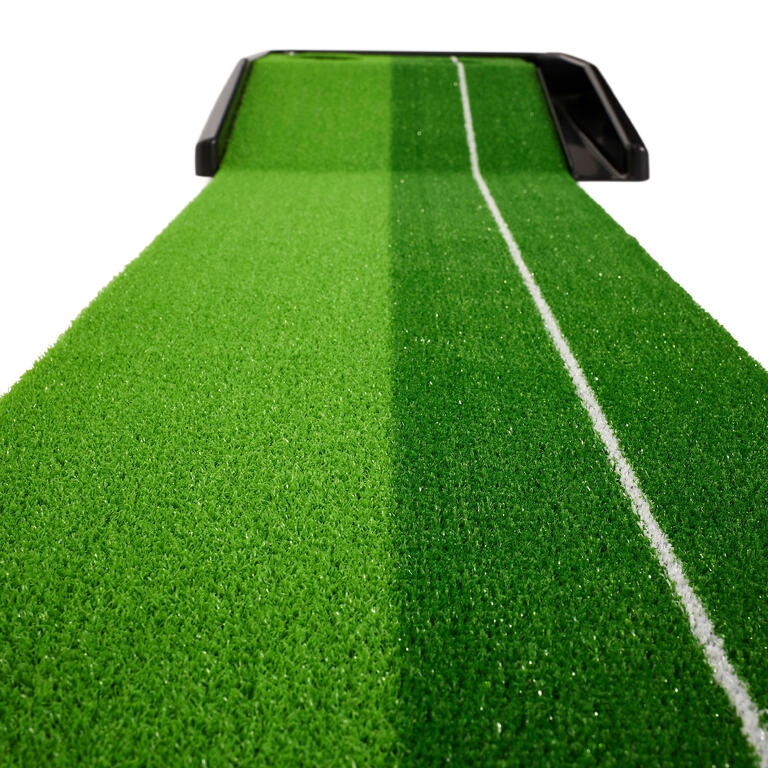
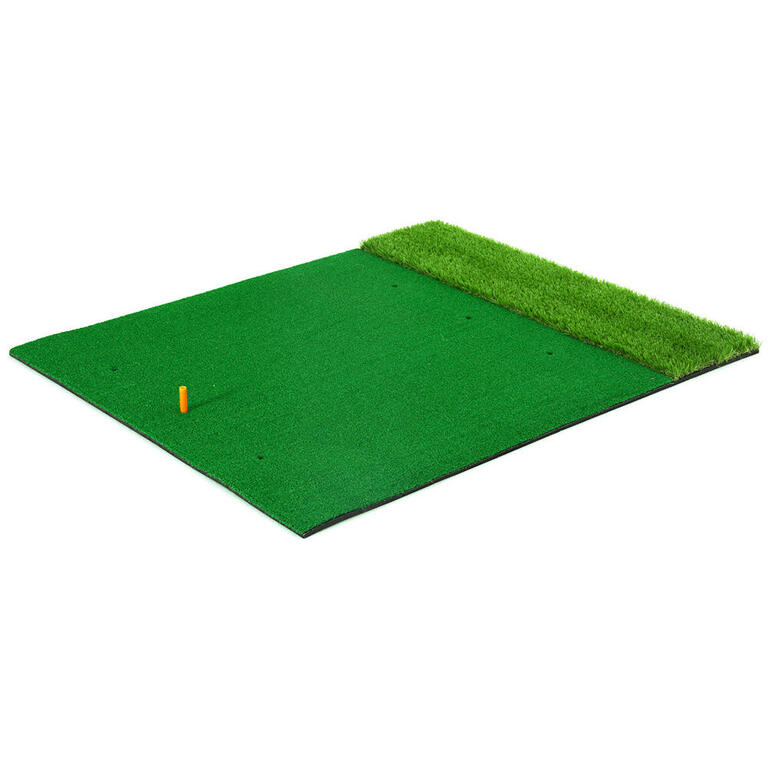
A mat lets you practise at home without wrecking the lawn. We build our range mat with dense turf that absorbs the strike and protects the floor underneath, and our putting mat with two rolling speeds, two hole sizes and a return gutter that sends the ball back to you. Fifteen minutes in the garage on a weeknight beats a range trip you never get around to.
Hitting mats and putting mats solve completely different problems, so start there. A hitting mat is built to take repeated full-swing impact and protect your floor, while a putting mat is designed for a smooth, consistent roll rather than club impact. If you want to work on both parts of your game, you'll likely need one of each rather than a single mat that does everything well.
Turf Quality
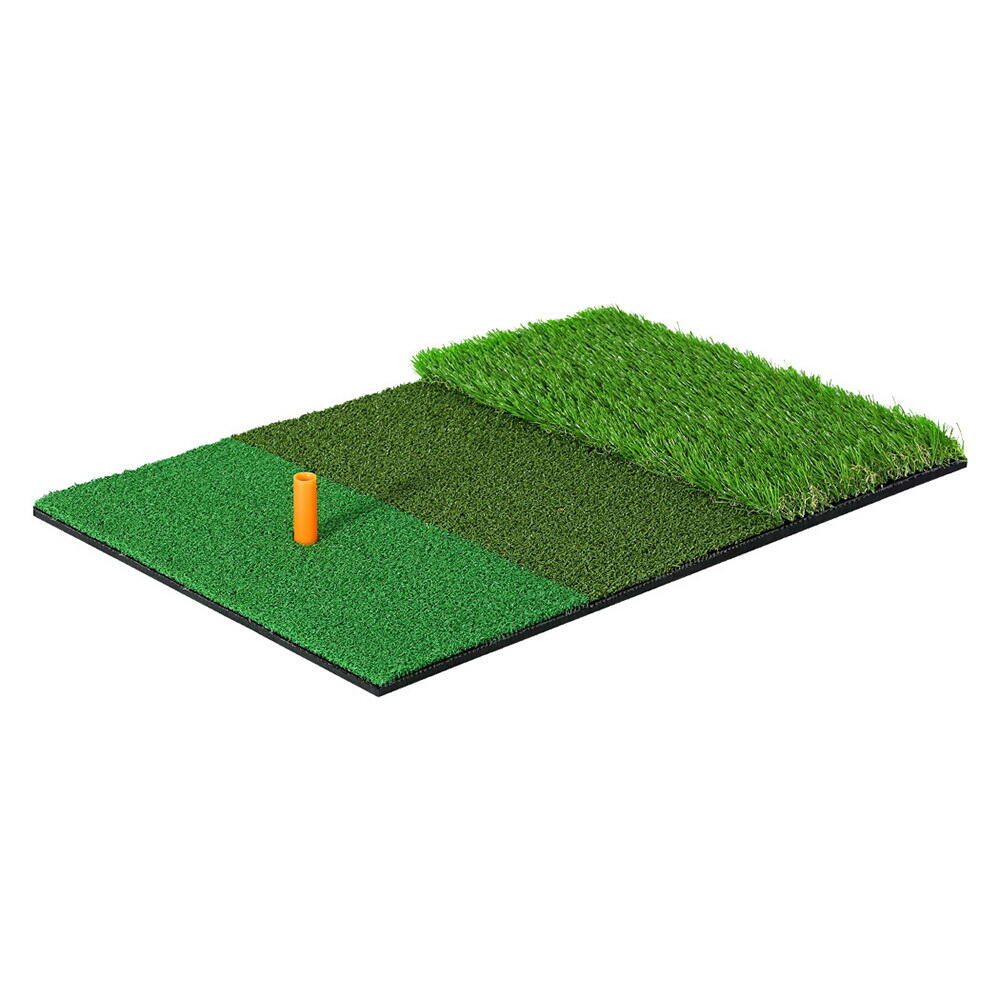
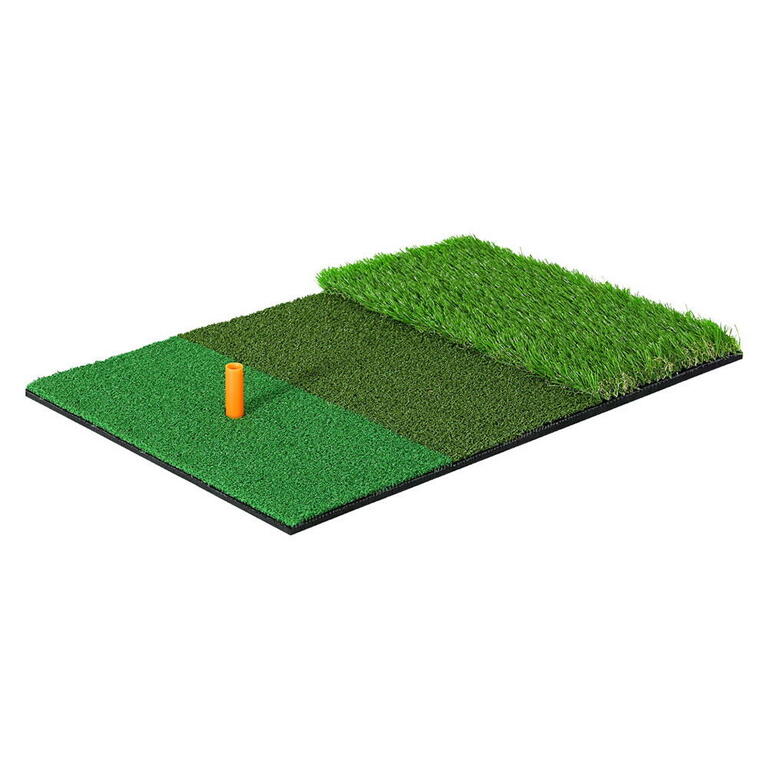
The surface affects how realistic each shot feels and how the club interacts with the mat. Denser, shorter turf generally provides a firmer feel that more closely resembles a fairway lie, while softer surfaces can feel more forgiving during practise. If you're practising with irons regularly, a firmer surface gives more honest feedback on your strike than a plush one will.
Size and Portability
Golf mats come in a range of sizes to suit different spaces and practice styles. Larger mats provide more room to set up comfortably and practise a variety of shots, while compact mats are easier to store when not in use. Consider how much space you have available and whether the mat will stay set up or be packed away after each session.
Stability
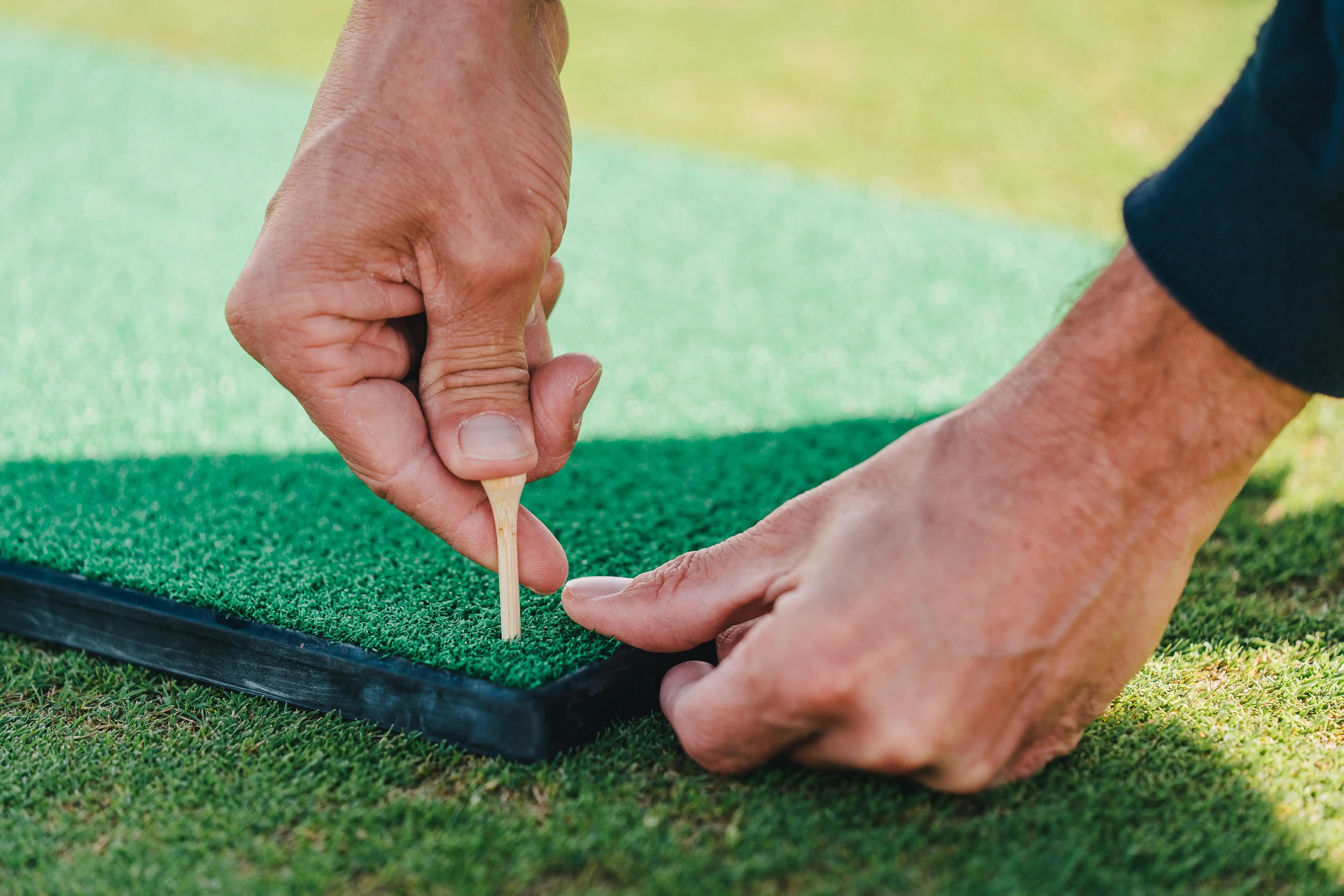
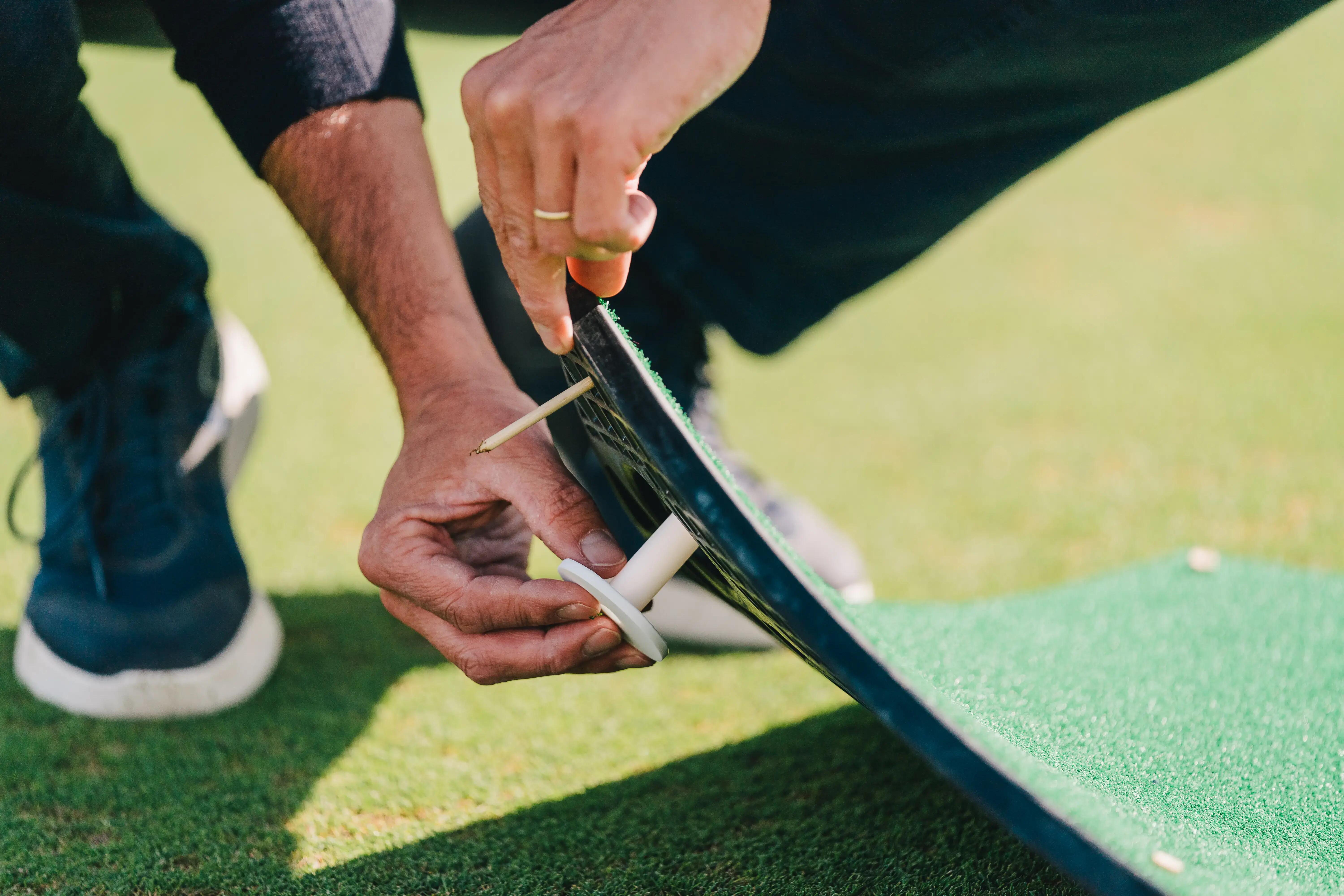
A stable golf mat helps you practise with greater confidence by staying securely in place throughout your swing. Features such as a non-slip backing or solid base can reduce unwanted movement, especially on hard surfaces. A secure mat creates a more consistent practice experience.
Testing your swing at home. You need a compact mat for occasional practice in a small space. Simple setup, easy to store when you're done.
Building your swing regularly. You want a mat that feels like real turf and lasts through consistent use. Good feedback helps your technique improve between rounds.
Training seriously at home. You're hitting hundreds of balls weekly and need a mat that mirrors actual course conditions. Durability and realistic feedback are non-negotiable.
Maintaining Your Practice Mat
Sweep or brush the top surface regularly to remove debris and prevent matting. Hose it down occasionally with a hose to clean both sides thoroughly. Let it dry completely before rolling up, as moisture leads to mould and odour. Store it rolled in a garage or shed, not folded, which creases the surface. A good mat can last several years of daily practice with basic maintenance. Keep it out of direct rain to extend its life.
Golf mats by type
Type
Best for
Compact mats (4x5 feet)
Limited space, apartment balconies or garage corners, casual practise.
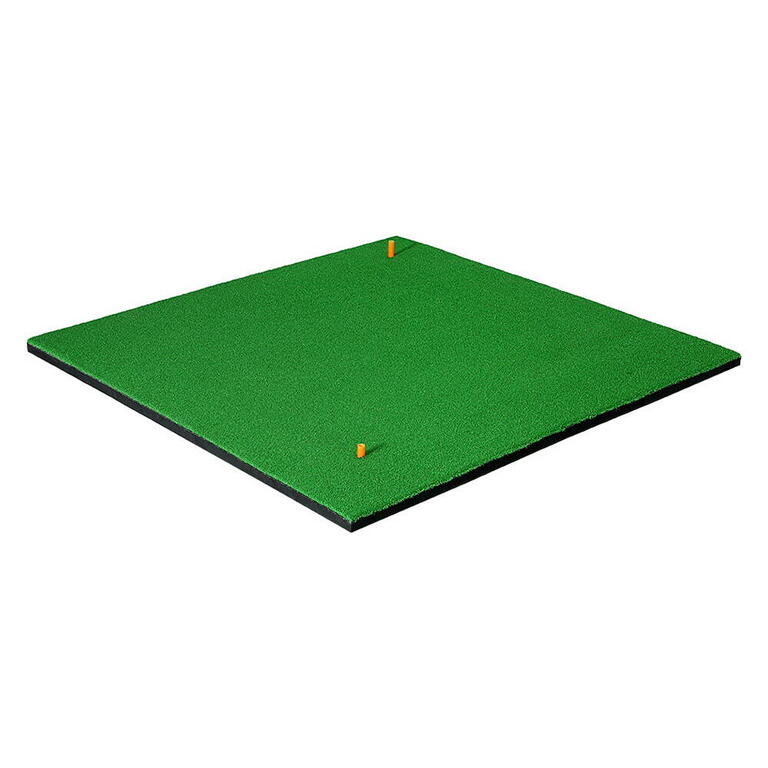
Most home practise setups, comfortable swing without feeling cramped.
Standard mats (5x7 feet)
Serious practise routines where ball collection becomes tedious without automation.
Premium mats with ball return systems
Foam is portable and quieter; turf feels more realistic but weighs more and requires maintenance.
Yes. A golf mat works on concrete as long as it has a stable, non-slip base. Put it on a level surface so it doesn't shift during practice, and check the mat is thick enough to absorb the strike, otherwise you'll feel the impact through the club and wear the turf out quickly.
How much space do I need for a golf practice mat?
The amount of space depends on the size of the mat and the type of practice you plan to do. Make sure you have enough room for your stance, swing and follow-through, and check the product dimensions before choosing a mat for your space.
Do I need a net with my golf mat?
Can I use real balls on a golf practice mat?
How do I maintain my golf mat for longevity?
A practice net is recommended if you're hitting full shots at home, especially in areas where balls could damage nearby property. If you're only practising putting or short shots, a net may not always be necessary.
Yes. Real golf balls provide the most realistic feel and performance when practising on a golf mat. Practice balls can also be useful if you have limited space or want to reduce the distance the ball travels.
Brush the hitting surface regularly to remove debris. Cover or bring indoors when not in use to protect from sun and weather. Rotate the mat occasionally to spread wear evenly. Clean water rinse removes dirt buildup. Regular care extends mat life significantly.
Practise Smarter, Not Just at the Range
Home practice removes cost and scheduling barriers to improvement. Size and material affect how realistic your practice feels. An affordable mat lets you groove your swing regularly without range fees. Even 15 minutes at home beats skipping practice. Consistent practice, whether at home or on the range, is one of the best ways to improve.
 All SportsMenWomenKidsAccessoriesEquipment and LeisureHealth & NutritionBest DealsNew ArrivalsMarketplace
 Hiking & Trekking
 Swimming
 Cycling
 Fitness (Yoga/Pilates)
 Camping
 Running