Holidaymakers and first-timers
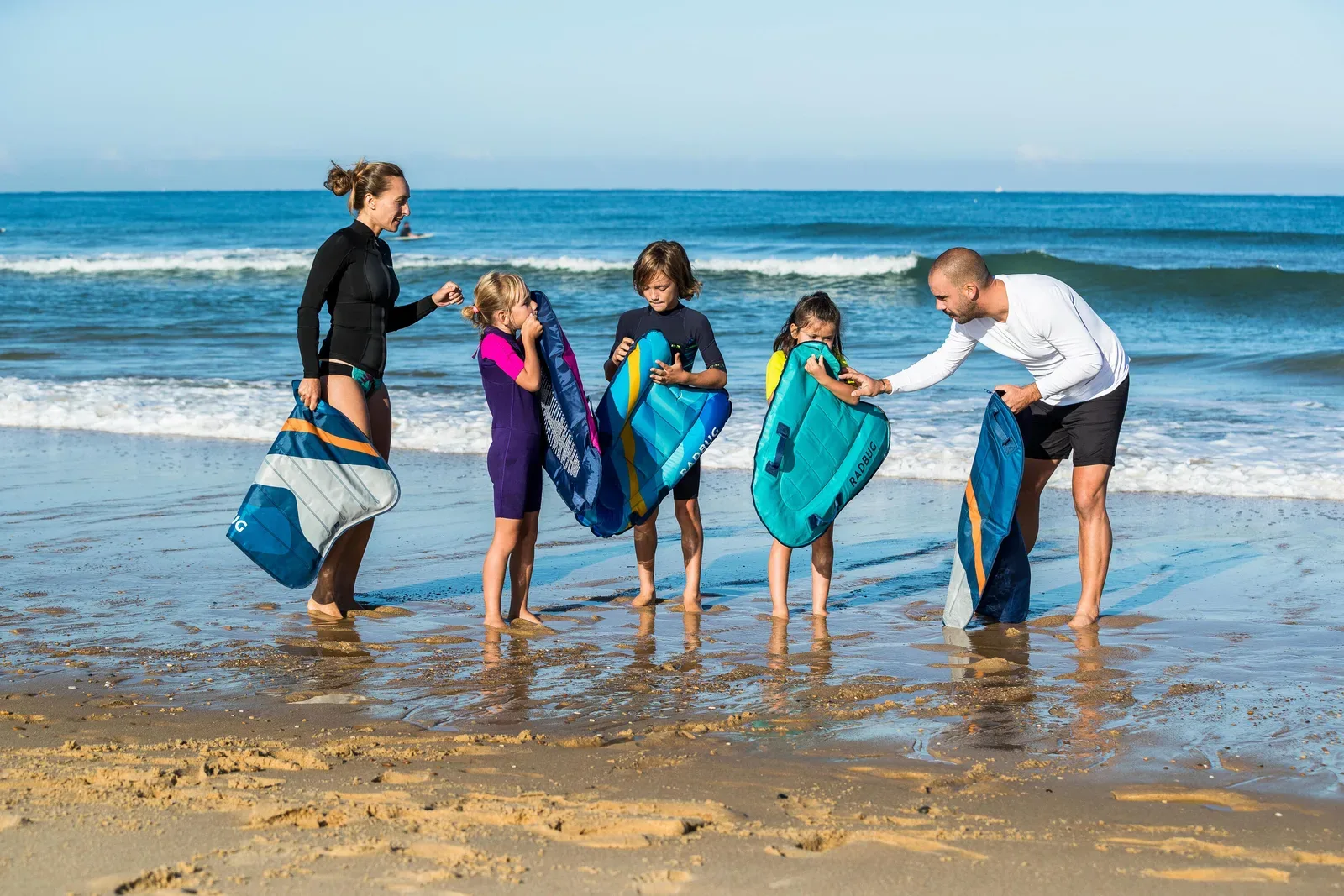
A beginner foam board with a wrist leash, or an inflatable that packs into a suitcase, is all you need for small waves.
The right bodyboard depends on your size and the waves you plan to ride. We'll help you choose a length and style, from first splashes in the whitewater to catching clean waves with fins.
Options from our bodyboard range, plus a leash to keep your board close.
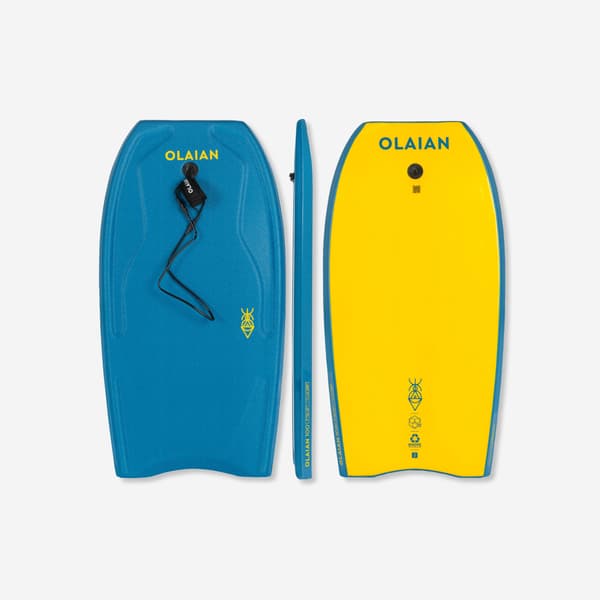
Beginner foam boards that come with a wrist leash.
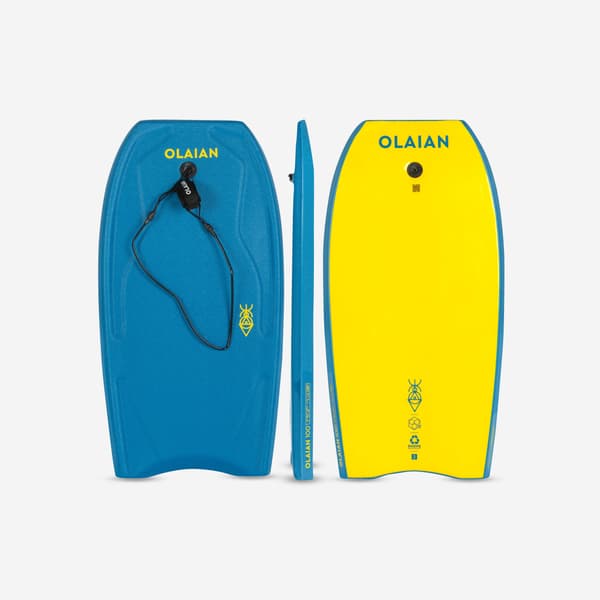
Shorter boards sized for children learning in small waves.
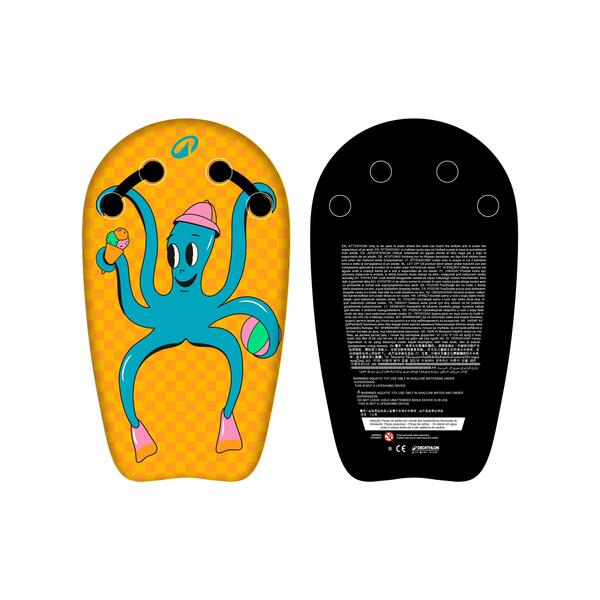
Small boards with handles for shallow whitewater fun.
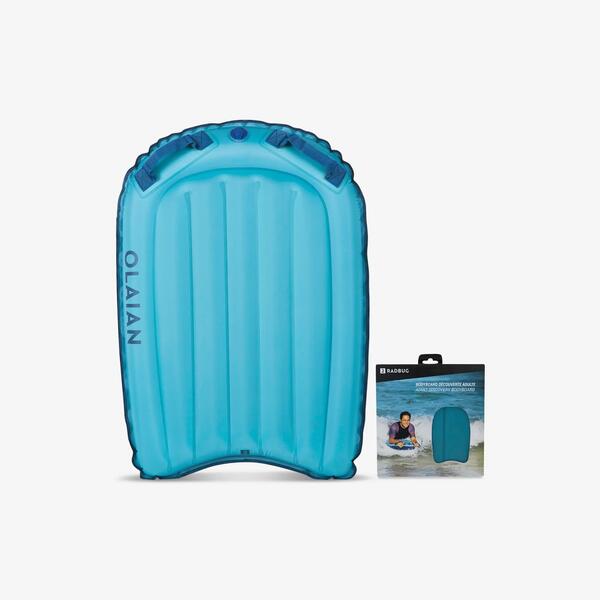
Inflatable boards that pack down small for holidays.
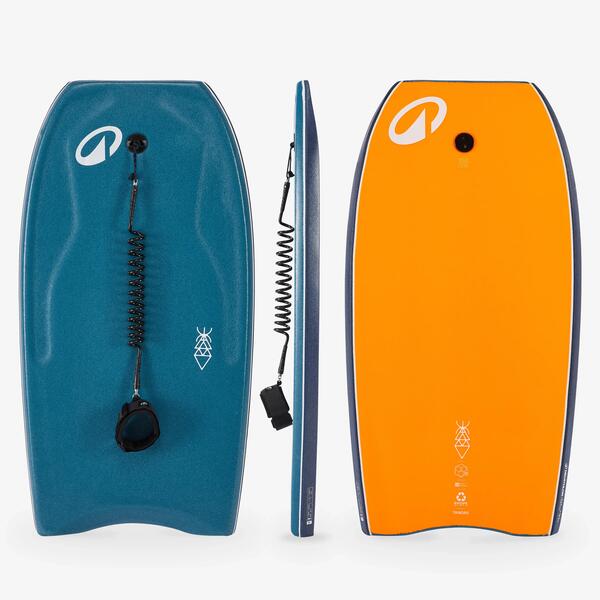
Sturdier boards for bigger waves once you ride with fins.
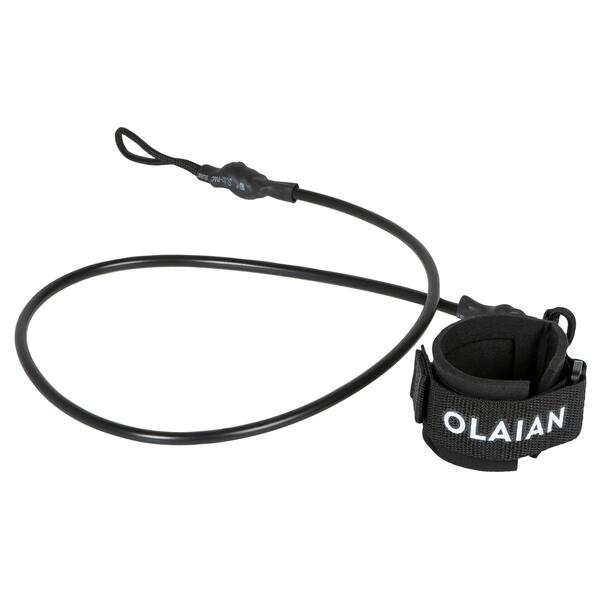
Leashes for boards and fins, including bodyboard wrist styles.
Stand the board on its tail: it should reach roughly between your belly button and your chest. A board that is too long is hard to steer, and one that is too short won't hold you up.
Each of our boards lists a weight guide, from 15 to 25 kg on small kids' boards up to 120 kg on our step-up board. More volume helps heavier riders float and catch waves.
Beginner boards are made for whitewater and waves under about a metre. Once you're riding green waves with fins, a sturdier board holds its line better.
A leash keeps the board with you instead of washing towards other swimmers. Wrist leashes are simple for beginners, while a bicep leash keeps the cord out of the way as you improve.
A beginner foam board with a wrist leash, or an inflatable that packs into a suitcase, is all you need for small waves.
Handle boards suit ages 4 to 8 in shallow water, and junior boards suit older children learning to catch waves.
A sturdier board used with fins gives you more speed and control in waves up to about 1.5 metres.
| Board type | Best for | Look for |
|---|---|---|
| Handle boards | Ages 4 to 8 in shallow whitewater | Grips to hold and a weight guide |
| Junior bodyboards | Older kids learning in small waves | A shorter length and a wrist leash |
| Beginner foam boards | Adults trying their first waves | A leash included in the box |
| Inflatable bodyboards | Travel and beach holidays | A valve for quick set-up |
| Step-up bodyboards | Riding waves up to about 1.5 m with fins | A bicep or wrist leash |
Stand the board on its tail next to you. For most riders it should come up to somewhere between the belly button and the chest. Weight matters too, so check the weight guide on each board: a heavier rider needs more volume to float and paddle easily.
Not for playing in the whitewater close to shore, and our handle boards for young kids are made to be used without fins. To catch unbroken waves you'll want fins, because they help you kick onto a wave before it breaks. Our beginner and step-up boards are designed to be ridden with fins.
A foam board feels firmer and more responsive, so it's the better choice if you plan to bodyboard regularly. An inflatable board is lighter to carry and packs down small, which makes it handy for travel and family holidays. Both suit small waves near the shore.
Children from around 4 can enjoy a small handle board in shallow whitewater, no deeper than their navel. Stay within arm's reach, choose a patrolled beach and swim between the red and yellow flags. As they grow in size and confidence, they can move up to a junior board with a leash.
Yes, it's a good idea. Lying on a board can rub your chest and stomach, so we recommend a rash vest or wetsuit on all our bodyboards. It also protects your skin from the sun, and a wetsuit keeps you warm for longer sessions in cooler water.
Pick a board that fits your size and the waves at your local beach. Wetsuits, leashes and beach gear are all in our water sports range.
Free delivery on orders over $150. Members get our lifetime warranty.