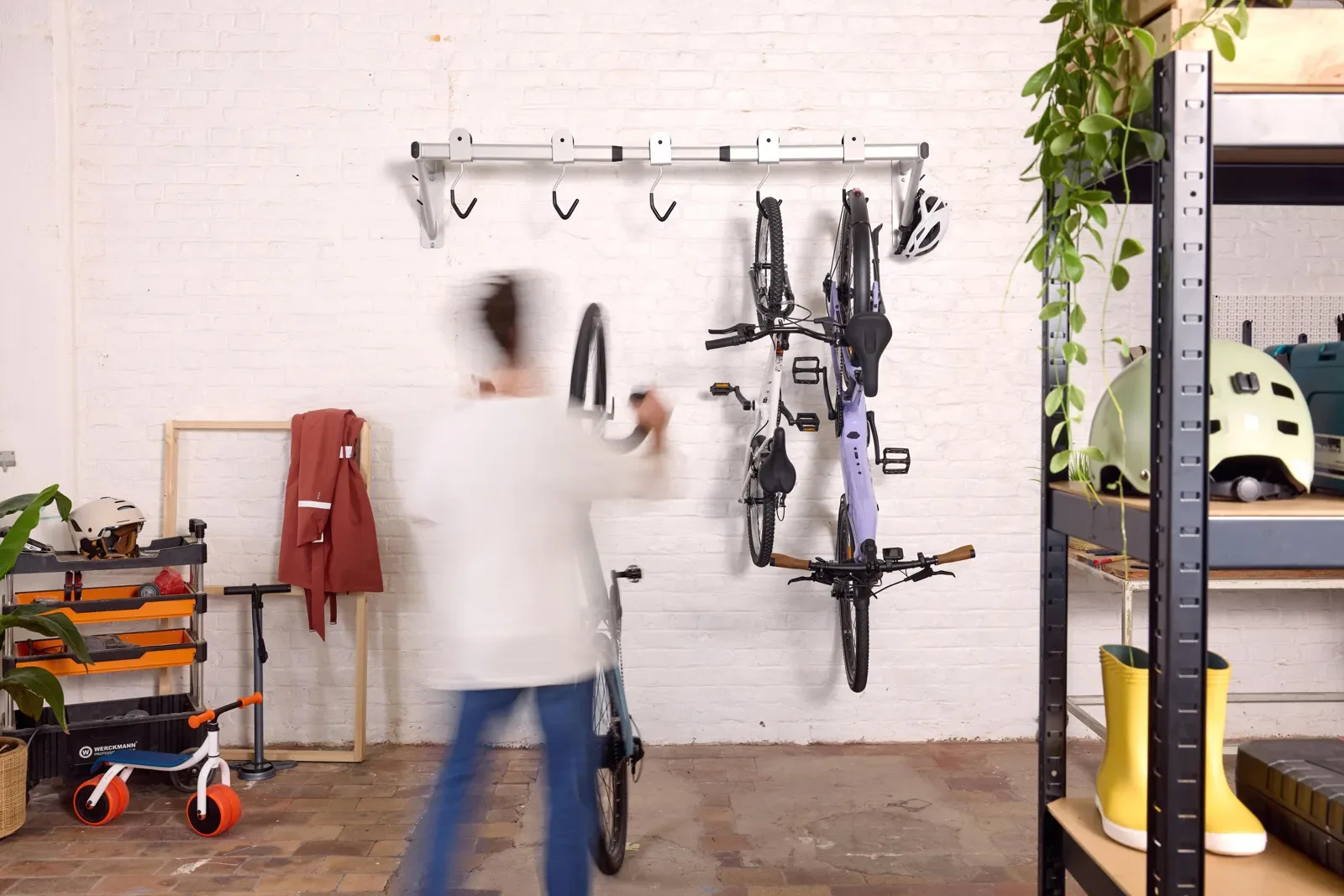
New riders
Start with a multitool, tyre levers, a spare tube and a pump. That covers flats and loose bolts, which are most roadside problems.
Most home bike jobs need only a handful of tools, kept together and within reach. Here is what we put in a maintenance kit, why each piece earns its place and what to add as your skills grow.
Six things that handle most home fixes, in the order we would buy them.
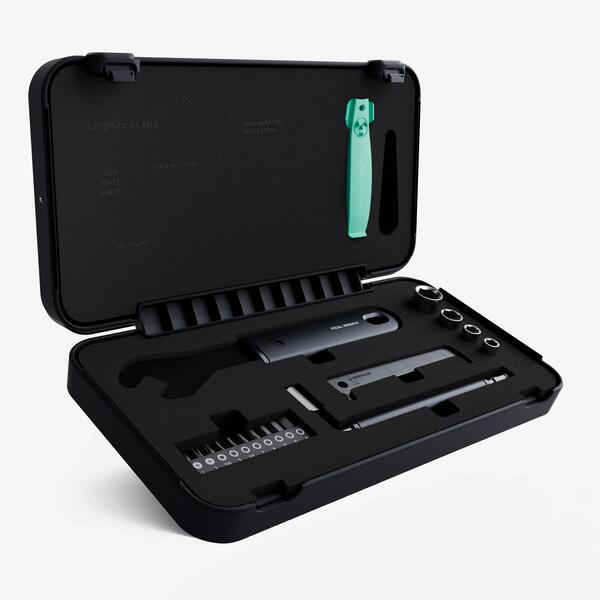
Multitools, toolboxes and single tools for home fixes.
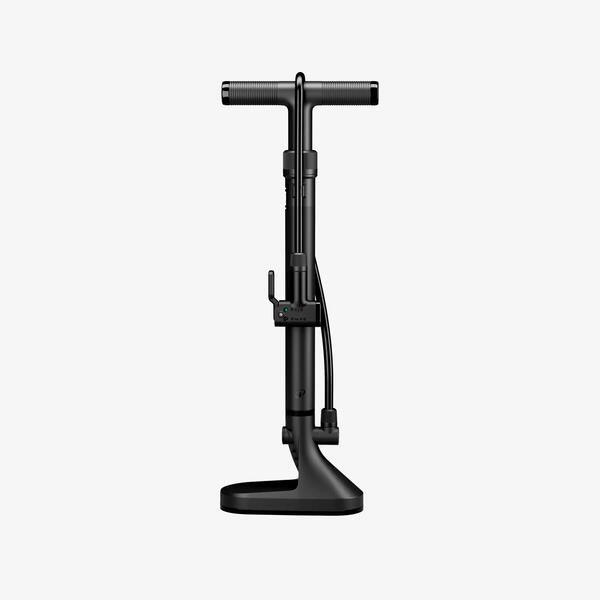
Floor pumps, hand pumps and CO2 inflators for every tyre.
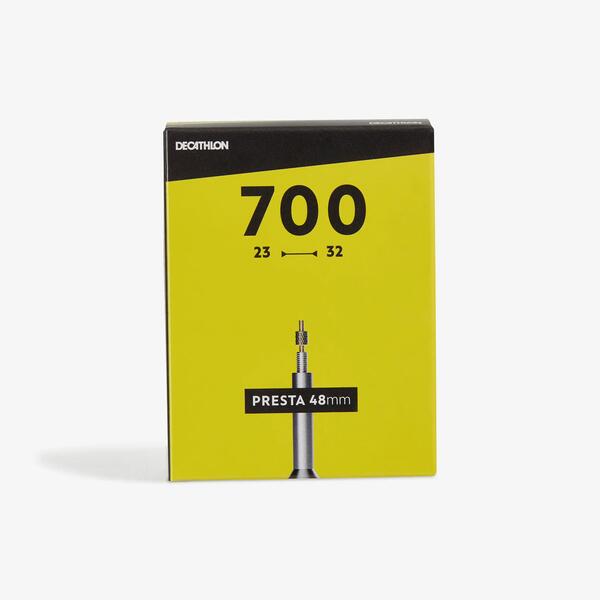
Spare tubes in road, mountain and kids' wheel sizes.
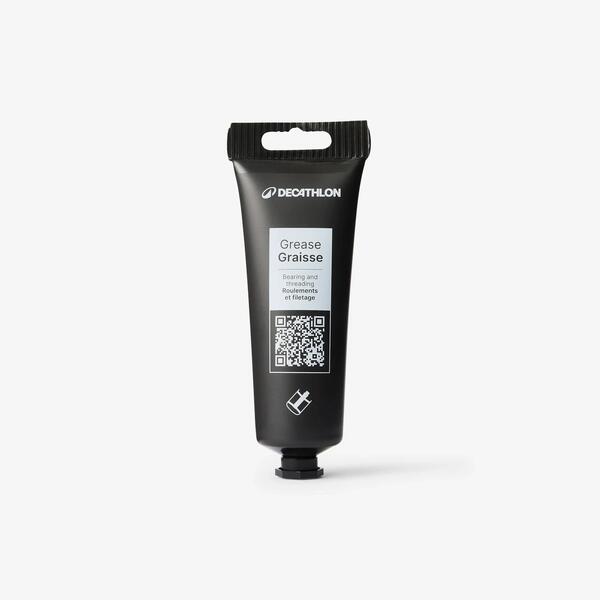
Lubes, grease, cleaners and brushes to keep parts running.
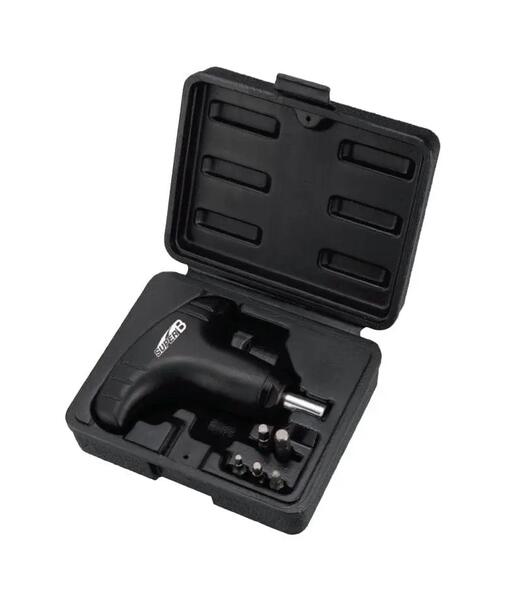
Torque wrenches sit here alongside trail tools and care.
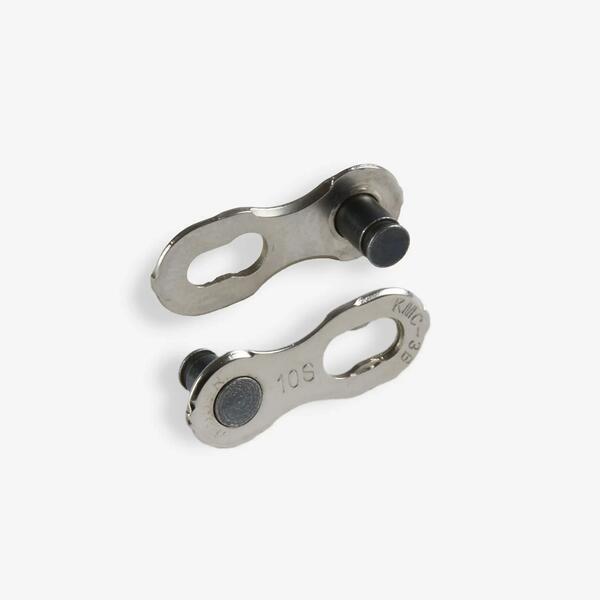
Chains, quick links and drivetrain parts for worn gear.
Most modern bikes use hex bolts from 2 to 8 mm, plus a T25 Torx on many brakes and stems. Check the bolts on your own bike before you buy, so the kit covers them all. A multitool is a good start, but full-length keys give better leverage.
Carbon parts, stems and seatposts have torque limits printed on them. A torque wrench or preset torque key stops you crushing a part or leaving it loose. It is the tool most home mechanics wish they had bought sooner.
Flats are the most common fix, so pair tyre levers with a spare tube in your size and valve type. Presta and Schrader valves need different pump heads, so check yours. A floor pump with a gauge makes setting pressure easy.
A toolbox or roll keeps everything together, so nothing goes missing mid-job. Store it somewhere dry to stop rust on steel tools. Keep a small separate kit for rides.
Start with a multitool, tyre levers, a spare tube and a pump. That covers flats and loose bolts, which are most roadside problems.
Add a torque wrench, a chain tool and quick links. You can then adjust, tighten and swap a chain at home.
One shared kit can look after several bikes. Check you have tubes for every wheel size in the shed.
| Item | Why it matters | Tip |
|---|---|---|
| Multitool or tool kit | Covers most bolts on the bike | Check it has every hex size you use |
| Floor pump | Correct pressure means fewer flats | Match the head to your valve type |
| Spare inner tube | Gets you rolling after a puncture | Check the size printed on your tyre |
| Grease and lube | Stops wear, squeaks and seized bolts | Grease threads, lube the chain |
| Torque wrench | Protects parts from over-tightening | Follow the limit printed on the part |
| Chain quick links | Joins a chain without special pins | Match the link to your chain's speed |
A set of hex keys (usually 2 to 8 mm), tyre levers, a pump and a spare tube cover most everyday jobs. Add a chain tool and quick links once you want to service the drivetrain. A torque wrench is worth it if your bike has carbon parts or you work on stems and seatposts.
A multitool is ideal for rides and quick adjustments, as it is light and fits in a pocket or saddle bag. At home, full-size tools give more leverage and reach, which makes stiff bolts easier and safer to undo. Many riders keep a multitool for the road and a fuller kit in the garage.
If your bike has carbon parts, a torque wrench is strongly recommended, because over-tightening can crack them. Even on alloy bikes, it helps you tighten stems, bars and seatposts to the figure printed on the part. Always follow the limit marked on the component or in the maker's guide.
Look at the sidewall of your tyre, where the size is printed (for example 700x28 or 29x2.2). Pick a tube whose size range covers that figure, and match the valve type (presta or Schrader) to your rim. Valve length matters on deeper rims, so check that too.
A quick check before each ride (tyre pressure, brakes and loose bolts) catches most problems early. Clean and lube the chain every few rides, or more often in wet or dusty conditions. For bigger jobs or anything safety critical you are unsure about, a bike workshop is the safer choice.
Start with the basics and add tools as your confidence grows. We have everything you need to keep your bike rolling.
Free delivery on orders over $150. Members get our lifetime warranty.